Researchers find up to 2.28% annual wave-induced losses in floating PV systems
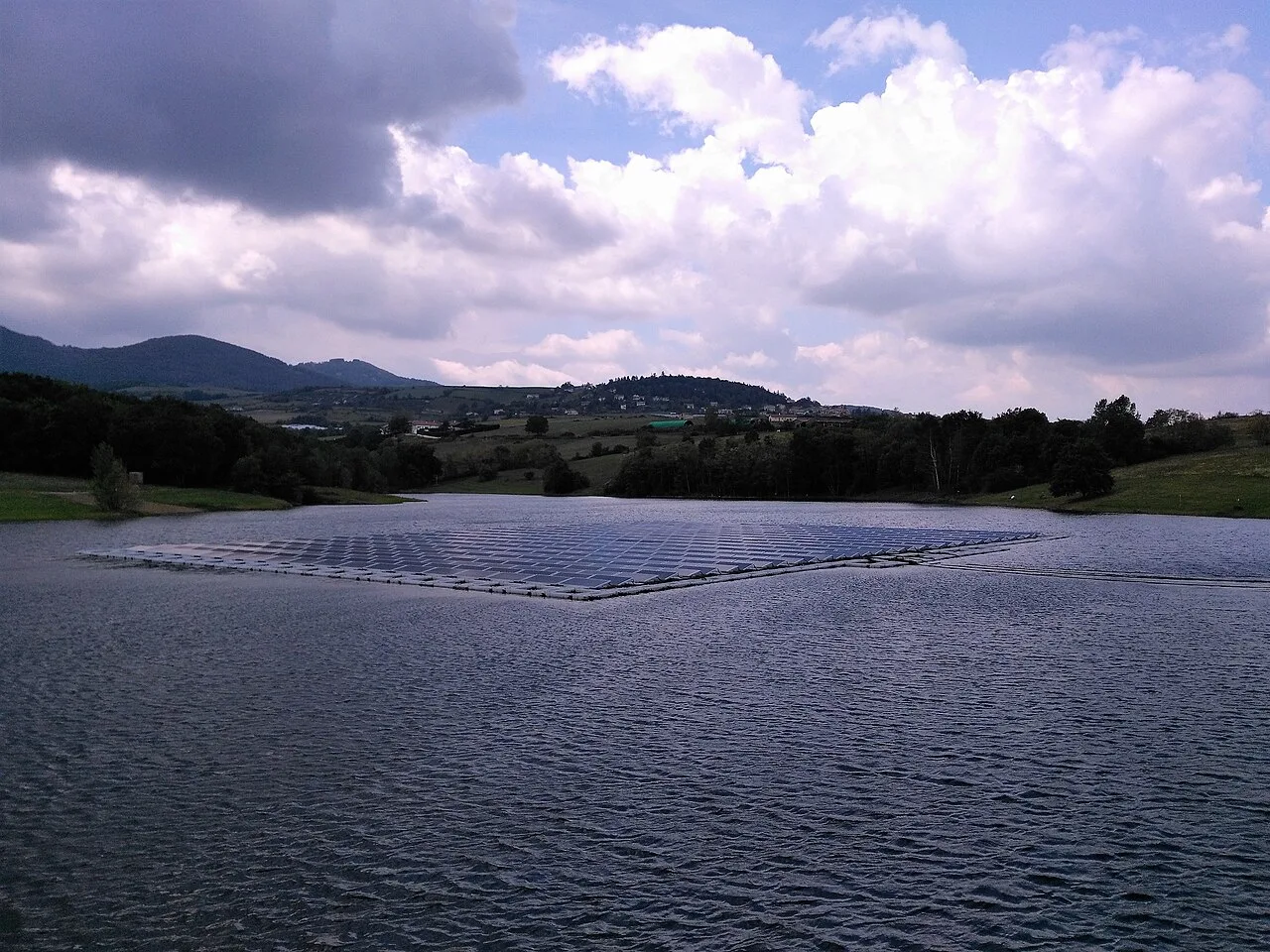
A research team in Norway has expanded a model for wave-induced loss (WIL) in floating photovoltaics (FPV) that it first presented in 2025. The updated framework uses site-specific, time-correlated wave and solar irradiance data to estimate annual energy losses under realistic weather conditions, including cloudy periods.
“While the previous study enabled an understanding of the WIL effect from variations in individual parameters, this work simulates WIL throughout the year, taking into consideration the varying environmental conditions,” the researchers said. “The expanded modeling framework is used to simulate WIL, wave-induced irradiance variation (WIIV), and wave-induced mismatch loss (WIML) for the year 2023 at four nearshore locations along the Norwegian coast.”
The framework consists of four modeling steps. First, in a step added to the original model, the researchers used the SWAN wave model to generate hourly, site-specific sea-state parameters based on wind, boundary wave spectra, and bathymetric data. Second, they used their existing 3DFloat approach to simulate panel movements, assuming that each panel directly follows local wave motion. This step now accounts for changing sea states throughout the year and allows for a more flexible wave spectrum.
In the third step, the researchers used pvlib to calculate the irradiance reaching each moving panel and an equivalent stationary reference panel, accounting for panel orientation and reflection losses. Unlike the previous study, which relied on clear-sky calculations, the updated model uses time-correlated irradiance data that include cloudy periods. Finally, the researchers used the existing PVMismatch electrical model to calculate individual panel and string output, which they integrated over time to determine energy production.
The researchers tested the updated framework through simulations covering the full year of 2023 at four locations along the Norwegian coast, selected to represent increasing exposure to the Skagerrak Strait. The first site is located in a sheltered fjord, while the second is closer to the fjord’s mouth but protected by small islands. The third and fourth sites are located beyond these islands, with the fourth being the most exposed.
At each location, the researchers simulated 10 horizontally mounted panels connected in a single string and arranged along an east-west axis. The electrical parameters were based on Jinko Solar’s Cheetah 60M-V 325 W monocrystalline PERC module, with the panel temperature held constant at 25 C. An additional simulation at the most exposed site used a panel tilt angle of 15 degrees to assess its effect on wave-induced losses.
“The simulations yielded an annual WIL of 1.12% for the most sheltered location (with median wave height 0.22 m) and 2.28% for the more exposed location (with median wave height 0.52 m),” the researchers said. “The contribution from WIML and WIIV was quantified, showing that mismatch losses dominate the total WIL, while changes in average irradiance resulted in a small gain.”
The researchers also identified a correlation between WIL and the fraction of direct irradiance, highlighting the importance of using time-correlated wave and irradiance data.
The findings are presented in “Modelling annual wave-induced loss for floating photovoltaics under realistic weather conditions,” published in Solar Energy. The research team included scientists from Norway’s Institute for Energy Technology (IFE) and the University of Oslo (UiO).
The post Researchers find up to 2.28% annual wave-induced losses in floating PV systems appeared first on pv magazine Global.