Flexing their intelligence
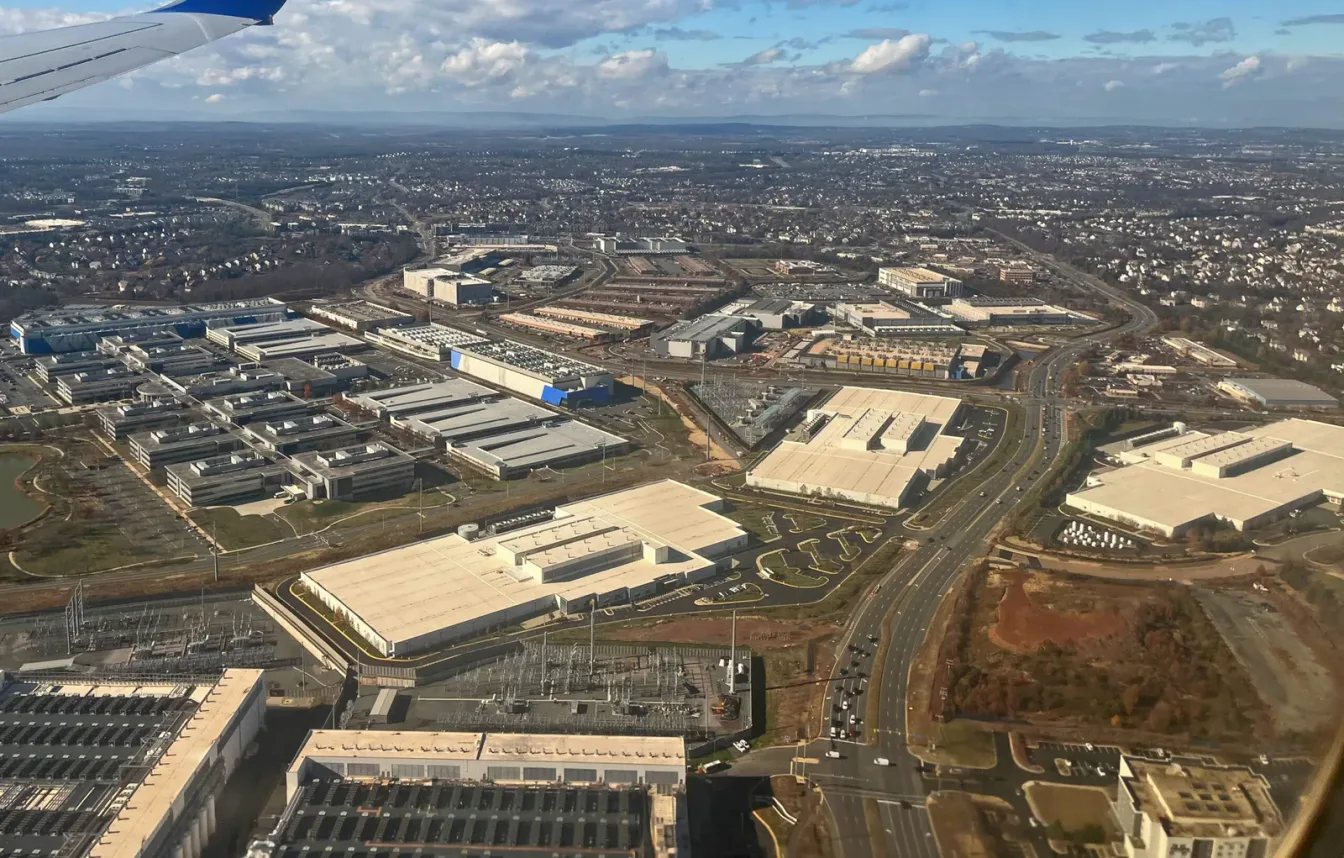
In July 2026, a transmission line fault in Ashburn, Virginia – an area known as Data Center Alley because it is the most data-center-dense place in the world – prompted data centers to switch to their emergency backup power, resulting in an almost instantaneous drop of more than 3 GW in grid load.
For people working with data center clients like Wannie Park, the only surprise was that events like this aren’t more common in the United States. “Technology is being built on the fly, especially in the software and services side. There’s going to be growth hiccups,” he said.
Park’s startup Pado AI makes grid orchestration software designed to help data centers become flexible loads while making the most of their white space onsite and their compute per megawatt. Its technology can be applied to both greenfield and brownfield sites, including smaller legacy data centers (30 MW to 50 MW) of which there are thousands in the United States. These players don’t have fat checkbooks like the hyperscalers, but they do have existing grid connections, said Park.
Pado AI spun out of South Korean battery company LG a little over a year ago and is shipping its own vendor-agnostic product. Park is eyeing neocloud opportunities, and he has noticed an industry-wide shift towards inference tasks, which use less energy.
Based on tasks, energy demand and renewable resources on the grid, Pado AI’s technology creates a forecast of how an individual data center interacts with the grid, which utilities can use to create flexibility measures. It can also rank a data center’s tasks based on priority, placing them in different zones within the data center, or even transferring them to another data center in another location. Typically, jobs are moved around based on their cooling needs, which helps to use less cooling power and create more compute.
Complex orchestration
There are different approaches to flexibility and orchestration software, but all ultimately aim to cut the lead time for data centers to connect and reduce their burden on the grid. Camus Energy works with several utilities, both vertically and non-vertically integrated, on managing live data center loads. It advocates flexible grid connections for data center developers to reduce their waiting time. Its background is providing software and data to utilities directly, but it introduced its FlexConnect product to address problems around data center flexibility.
“We can help data centers operate within grid limits for the locations where they interconnect … and we’ve been working with our data center customers and utility partners to formalize the model by which the value flexibility is analyzed and also how it’s operated on an ongoing basis,” said Camus Energy’s CEO and co-founder, Astrid Atkinson.
Camus said it brings the things that planning tools usually do and the things distributed energy resource management platforms (DERMS) do into a single system, covering the gaps for both. Its technology uses time-series power flow analysis to evaluate grid constraints over thousands of hours and then converts the results into operating limits (calculated using physics-based power flow analysis of the grid) to be enforced in real-time and day-ahead operations.
After an initial analysis figures out things like the size of data center relative to the site, how many megawatts within the existing grid, and the flexibility profile each project would need for access to power, Camus works on the connectivity side to integrate with the dispatch and signaling for transmission resources at the grid operator.
Atkinson is a former senior director of software engineering at Google where she worked managing distributed systems. “It is a hard problem, managing the utility data and operational signaling,” she said. The Camus CEO explained that the company has been looking at reliable and deterministic large language model (LLM) results for grid analysis as a next step.
“We have our own technology around how to eliminate math errors and hallucinations when using LLMs to do this kind of work. Agentic approaches are also very helpful for automating some of the manual parts of doing an interconnection analysis,” added Atkinson.
Behind the headlines
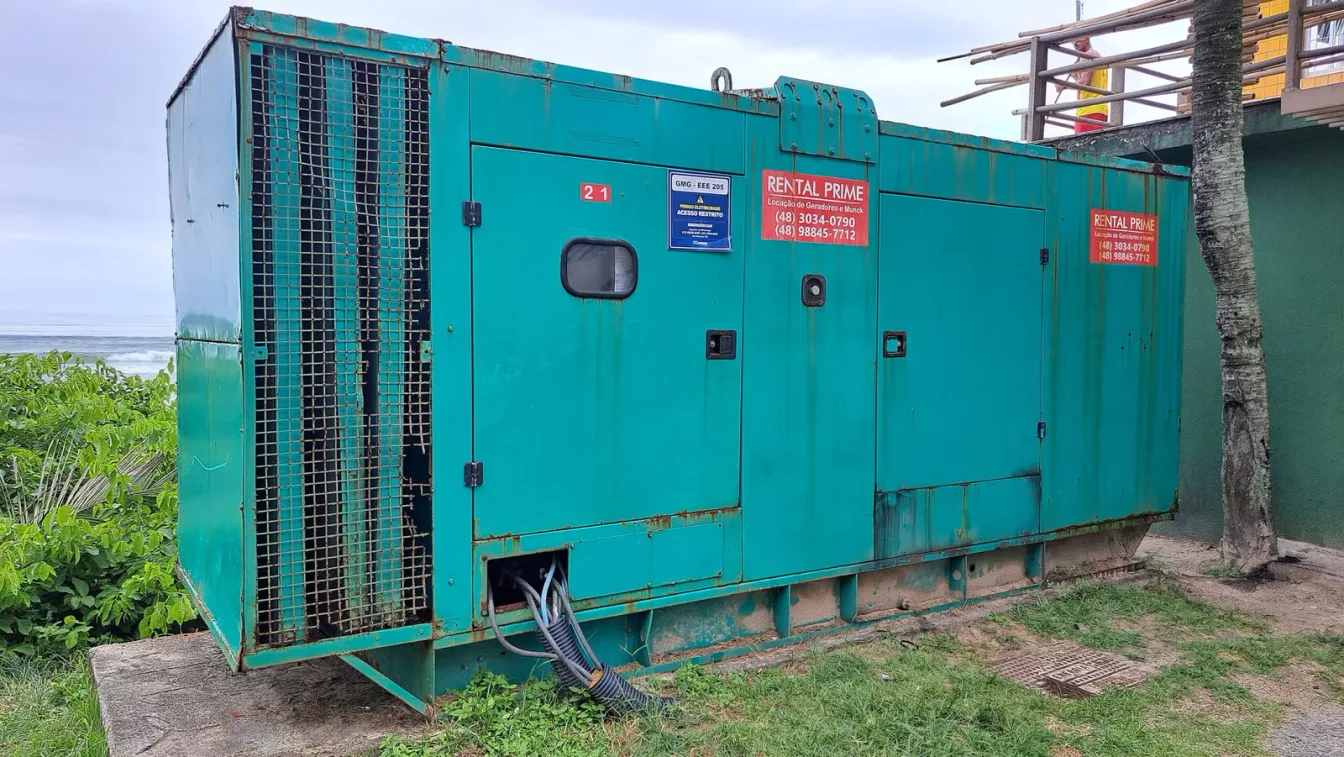
Not everyone working on technological solutions for AI data centers is convinced of the merits of the current flexibility approach. “Flexibility is being talked about as this great climate solution for AI, this silver bullet, when in reality the way it’s achieved, at least to date, is through diesel generators,” said Boris Gamazaychikov, co-founder and CEO of research and advisory group Sustainable AI.
“Most of the headlines I’ve seen purporting that it’s a solution are talking about workload flexibility,” he said, pointing out that this simply means reducing the amount of AI workload that’s happening at any given time, whether that’s inference or training, during times of high grid usage by either transferring the workload to another data center in another region or reducing it using smart orchestration software.
Gamazaychikov is an AI sustainability engineer and former head of AI sustainability at Salesforce. He co-founded Sustainable AI after noticing a lot of enterprises were struggling to reconcile their AI growth plans with their sustainability strategies.
He said he doubts there are enough incentives now for data center operators to manage their workload flexibility via grid orchestration software. “I’m not convinced that is going to happen at scale, to be honest. I don’t see enough incentives there and right now AI companies are really just looking to get as much economic value out of each megawatt as possible.”
For Park and Atkinson, enabling data centers to use energy more efficiently is where the value is. But they don’t get a say in what type of power source the data centers they work with use. Workload shifting adds “significant complexity” to current data-center processes, said Gamazaychikov. He said load flexibility can involve onsite storage or generation to reduce grid load and supplement it with a battery. But hyperscalers don’t solely use batteries. They use whatever power source gets them a grid connection cheaply and quickly.
“What’s actually happening more is diesel generators,” said Gamazaychikov. When a data center switches to their behind the meter diesel generators for emergency backup, emissions skyrocket. For places with high data center concentration like northern Virginia, that’s potentially a climate and health hazard.
Combined approach
Heavy hitters Google and Nvidia, together with Nvidia’s NVentures portfolio company EmeraldAI, founded the AI Energy Management Alliance (AEMA) in September to find ways to reduce AI’s climate and energy burden. Camus Energy is a member of the alliance, as is battery manufacturer Fluence.
Fluence represents battery players’ interests in the group and will advocate for battery storage to make data centers be “good grid citizens,” as TJ Winter, VP of emerging segments and intelligence at Fluence, put it.
AEMA offers Fluence a more direct line to policymakers and AI hyperscalers like Anthropic, Nvidia and Google to get its message on batteries for grid flexibility across. “The goal is not simply to connect data centers faster, but to enable responsible growth that makes better use of the grid,” said Winter.
“Storage allows a facility to adjust how much power it draws from the grid when the system needs relief, while keeping its own operations reliable,” Winter explained. “That flexibility can unlock capacity on the existing grid that would otherwise go unused.”
A report by S&P Global, commissioned by Fluence, claims batteries provide value on both cost and grid flexibility where other power sources don’t. ‘The Real Cost of Power: Why lifecycle performance favors BESS for data centers,” stated that the value of BESS is its ability to act as a controllable load and peak management tool. Unlike gas or diesel – which are also high carbon emitters – BESS enables developers to reshape demand, reduce peak exposure and potentially speed up grid access. “Flexible capacity is a load management problem, and BESS is uniquely positioned to address it,” said the authors. Flexible capacity is also very emissions-intensive, which is another reason not to use diesel and gas.
Investment tax credits in the United States mean BESS is competitive on cost as well as emissions and performance. Projects that qualify for domestic content or energy community credits can receive higher tax credits.
Overall, BESS is “emerging as the superior solution when evaluated on a full lifecycle basis” said the authors, adding that a battery installed for a single use case can add value in other areas when the need arises. This should be considered and requires developers to move beyond a capex-first mindset to appreciate long-term advantages such as flexibility, rapid deployment, and electricity tariff optimization compatibility – all of which can improve long-term economics even if initial installation costs are higher.
Vladimir Troy, VP of AI infrastructure at Nvidia, explained that the chip giant has been working with players like Fluence and Siemens to incorporate computing, power and storage into a common product design protocol it is calling DSX Ready that gives battery companies prescribed requirements and standards.
As Troy said, the speed to power benefit batteries offer is very much part of the overall reason Nvidia is working with BESS companies on developing these standardized approaches in the first place. “Qualified batteries can support rapid power changes, grid disturbances, demand response and transitions to backup or onsite power. Together, these efforts can accelerate time to power, make better use of existing grid capacity and deliver more AI output per watt,” said Troy.
For the likes of Nvidia, the goal is to make the most of available energy while reducing the cost of producing AI. “Increasingly, those gains come from designing the entire AI factory as one system: compute, networking, power and cooling working together. The most promising applications connect grid intelligence, flexible computing and clean energy,” said Troy.