Developing Generosity
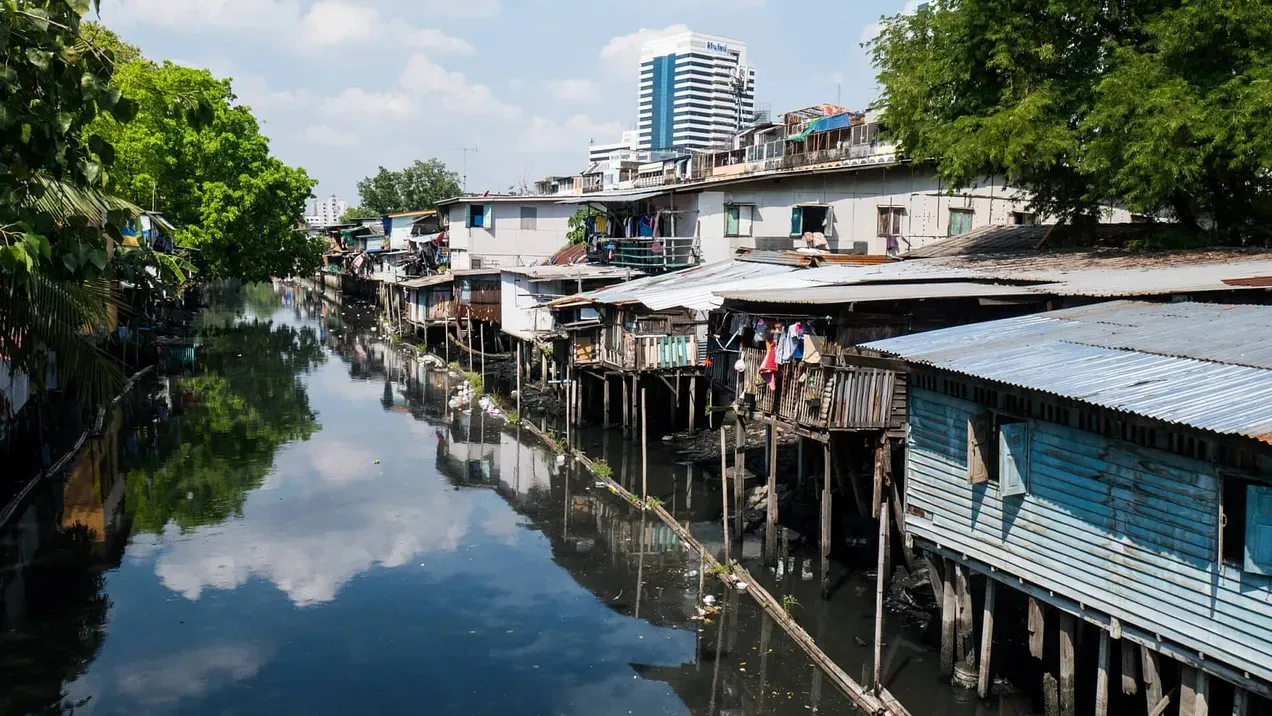
My mother tongue is Thai, but for a long time I couldn’t swear in Thai. That was because the international school I went to banned us from speaking Thai on campus. No native languages, all the better to improve our English. It was quite a colonial relationship. I remember the colonial roots of my English every time an American complements my fluency, now that I live in the US.
Because of the school ban my Thai was polite, sweet, but not cool. I had no slang. I could not swear. This changed in the last two years of high school. I did the International Baccalaureate, which then required fifty hours of service from each student in order to graduate with the IB diploma. That seemed like a lot of hours to me! I remember my reluctance to leave the beautiful school campus with its duck ponds and Thai sala and venture into the great unknown of the Klong Toei slums.
I was matched to work in an orphanage of kids with HIV. I squeal for babies and toddlers, and was thrilled. Thailand was early to destigmatize HIV/AIDS. I ended up spending years in this orphanage, holding babies with many wonderful volunteers. What bliss, truly. I learned the carrot dance that the toddlers were obsessed with then; I can still sing it. Then, to my chagrin, I was moved out of the baby and toddler center to be with the adolescents. I think there was some glamour to having an international school student among the older kids. I sensed status in their jostling to speak with me. When the teenagers heard me speak, they fell over themselves laughing. How did I sound like such a child! They taught me to swear. We spoke in slang. In my time in Klong Toei, my Thai finally entered adolescence.
I learned a lot in those fifty hours of volunteer service, which I ended up exceeding. First, service feels wonderful. Maybe in the very beginning it was uncomfortable because of self-consciousness—and who could be more self-conscious than a teenager. But even adolescent me was able to relax the certainty that everyone was judging her and enjoy the camaraderie. I brought candy, and we’d walk around in a big pack of teenagers through the slum.
I learned that when the rains come, the slum is first to flood and last to drain; I learned it loses power all the time; I learned that people can be proud of where they’re from even when home is a shack made from corrugated tin. I learned that phad thai is best made on a street-side wok; I learned that Muay Thai keeps kids, especially boys, out of trouble. I learned that no one begs nor steals if they can help it; I learned that people are generally kind and keen for friendship. It was a life-changing year, as it was meant to be.
Reflecting back on that period, I am struck by how effective it was to have a service requirement. We studied economics in IB and learned about purchasing power parity, which is the relative cost of a Big Mac in Cambodia, say, versus the US. But walking those streets, paying for food, looking away as buddies fished coins out of pockets, the cut-open plastic water bottles used to beg, and drains—that was a different education in the cost of living. Knowledge moved from head to heart.
Service can be a force-function to generosity. Some of us are born with access to our tender and generous nature; some of us have quite a crust around the heart. For whatever reasons (the causes and conditions of karma) many of us have learned to armor the heart.
All of us are affected by culture, which is a collective karma. Thailand has a collective culture of generosity. It is startling and real. Don’t worry—there’s a shadow side to Thai culture too. I wrote a whole novel to process it.
The culture of the United States is not what I would call an open and generous one. There seems to be fear around opening the heart. It sounds like: If I’m generous, someone will take advantage of me.
It’s probably a well-earned fear. But we cannot begin to walk the path of a bodhisattva without dana, generosity.
We cannot begin to walk the path of a bodhisattva without dana, generosity.
In the temple where I teach, students have asked what you should do if you can’t just produce generosity. What then?
It’s a brave question to voice in a room. This is the answer: Force-function generosity with service. Find a way to log fifty hours of service, and the generosity will be there in your heart by the end of that time.
We remain stuck in spiritual adolescence if we have not had a significant period of service and generosity in our lives. Spiritual adolescence is a preoccupation with comfort and status. It can last our whole life if we let it.
If you are ready to progress to adulthood, I recommend engaging in service. Letting go of individual protectiveness, and feeling the wide river of the heart’s flow is actually a relief. It is freeing in and of itself (though it is not Enlightenment). Push the edges of your comfortable existence and commit significant hours to service. It will widen the aperture of your heart and bring flow again. In Thai the word “kindness” literally means “water of the heart.” My mother tongue is wise. Kindness does flow. It arises naturally, without effort. Giving comes naturally, without effort. When there is flow. If there isn’t flow, we have to poke a hole in the armor of the heart. You poke a hole through service.
If you’ve traveled to developing countries from the US, you might have noticed the baseline generosity of most people. One reason for this is because people from a poor place have had to take responsibility for collective well-being. When you are from a poor country, you know that no one is coming to bail you out. Here in the US we might have a fantasy of FEMA or the President or the National Guard coming to people’s aid.
They do, sometimes. And, turning away because the National Guard has been deployed is a way of making the suffering of people connected to us Not Our Problem. That is the easy egoic slide away from responsibility. In Thailand, when it floods, people pick up a bucket.
Eventually, if you continue on this path, all action is service. You find that you’ve planted yourself in the place of service. It is your purpose. It feels good. It’s the only place you want to reside.
Things can even look similar, on the outside, whether you’re doing service or not.
An example of this is Yo-Yo Ma. Born a prodigy, no matter what, Ma probably would have spent his life playing music. But we don’t hear Ma playing just Bach for the rest of his life. (Sublime Bach!)
I just watched A Song for the Snow Lion, about Ma traveling to Bhutan to see about a folk song he heard a Bhutanese woman sing. What did the song mean, he wondered? Could he find the woman and play with her while she sang the song? In his quest (for it is a quest) the director Pawo Choyning Dorji captures Ma playing music in an open square in Bhutan. Imagine going about your business, when who should be playing but the world’s foremost cellist, sitting on the stone of the town square? Ma knows that his playing is a gift. He brings the music, offers the music, and through it, Ma lives what looks like an immense life of curiosity, wonder, gift, and meaning.
Service as purpose leads a person far beyond any conventional definition of success, or what we could ever conjure from samsaric ambition. It’s when we adopt service in our hearts that How We Spend Our Days starts to soar.
◆
This article was originally published on Sunisa Manning’s Substack, “Dharma Bites.”