The Joseph Smith Translation: Jeremiah and the Prophets – Part 2

Jeremiah and the Prophets
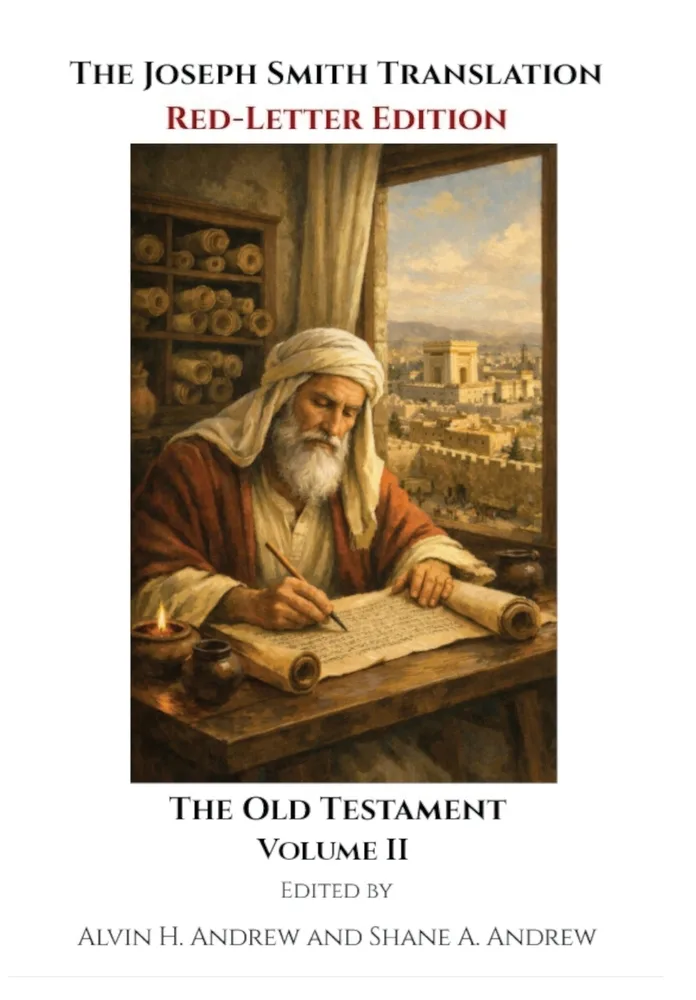 The book of Jeremiah is a case study for following the Prophet, or in the case of the Israelites, for not following the Prophet. Much of the Old Testament itself qualifies for a similar epitaph. It was in the complicated political and religious environment shown in Part 1 that Jeremiah, and several other prophets were called to advise, warn, rebuke, and call to repentance the rulers and people of Judah. The Book of Mormon prophet Nephi teaches “For it came to pass in the commencement of the first year of the reign of Zedekiah, king of Judah, (my father, Lehi, having dwelt at Jerusalem in all his days); and in that same year there came many prophets, prophesying unto the people that they must repent, or the great city Jerusalem must be destroyed.1” (1 Nephi 1:4; italics are mine)
Jeremiah and other prophets preached to Judah that if they surrendered to Nebuchadnezzar II the king of Babylon, they would survive. This was considered seditious talk by influential members of the House of David and many citizens of Judah. Such talk caused loyalties to the King of Judah, and to the Lord and His prophets, to shift and shuffle, to wax and wane as the winds of the East became a harsh reality for all of Judah.
Judah had a choice to make, submit to Babylon or run to the Egyptians for help. If they chose correctly, they would live, If they chose incorrectly, they would die or be taken captive. They chose wrong by going to Egypt for assistance which itself was defeated in 605 BC at the battle of Carchemish. As a result of making the wrong decisions once again, by not listening to the prophets, the influential and important people of Judah were slaughtered or carried away captive into Babylon for about 70 years.
It is uncertain how many prophets were operating in Judah at the time, but we know there were at least six whose ministries overlapped or were contemporary with Jeremiah. They included Nahum (possibly) (c. 650-612 BCE), Zephaniah (c. 640-609 BCE), Huldah the prophetess (c. 622 BCE), Jeremiah (c. 627-after 586 BCE), Urijah (c. 609-598 BCE), and Lehi (c. 605-597 BCE). The prophet Habakkuk may also have been present, but this is debated. Perhaps Ishmael was somehow involved as well, which could account for his willingness to take his family into the wilderness to join Lehi’s little band.
Jeremiah and the Joseph Smith Translation
In the Joseph Smith Translation (JST), 14 of Jeremiah’s 52 chapters were altered. Chapters with modifications include 2, 17, 18, 25-27, 29, 30, 34-37, 42, and 44. Generally, the modified chapters contained very few changes. However, the changes that were made clarified passages by grammatically altering words, creating a shift in intent or audience. This had the effect of more clearly depicting the intent behind the messages themselves.
Following are all the JST changes found in Jeremiah. Incidentally, Joseph Smith marked the book of Lamentations by writing “The Lamentations of Jeremiah is Correct” and therefore made no changes to the book. Some scholars may argue the fact, but by Joseph making that statement, it settles the debate over the authorship of Lamentations, at least for me.
Jeremiah 2:24
24 A wild ass used to the wilderness, that snuffeth up the wind at her pleasure; in her occasion who can turn her away? all they that seek her will not weary themselves; in her month they shall not find her.
In this verse, the “wild ass” is Judah who does what she chooses with no regard for the message of the prophets who are among those that seek her and “shall not find her.”
Jeremiah 17:5
5 Thus saith the Lord; Cursed be the man that trusteth in man, and maketh flesh his arm, and whose heart departeth from the Lord.
This phrase was modified because the H. & E. Phinney bible used for the JST printed it as “Thus saith the Lord, Cursed be them an that trusteth in man, …”. The fact that Joseph caught and corrected this error gives us some insight into the thoroughness of his work.
Jeremiah 18:8, 10, 13-16
8 If that nation, against whom I have pronounced, turn from their evil, I will withhold repent of the evil that I thought to do unto them.
10 If it do evil in my sight, that it obey not my voice, then I will withhold repent of the good, wherewith I said I would benefit them.
13 Therefore thus saith the Lord; Ask ye now among the heathen, who hath heard such things; the virgin of Israel hath done a very horrible thing.
14 Will you not a man leave the snow of the fields of Lebanon; which cometh from the rock of the field? or shall not the cold flowing waters that come from another place from the rock, be forsaken?
15 Because my people hath forgotten me, they have burned incense to vanity, and they have caused them to stumble in their ways from the ancient paths, to walk in paths, in a way not cast up;
16 To make their land desolate, and a perpetual hissing; every one that passeth thereby shall be astonished, and wag his head.
This passage in Jeremiah 18 once again alters the concept of the Lord repenting for His actions. It is replaced with a more correct view of the Lord withholding, or not withholding, punishment and blessings. We saw this before in Exodus where on multiple occasions the King James Bible (KJB) stated that the Lord “repented” of some of his actions. Repenting suggests wrongdoing, which is never the case with the Lord. Similar changes were made to Jeremiah 26:3, 13, 19; and 42:10.
Jeremiah 25:
31 A noise shall come even to the ends of the earth; for the Lord hath a controversy with the nations, he will plead with all flesh; he will give the them that are wicked to the sword, saith the Lord.
This JST verse simplifies the phrase “them that are.”
Jeremiah 26:3-6, 13
3 If so be they will hearken, and turn every man from his evil way and repent, I will turn away that I may repent me of the evil which I purpose to do unto them, because of the evil of their doing. doings.
4 And thou shalt say unto them, Thus saith the Lord; If ye will not hearken to me, to walk in my law, which I have set before you,
5 To hearken to the words of my servants, the prophets, whom I sent unto you, commanding them to rise both rising up early and sending them; but ye have not hearkened;
6 Then will I make this house like Shiloh, and will make this city a curse to all the nations of the earth; for ye have not hearkened unto my servants, the prophets.
13 Therefore now, amend your ways and your doings, and obey the voice of the Lord your God, and repent, and the Lord will turn away repent him of the evil that he hath pronounced against you.
Jeremiah 42:10
10 If ye will still abide in this land, then will I build you, and not pull you down; and I will plant you, and not pluck you up; and I will turn away for I repent me of the evil that I have done unto you.
The verses above again modify the repenting concept by rightfully taking it from the Lord and placing it upon the people being addressed. At the same time in Jeremiah 25:6, the Prophet Joseph explains the reason for nations being cursed.
Jeremiah 26: 16-23
16 Then said the princes and all the people unto the priests and to the prophets; This man is not worthy to die: for he hath spoken to us in the name of the Lord our God.
17 Then rose up certain of the elders of the land, and spake to all the assembly of the people, saying,
18 Micah the Morasthite prophesied in the days of Hezekiah king of Judah, and spake to all the people of Judah, saying, Thus saith the Lord of hosts; Zion shall be plowed like a field, and Jerusalem shall become heaps, and the mountain of the house of the Lord as the high places of a forest.
19 Did Hezekiah, king of Judah, and all Judah, put him at all to death? Did did he not fear the Lord, and besought the Lord and repented, and the Lord turned away repented him of the evil which he had pronounced against them? Thus by putting Jeremiah to death we might might we procure great evil against our souls.
20 But And there was also a man among the priests, rose up and said, that that prophesied in the name of the Lord, Urijah the son of Shemaiah of Kirjathjearim, who prophesied against this city, and against this land, according to all the words of Jeremiah;
21 And when Jehoiakim the king, with all his mighty men, and all the princes, heard his words, the king sought to put him to death; but when Urijah heard it, he was afraid, and fled, and went into Egypt;
22 And Jehoiakim the king sent men into Egypt, namely, Elnathan the son of Achbor, and certain men with him into Egypt.
23 And they fetched forth Urijah out of Egypt, and brought him unto Jehoiakim the king; who slew him with the sword, and cast his dead body into the graves of the common people.
The JST verses in Jeremiah 26:16-23 are interesting in a number of ways. First, in verses 16-17 we get a picture of the controversy among the leading figures in Judah on how they should handle this pesky and seditious prophet Jeremiah. They recalled a similar circumstance that King Hezekiah faced when the prophet Micah the Morashite (Micah 3) warned the King at the time the Assyrians were mounting a campaign against Jerusalem. Hezekiah responded by repenting thus gaining the Lord’s promise to protect Jerusalem from the Assyrians at that time. (Isaiah 37:33-35)
Second, the influential people of Jeremiah’s time were not ignorant of the positive outcome of Hezekiah’s rule. Verses 18-19 show us that they were very familiar with the story of Hezekiah, Micah, Isaiah and of the preservation of Jerusalem. Since there was only about 130 years between Hezekiah and Zedekiah’s reign, it is quite possible that their grandparents or great-grandparents were present during the time of Hezekiah. The influential people of Judah at the time of Jeremiah would also have been familiar with the history of the Kings2 subsequent to Hezekiah, Mannaseh (2 Kgs 21:1-18; 2 Chr 33:1-20), Amon (2 Kgs 21:19–26; 2 Chr 33:21–25), Josiah (a righteous King; 2 Kgs 22:1–23:30; 2 Chr 34:1–35:27), Jehoahaz/ Jehoiakim (2 Kgs 23:31–24:7; 2 Chr 36:1–8), Jehoiachin (2 Kgs 24:8–16; 2 Chr 36:9–10; first king to go into Babylonian captivity) and Zedekiah (2 Kgs 24:17–25:21; 2 Chr 36:11–21).
Third, the JST makes it clear that a “a man among the priests, rose up,” and related the tale of the prophet Urijah, a contemporary of Jeremiah who had also been prophesying seditiously. This priest was obviously part of those who advocated resistance to Babylonia and flight into Egypt and may have been trying to justify killing Jeremiah. When Urijah was threatened by Jehoiakim and his collaborators, he fled into Egypt, where he was hunted down by the King’s guard, returned to Jerusalem and executed. Hugh Nibley3suggests this may have been the same prophet referred to in the Lachish Letters.4 Under those conditions, it is not hard to see how the Prophet Lehi, as part of Jeremiah’s group, was also held in contempt and was to be tried and executed for sedition.
Jeremiah 27:7
7 And all nations shall serve him, and his son, and his son’s son, until the very time their end of his land come; and after that then many nations, and great kings shall serve themselves of them. him.
Verse 7 above is a relatively simple JST alteration, but it does clarify for us that the Lord is speaking to Jeremiah about the end of Nebuchadnezzar’s reign and implying how other nations shall take advantage of the fall of Babylon. The Lord went on to describe the disposition of those who submit to the Babylonian King and those who do not.
The next few verses discuss a peculiar alteration made by the JST and a phrase debated by scholars for a long time, “rising early.”
Jeremiah 29:19
19 Because they have not hearkened to my words, saith the Lord, which I sent unto them by my servants, the prophets, commanding them to rise rising up early and sending them; but you ye would not hear, saith the Lord.
Jeremiah 35:14-15
14 The words of Jonadab the son of Rechab, that he commanded his sons not to drink wine, are performed; for unto this day they drink none, but obey their father’s commandment; notwithstanding I have spoken unto you, commanding you to rise up rising early and speaking; but ye hearkened not unto me.
15 I have sent also unto you all my servants the prophets, commanding them to rise rising up early and sending them, saying, Return ye now every man from his evil way, and amend your doings, and go not after other gods to serve them, and ye shall dwell in the land which I have given to you and to your fathers; but ye have not inclined your ear, nor hearkened unto me.
Jeremiah 44:4
4 Howbeit I sent unto you all my servants the prophets, commanding them to rise rising early and sending them, saying, Oh, do not this abominable thing that I hate.
The phrase “rising early” or “rising up early” (Hebrew root: shakam, שָׁכַם, meaning to start early in the morning, to be diligent, or to do something with earnest urgency) is one of the most distinctive stylistic markers in the book of Jeremiah. Within Jeremiah it appears eleven times (e.g., Jeremiah 7:13, 7:25, 11:7, 25:3, 25:4, 26:5, 29:19, 32:33, 35:14, 35:15, 44:4). In some instances, the KJB uses the phrase to describe God rising early to send prophets; in others, it describes the prophets rising early to deliver the word.
In ancient Near Eastern culture and Biblical Hebrew idiom, rising early in the morning was a physical manifestation of diligence, eagerness, unwearied persistence, and deep earnestness. When a person woke up before dawn to accomplish a task, it showed that the task was a matter of supreme importance and priority.
Across the verses that are altered in the JST (Jeremiah 26:5, 35:15, 29:19, and 44:4), the King James text used the exact same literal participle phrase (rising up early and sending them), which grammatically blurs the line between the actions of God and the actions of the messengers. By systematically inserting “commanding them to,” Joseph Smith’s revision resolves any ambiguity and makes it clear that the urgency, timing, and initiative originated as a direct command from God. Joseph would not have understood the Hebrew idiom. Once again he modified a KJB passage to read like the Hebrew idiom suggests, which is that God was eager to have Judah repent and return to Him and therefore commanded His messengers to get up and get going.
BYU Professor Monte S. Nyman stated in his article: “The consistency of these revisions suggests Joseph recognized something significant about the expression. Yet the variation in when and how he changed it may indicate that this understanding was not applied mechanically to every occurrence.”5
Jeremiah 30:12-15
12 For thus saith the Lord, Thy bruise is not incurable, although their wounds are grievous. and thy wound is grievous.
13 Is there There is none to plead thy cause, that thou mayest be bound up? Hast thou hast no healing medicines?
14 Have all All thy lovers have forgotten thee? Do they not seek thee? not; For for I have wounded thee with the wound of an enemy, with the chastisement of a cruel one, for the multitude of thine iniquity; because thy sins are were increased.
15 Why criest thou for thine affliction, is thy sorrow is incurable? It was for the multitude of thine iniquities, and iniquity; because thy sins are were increased I have done these things unto thee.
Jeremiah 30:12-15 is a beautiful and poetic passage where the JST corrects our understanding of the verses, clarifying the concept of repentance and the power of the Atonement. The Lord was pleading with Judah in this instance and asking them why they do not seek healing through Him.
Jeremiah 34:15
15 But And ye were now turned, and had done right in my sight, in proclaiming liberty every man to his neighbour; and ye had made a covenant before me in the house which is called by my name;
There is nothing obviously important with the JST change in verse 15 above. However, by changing the conjunctive “And,” for the conjunctive “But” the JST breaks the continuous narrative chain to signal a logical turning point. It forces the reader to pause and evaluate the moral flip-flop of King Zedekiah’s people. (Reading the surrounding verses will help in seeing the complete picture here.)
Jeremiah 36:30
30 Therefore thus saith the Lord unto of Jehoiakim king of Judah; He shall have none to sit upon the throne of David; and his dead body shall be cast out in the day to the heat, and in the night to the frost.
Replacing the preposition “of” by the preposition “unto” in the above verse dramatically alters the grammar by removing Jehoiakim as a third-person object or topic in a prophecy delivered to a wider audience. It transforms the clause into a direct, targeted message aimed directly at Jehoiakim. It is unlikely at this point in his life that Joseph Smith understood much about grammar. However, this verse and the verse Jeremiah 34:15, markedly create important grammatical shifts that bring into focus the intent of those verses.
Jeremiah 37:16, 21
16 And When Jeremiah was entered into the dungeon, and into the cabins, and he Jeremiah had remained there many days;
By replacing “When“ with the coordinating conjunction “And“, the JST elevates verse 16 into a standalone, complete sentence. This transforms the statement from an introductory time marker into a primary narrative event: Jeremiah was put into the dungeon, and he remained there for a long time.
21 And now I have this day declared it to you, that but ye have not obeyed the voice of the Lord your God, nor any thing for the which he hath sent me unto you.
In the JST grammatical alterations of verse 21, Jeremiah is no longer saying, “I gave you God’s message, but you aren’t listening.” He is saying, “What I am declaring to you today is the very fact that you have failed to obey.” It transforms his statement into an explicit accusation and indictment of their present condition.
The following and final JST change in Jeremiah ironically serves as Judah’s final epitaph.
Jeremiah 42:14
14 Saying, No; but we will go into the land of Egypt, where we shall see no war, nor hear the sound of the trumpet, nor have hunger for want of bread; and there will we dwell;
The book of Jeremiah has beautifully illustrated once again, the inspiration given to the Prophet Joseph Smith as he continued in his role as Prophet, Seer, Revelator, and Translator.
1. Scholarly research indicates that Zedikiah began to reign in Judah in the year 597 BC.2. The Babylonian Talmud. Translated by Isidore Epstein. Bava Batra 15a. London: Soncino Press, 1935–1952. The Babylonian Talmud attributes the book of Kings to Jeremiah and the book of Chronicles to Ezra. Originally each book as compiled by those writers was a single book. The Book of Kings written ירמיה כתב ספרו וספר מלכים וקינות, translated as “Jeremiah wrote his book, the Book of Kings, and Lamentations.” The title for Chronicles was written עזרא כתב ספרו ויחס של דברי הימים עד לו, and translates to “Ezra wrote his book and the genealogy of Chronicles up to his time.” 3. Nibley, Hugh W. “The Lachish Letters.” In The Prophetic Book of Mormon, 380–406. Salt Lake City: Deseret Book; Provo, UT: Foundation for Ancient Research and Mormon Studies, 1989.4. “The Lachish Letters.” Bnei Israel. https://bneiisrael.com/story/lachish-letters.5. Monte S. Nyman, “The Contribution of the JST to Understanding the Old Testament Prophets,” in The Joseph Smith Translation: The Restoration of Plain and Precious Truths, ed. Monte S. Nyman and Robert L. Millet (Provo, UT: Religious Studies Center, Brigham Young University, 1985), 121–46.