PVcase launches early-stage feasibility and design software
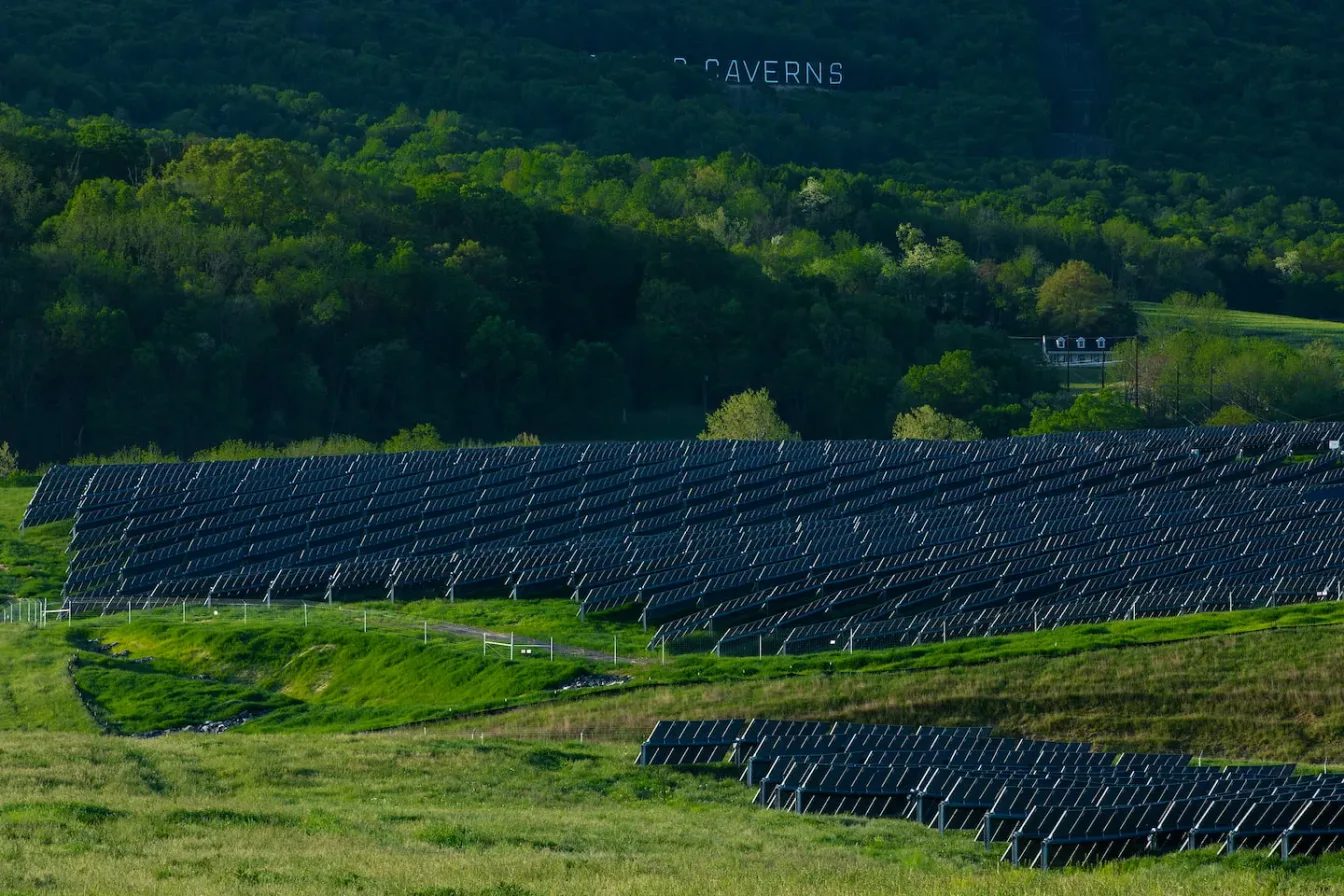
Solar development platform provider PVCase has launched PVcase Concept, a new cloud-based software tool for early-stage site feasibility and design.
According to the company, the new software addresses “the missing middle” of the solar development process, sitting between the site selection process and more detailed engineering of a project that is already finalized, and also serves as a filter to give utility-scale development teams an organized way to arrive at a “go or no-go” decision about a project.
“Every site in a pipeline starts as a ‘maybe,’ and too many stay that way too long, pulling engineering time into projects that won’t get built,” said PVcase CEO David Trainavicius in a statement. “PVcase Concept closes the gap between finding a site and engineering it, with a single source of truth for the go/no-go decision. The right sites move from maybe to megawatts faster, and fewer engineering hours are lost on the rest.”
The software helps development teams after the site screening process by bringing in site data from PVcase Prospect software or importing their own KML, KMZ, or shapefiles, and then using the software to conduct buildable area analysis based on GIS data, produce a preliminary design and compare layout options based on financial metrics like CapEx and LCOE.
If the decision is made to move forward on a project, the preliminary design and underlying data can be moved into PVcase Ground Mount to allow a developer’s engineering team to complete a final design.
Solving project attrition
In an interview with pv magazine USA, PVcase senior VP of engineering Karen Djoury explained that project attrition is becoming a major concern for developers, with 46% of respondents to the company’s recent survey on the state of project development indicating that at least half their projects never reach construction.
Djoury said that in many cases, developers have access to the information that would help developers reject a site before dedicating too many resources, but that data is not well-organized. “It’s not that there’s a lack of data but it’s a lack of control of data,” she explained. “The go/no-go decision can become hard if you can’t keep track of your assumptions all the time.”
Djoury’s words are a call-back to the “single source of truth” Trainavicius discussed. The PVcase Concept software is designed to collect information about policy rules, geography, prospective equipment, costs and production estimates in a single dashboard that can give development teams a clear idea of whether a project will face major obstacles to completion.
PVcase product manager JP Baertson presented a demo of the new Concept software to pv magazine USA, in which he showed how the software displayed data about an example project in western Michigan.
Given a group of polygons overlaid on an aerial map, the software identified buildable and non-buildable areas as defined by underlying GIS data from PVcase’s Prospect database, adding setbacks based on site features and local regulations and identifying local transmission lines and points of interconnection.
Another location-based feature of the software highlights government regulations like Clean Water Act restrictions that apply to the site, and also provides an AI-generated indication of local community sentiment, gleaned from news postings and public meeting minutes.
Baertson pointed out that policy considerations have become more important to developers, citing an example of a PVcase customer whose utility-scale project pipeline has tripled in recent years. “Guess what else has tripled?” he asked. “The amount of attrition. They’re still seeing the same amount actually get to construction-ready. And so that level of go/no-go decision is almost always tripping them up at the policy level, not necessarily the design or cost-of-materials level. And that’s the type of thing we want to make sure we’re surfacing as early as possible.”
The software allows developers to use the automatically generated information or add manual overrides to the buildable areas, for example, in places where landowners are interested in removing a stand or trees, or where the software identifies a slope that could be graded without a great deal of cost.
At that point, the software can automatically fill the buildable areas of the site with a proposed system layout with module rows, inverters and other equipment, based on a specified Ground Coverage Ratio (GCR). The software is pre-populated with a component database consisting of thousands of entries that allows developers to choose the equipment they wish to spec out for the site — and change that equipment and GCR on the fly to see how it affects the outcomes.
In PVcase Concept, those outcomes are measured in system size and total expected annual energy yield. The system can also generate expected costs for capital and operating expenses, ultimately providing an estimated number for levelized cost of energy (LCOE). All of that is also subject to manual adjustment based on the developer’s specific costs and what-if analysis.
Each mix of preliminary design and estimated financial performance in the software can be saved as a scenario, and these scenarios are what provides the software’s users with the ability to make an ultimate decision about a project.
“This is a way for [developers] to look at multiple iterations of this for the team to make financial calls, go/no-go decisions across the actual landowners,” Baertson explained. “And then the reality of ‘Can we move this forward? Let’s figure that out now before we’ve paid our consultant, before we’ve paid our engineering team to do this, and bring in some of those decisions at this stage that really bring reality to us sooner versus bad news down the line after more than a couple thousand dollars have been spent.’”
If the team chooses to move forward with the project, the Concept software allows a scenario to be output as a DXF file, which Baertson described as “turnkey perfect for a PVcase Ground Mount CAD tool,” or any other CAD tool.
The PVcase Concept software is available worldwide as a standalone solution or integrated with PVcase Prospect in the United States starting on Nov. 16, 2026. PVcase executives and engineers will be on hand at RE+ 2026 to discuss the software.