The Prompting the Gave me Back My Father
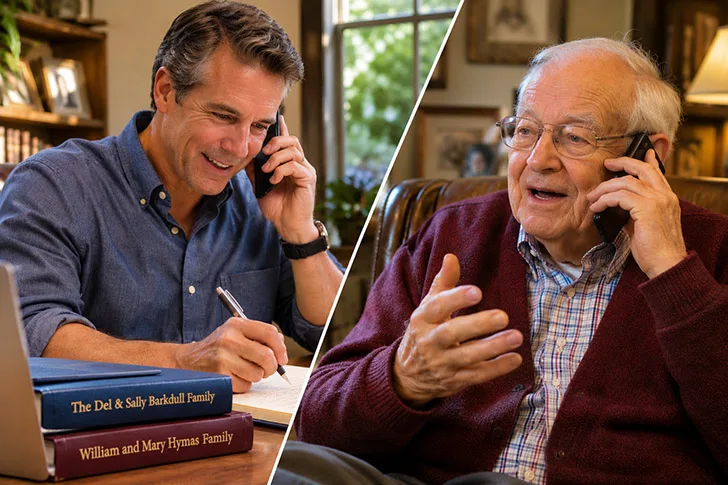
Sometimes the Lord’s quietest promptings lead to blessings far greater than anything we could have imagined. When David Barkdull felt impressed one Sunday morning to tackle a long-abandoned project involving old cassette recordings of his grandparents, he had no idea that he was about to embark on one of the most meaningful experiences of his life. What began as an effort to preserve generations of family history soon became something much more personal—a remarkable journey into the past that brought him closer to his aging father. Only later would David understand just how perfectly timed that prompting had been.
If you have family history stories to share, miracles, promptings, “coincidences,” small-world connections in your family history research, please share them here. Please let us know your name and where you are from.
January 2019
I was sitting in Priesthood listening to a lesson about following promptings we may have in our life when suddenly and unexpectedly I felt my own prompting that I needed to transcribe eight ninety-minute cassette tapes of interviews with my grandparents, Nate and Pearl Hymas Barkdull, that had been recorded by their sons, Del and Reed Barkdull, in the 1970s. I also had about twenty hours of interviews I had recorded with my dad and his brother.
However, almost immediately, I began to question this impression. Had I genuinely been prompted to do this, or had it simply been a random thought?
Fifteen years earlier, I had started this transcription project but had given up. It was difficult and tedious— and besides, I was a far better procrastinator than transcriber. But this time, I decided it was what I call an “either/or” situation. What I had felt either happened or it hadn’t. It was that simple, that black and white.
So, I concluded it had happened.
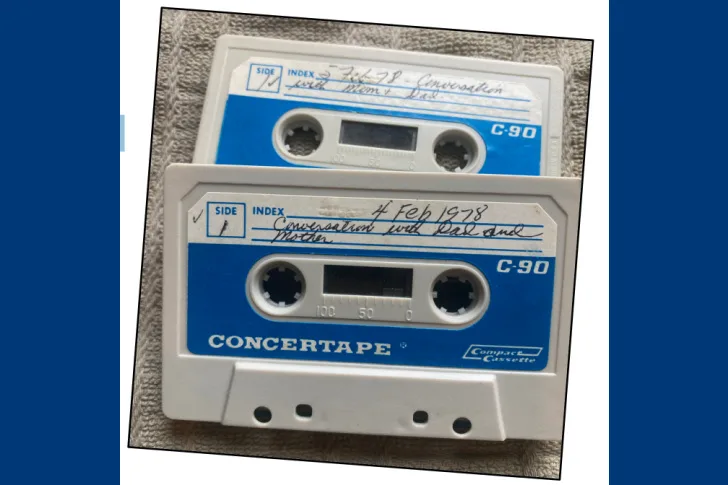
5 Feb 1978: Two of the eight tape recorders Del & Reed Barkdull made interviewing their parents’ oral history.
With renewed motivation, I set to work. Within a few weeks, I found an online transcription service that quickly finished the project. Suddenly, I had well over a thousand typed pages of family stories spanning more than 150 years.
But as I began reviewing, organizing, and editing the transcripts, I discovered a problem. Much of what my grandparents talked about made little or no sense to me. Many of the names and places were unfamiliar, and the context behind many of their stories was missing. I hadn’t grown up in Bear Lake, Idaho, and I simply didn’t know who many of these people were.
For the next few months, I plodded along, editing and expanding the stories as best I could. Before long, however, I found myself calling my 86-year-old father in Lindon, Utah, almost every night. I would tell him what I had been working on that day and pepper him with questions.
I was amazed by Dad’s ability to recall names, places, relationships, and the circumstances surrounding events from decades earlier. He had grown up in Bear Lake and knew his parents’ stories well. His mother was a social gadfly who often took Dad and his brother Reed along when she visited friends and relatives. While the adults talked, Dad would sit somewhere out of the way and listen. Apparently, far more of those conversations had lodged in his memory than anyone realized.
He had been a sponge for family lore.
For nearly six months, Dad and I traveled backward through time together. Night after night, we talked about his parents, grandparents, aunts, uncles, neighbors, farms, towns, hardships, marriages, tragedies, and the countless small events that make up a family’s history.
Something else happened during those months.
Dad and I had grown close again.
Before this project began, our relationship had been slowly dwindling. Dad was getting older, and his world seemed to be growing smaller. Fewer things interested him, and finding anything meaningful to talk about besides the weather had become increasingly difficult. But these family stories changed that. He had something I greatly needed, and I had rekindled something that awakened an old interest. We had a reason to talk again.
Six months after that Sunday morning in January, we finished reviewing the transcripts.
About a week later, in early July, I called Dad once again. This time, I wanted to step back from the individual stories and talk about what they collectively meant.
One thing had become impossible for me to ignore: the enormous disparity between my ancestors’ lives and my own. Their opportunities for education, economic advancement, health care, and social mobility had been profoundly different from mine. Intellectually, I understood many of the historical reasons for those differences. But at a deeper level, one question kept bothering me:
Why had I been so fortunate and blessed?
I had a couple of ideas, but before sharing them, I wanted to hear what Dad thought.
We talked for a long time. Eventually, we concluded that much of life could be understood through the interaction of three things:
Circumstances. Opportunities. Choices.
The circumstances we are born into often determine the opportunities available to us. Those opportunities influence the choices we are able to make. And our choices, in turn, help determine and shape what we become.
I didn’t know it then, but this would be the last conversation I would ever have with my father.
Two weeks later, on Tuesday morning, July 30, I was at a playground with my daughter and little grandson when my phone rang. It was my sister. Her voice was somber. “David, Dad has passed away.” I stood there with the phone to my ear, trying to absorb what she had just said. Almost immediately, I began thinking about the last time I had spoken with Dad. Had I left anything unsaid? Was there something I should have asked him? Something I should have done?
And then, almost like the gears of a giant clock turning and falling into place, the previous six months suddenly came full circle and made sense.
A quiet impression in church.
Eight old cassette tapes.
More than a thousand pages of family stories.
Six months of nightly questions and conversations with my father.
And we had finished.
Had I dismissed that impression back in January as nothing more than a passing impulse, I would have lost far more than a transcription project. Dad carried in his memory the people, places, relationships, and circumstances that gave those old recordings meaning. Much of that knowledge would have passed away with him.
But it hadn’t. I had listened.
And because I had listened, Dad and I had renewed our friendship. Together, we fleshed out the stories of our ancestors, and in the process, something happened that I had never anticipated: those stories had also breathed new life into our relationship as well.
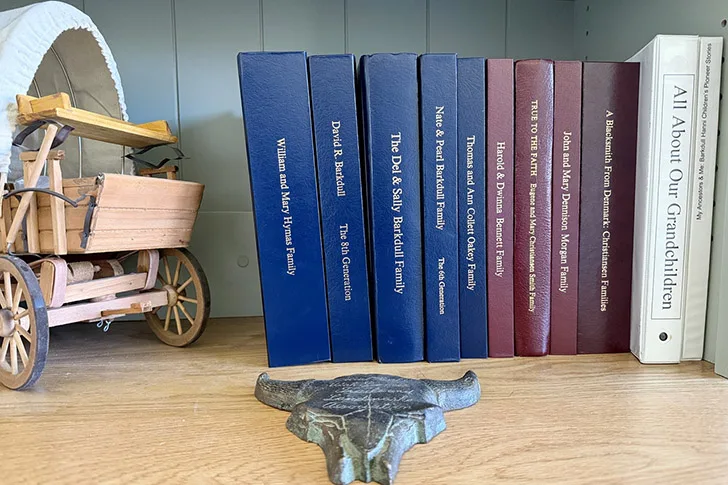
It has now been seven years since that quiet prompting. I have tried to make good use of those years. From those recordings, our conversations, and the research that followed, I have written eight substantial books about the lives of my direct-line pioneer ancestors, with a few more still to go.
Sometimes I think back to that Sunday morning in January 2019 and the question I asked myself: Was what I felt actually a prompting from beyond the veil, or merely a random thought that had wandered into my mind?
I no longer wonder.
That experience also taught me something about the very principle Dad and I discussed during our final conversation.
I could not control the fact that I was sitting in church that morning when the impression came. Nor could I control the fact that, six months later, my father would be gone.
But between those two circumstances was an opportunity. And I had made a choice.
Because of that choice, my children and grandchildren—and, I hope, generations yet to come— will be able to know something of the people who came before them: who they were, how they lived, what they endured, and the choices they made. And perhaps, in knowing their stories, my posterity will be better prepared to recognize the opportunities in their own lives and make choices worthy of those who came before them.
Circumstances. Opportunities. Choices.
–David Barkdull
Heber City, Utah
If you have family history stories to share, miracles, promptings, “coincidences,” small-world connections in your family history research, please share them here. Please let us know your name and where you are from.