The Weekly Wrap: This Mayor Launched A New Group To Help U.S. Small Towns Join Forces
(Photo by Derek Zhang / Unsplash)
Welcome back to The Weekly Wrap, our Friday roundup of stories that explain the problems oppressing people in cities and elevate the solutions that bring us closer to economic, environmental, and social justice. If you enjoy this newsletter, share it with a friend or colleague and tell them to subscribe.
This Mayor Launched A New Group To Help U.S. Small Towns Lead the Clean Energy Transition
Towns with populations of less than 30,000 residents are left out of the U.S. Conference of Mayors. That’s a problem, says Mondale Robinson, the first Black mayor of Enfield, North Carolina — a majority-Black town of about 2,000 near the poverty line — because small towns make up 93% of all incorporated municipalities and are home to 60 million Americans. Yet 90% of philanthropy flows to urban areas, and most foundations overlook communities like his.
Canary Media reports that Robinson has big clean energy ambitions for Enfield, including a solar farm to power the entire town and a thermal energy network to cut residents’ electric bills. But with no grant writers or policy staff, the barriers are steep. So Robinson, a longtime political organizer, is launching the National Conference of Small Cities and Rural Mayors to give small towns collective leverage on federal policy, philanthropy, and clean energy investment. He’s recruiting the first 100 founding mayors. “One small town can be ignored,” he said. “Thousands of organized small towns become a national constituency.”
Bay Area Transit On The Line
Could a ballot measure help stop BART’s transit death spiral?
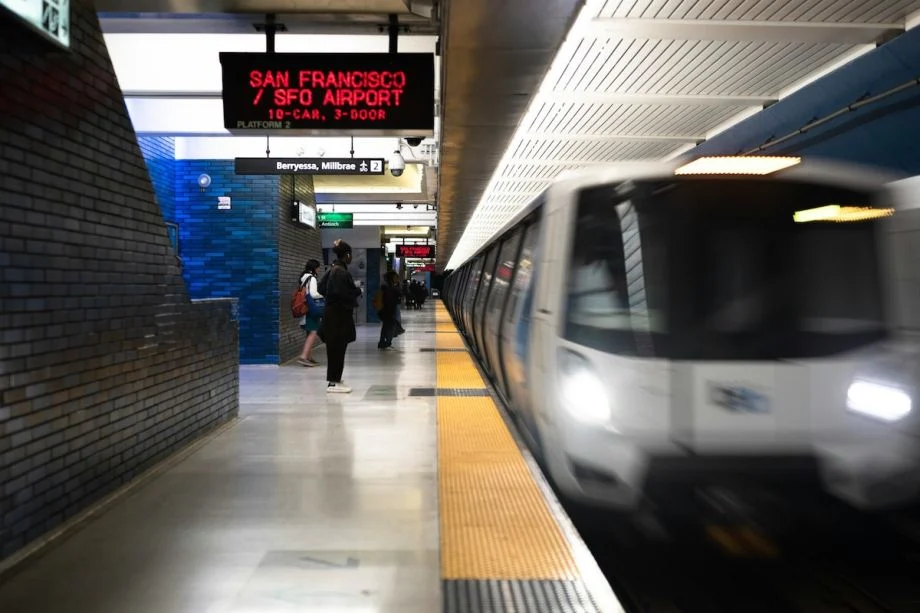
The San Francisco Bay Area could cut 70% of its service and close 30% of its stations due to lack of revenue, Mother Jones reports. The funding gap stems from a cratering of ridership at the beginning of the Covid-19 pandemic, from which the transit system has not fully recuperated. The region’s transit systems are projected to have a combined $800 million deficit by next year.
In November, voters in four Bay Area counties — Alameda, Contra Costa, San Mateo, and Santa Clara — will decide via a ballot measure whether to use a sales tax to raise an additional $1 billion a year for the transit system.
ICE Shooting Rocks New York City
On Oct. 8, an ICE agent shot 28-year-old Oscar Belgal in the neck in the Marble Hill neighborhood of the Bronx. A plainclothes ICE agent had fired seven rounds into the car Belgal was driving while his five-year-old child was in the backseat. According to a court filing from Belgal’s attorney, he still has a bullet lodged in his neck and is not receiving adequate care at the Manhattan Detention Center. The attorney’s filing said the ICE agent never identified himself and that ICE did not have a valid warrant to arrest Belgal.
A protest on the day of the shooting was violently suppressed by NYPD officers, leading to renewed calls for Mayor Zohran Mamdani to fire police commissioner Jessica Tisch, a request he quickly shot down. Mamdani has been criticized for his apparent lack of control over the NYPD.
Brazilian Elections Lean Right with Amazon on the Line
Flavio Bolsonaro, the son of far-right ex-president Jair Bolsonaro, won the first round of Brazilian presidential elections against incumbent Lula da Silva on Oct. 4, leading to a runoff election on Oct. 25. A win by Bolsonaro would mean nearly all of South America has elected far-right leaders in just a few short years. It could also mean devastation of the Amazon rainforest, climate scientists told Grist.
The younger Bolsonaro has campaigned on a softer version of his father’s deregulatory, agribusiness-friendly agenda. He has pledged to cut “illegal” deforestation but speed up legal deforestation through faster permitting. Carbon emissions doubled in 2019 and 2020 under the elder Bolsonaro, according to Grist.
The Amazon contains 175 billion metric tons of carbon; a 2021 Nature study found the Amazon had gone from an absorber of carbon to a carbon emitter due to deforestation. A climate scientist told Grist that more deforestation could cause Brazil to “reach the danger zone by the middle or end of the 2030s.”
Electric Bills Stabilize Ahead of Midterms
Heatmap reports that the average price of electricity per kilowatt hour decreased from 20 cents to 19.6 cents in the past year, but cautions that this minor shift is the result of California moving its climate credit to subsidize consumers during hotter, more high demand months. Without the credit, average prices across the country would have been flat.
According to Heatmap’s tracker, the average utility bill is up 33% in the past five years. Energy costs, which were trending up and were exacerbated by the Iran war, have been a charged topic ahead of next month’s midterm elections. In New York, where energy bill growth has outpaced the national average, Gov. Kathy Hochul has been blamed by Nassau County Executive Bruce Blakeman for rising electric costs.
MORE NEWS
-
Data center opposition spawns a surge of first-time candidates. Bloomberg Citylab
-
What Flock actually costs cities across the country. WIRED
-
NYC updates homeless encampment policy. City Limits
-
Trump just effectively killed a popular solar energy program for rural America. Grist
-
The tenant activist at the center of Mamdani’s housing gamble. Politico
-
NYC comptroller walks back pledge to buy Israel bonds. NY 1
-
How one Chicago program is diversifying the solar workforce. Canary Media
-
New Mexico is finding out that successfully providing universal child care requires giving teachers a living wage. Truthout
OPPORTUNITIES & RESOURCES
-
Visa Foundation is providing grants to nonprofit Entrepreneurial Support Organizations that provide direct services to small and micro businesses. Apply by Oct. 21.
-
Microsoft Community-First Grants are accepting applications for funding support for nonprofits serving King County, Washington, advancing civic life; education and workforce development, housing, human services, and basic needs; and sustainability and transportation. Apply by Oct. 23.
-
Max and Victoria Dreyfus Foundation is considering grant requests from community-based nonprofits including museums, cultural and performing arts programs, schools and hospitals, youth, senior, and disability programs, environmental and wildlife protection. Apply by Nov. 10.
-
The OpenAI Foundation and The Rockefeller Foundation’s new $50 million Cities Deliver initiative is supporting organizations working with city governments to put AI to work to improve public health, expand economic mobility, strengthen environmental resilience, and strengthen civic engagement. Apply by Nov. 29.
-
The America250 Community Futures Challenge is accepting applications from 501(c)(3) nonprofits advancing workforce development, economic mobility, public infrastructure, civic tech, entrepreneurship, community development, and more. Apply by Nov. 30.
Roshan Abraham is a contributing editor for housing and homelessness at Next City. Based in Queens, New York, he has written extensively about city policy, including prisons and policing, housing and homelessness for The Guardian, The New York Times, Slate, The Baffler, Village Voice, The Verge, Pacific Standard, The Appeal, Vice and other outlets. At Vice, he was formerly a staff writer covering the housing beat. He is a former Open City Fellow and Witness Fellow at the Asian American Writers Workshop and a former Equitable Cities Fellow at Next City.