When Your Doctor Prescribes a Visit to an Art Gallery
The soulful deep greens and browns of British Columbia’s forests weave together with ferns and moss, catching the light through the tops of ancient firs and cedars. The trees sway, and the earth rises and falls among the rocks.
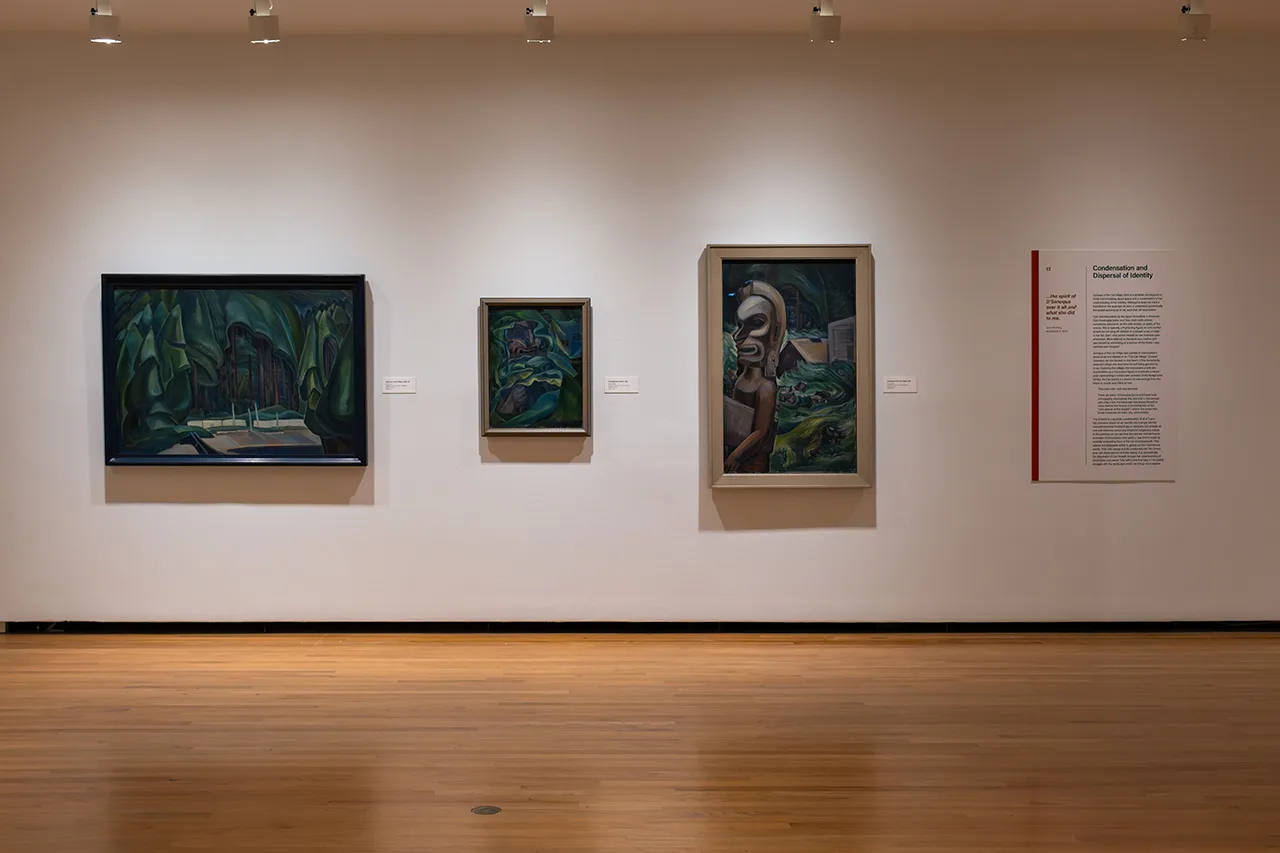
But in this case, the view isn’t from the trail. It is a painting by Canadian artist Emily Carr on display in the Vancouver Art Gallery, and some of those who are experiencing it are doing so because it was prescribed by their health care provider. How they ended up there is the result of a bit of creative thinking that honors the role of art in healing.
In 2025, the gallery partnered with BC Parks Foundation to extend PaRx, Canada’s national nature prescription program, to include the gallery. PaRx is a successful initiative that has included an estimated 2 million prescriptions issued by more than 20,000 health care providers. Typically, these prescriptions are for time outdoors, with added benefits, like free transportation, to reduce barriers to access.
Using art as an entry point into nature as a formal intervention is novel—the first collaboration of its kind between a nature prescription program and an arts institution in the world, according to Sirish Rao, the gallery’s co-CEO and executive director. While art-based prescriptions are gaining in popularity, this program goes a step further, integrating engagement with nature in a gentle, accessible way. Other institutions around the world are looking to the Vancouver Art Gallery program as a model initiative that can be replicated in other communities to support people’s well-being.
An artful approach to treatment
The process starts when a health care provider like a doctor, nurse, or therapist determines that a patient might benefit from a prescription to spend time in nature, including around the nature-inspired visual art at the gallery. The benefits can be many: combating isolation, engaging mentally and physically during a gallery visit, and experiencing awe and beauty.
The prescription to Vancouver Art Gallery includes free admission for the prescription holder and a guest, as well as a printed guide that offers prompts and questions to consider—for example, to notice the varied shades of green Carr used, or imagine a walk along a trail she painted—along with research about the benefits of experiencing nature. Participants are guided through “slow looking” as the act of learning through observation, imagination exercises, and physical movement—yes, swaying in an art gallery is encouraged.
After the visit, guests are invited to continue the immersion at a local nature space, with free carshare minutes to get there if needed. The art prescription guide suggests nearby parks where participants can walk or hike, extending slow looking from a curated indoor experience to the outdoors if they choose. And they can return to the gallery as often as they like by retaining their original prescription. On site, they can join free workshops, and a coloring book offers a contemplative experience at home.
This is an example of social prescribing, a worldwide movement that serves as a complement to clinical care and typical medication prescriptions by prescribing from a wide range of activities that support physical and mental health. Beyond art galleries and nature walks, this can include music classes, exercise sessions, or gardening programs. The prescription is personal and can be tailored to patients’ needs and interests.
Carla Fry is a West Vancouver psychologist and educator with more than 20 years of clinical experience. She says the art gallery prescription has been a gift for participants, especially those who face physical, mental, social, or even financial or transportation barriers to accessing nature. Many are surprised that they don’t have to pay anything for the experience.
“For them to understand that so many people have come together to create this opportunity, I think that in and of itself is special,” Fry says. “They say, ‘Wow, my community cares.’ The possibility that this exists, it’s available, it’s free—there’s something about that . . . that’s noteworthy.”
Fry is one of the professionals who gives these kinds of prescriptions to her clients. It’s another tool available to promote well-being.
“Of course, I’m never telling them to go. We talk about this as a prescription, but I always present it as ‘here’s an opportunity to meet some of your goals, and here’s what the opportunity looks like,’” she says.
As yet, no one has declined her prescription.
“They’re surprised that something so seemingly simplistic as slowing down and really looking, really living in front of the art or in nature is actually an intervention,” Fry says. “People in our culture are set up to think that growth has got to be painful, growth has got to be difficult, growth has got to be expensive, growth is going to take a long time. When I bring forward an intervention of going to a location, and your job as a client of mine is to appreciate, the first reaction is surprise. It opens up an entire conversation—‘I can just appreciate my life and not always be grinding to make it better.’ It’s a special process for me to witness.”
Awe and nature in community
The goal is to do more than increase the number of people who have exposure to art, though that might be a side effect. The formal prescription to nature through art is designed to reduce stress, anxiety, and social isolation. The ability to bring a guest, as well as the opportunity to experience art with other patrons, is key.
“There are other people there; these aren’t private viewings. But of course, sometimes people don’t feel connected to others in a room. Sometimes they do; sometimes it’s enough to feel that they’re part of a community. But others really benefit from being able to have a shared experience where they can reflect in real time and reflect afterwards,” Fry says.
Paula Toledo is the mental health advisor and lead well-being consultant at Vancouver Art Gallery, leading the Richardson Family Art of Wellbeing Lab. The lab aims to connect the community to art as a means to improve mental and physical well-being, drawing on a collaboration of researchers, scientists, physicians, and Indigenous Elders and healers.
Toledo came to this work through the personal experience of losing her husband and her mother within months, while also caring for her newborn child. That grief and her recovery changed the course of her life and her career in wellness.
“When we encounter something so vast that it transcends our current understanding of the world, it can be very mysterious,” Toledo says:
Sometimes it can be a very positive experience, but other times, like in cases of grief, it can also make you stop and wonder about the mystery behind it. I was in awe and I remember that exact moment where I thought, “Well, if that could happen, then the opposite must also be true.” That’s what the research supports: When we experience awe, it can lead to wonder, which is this mental state of openness and curiosity. Every day I woke up with that sense of curiosity that this might be the day that I turn the corner and collide with good fortune. That experience was so transformative that it led me to actually seek out resources.
Toledo’s health care provider connected her with a social worker who prescribed movement and art in the form of yoga and music classes.
I started to feel more energized and connected to my own self-determination,” she says. “If we look at the research on why social prescribing is so impactful, it’s because it really does encourage self-determination. I started to feel more connected to my community, more connected to my children, connecting to their own wonder, and it became this upward spiral towards healing and towards rebuilding my life.”
Art by prescription
Monica Harrison is one of the many prescription holders who has learned to lean into the peace and beauty of slowing down through the program. She is an educational assistant who works with students with support needs and advocates for their inclusion in schools. She experienced health issues that required her to be on leave from work and that triggered depression and anxiety.
“I’m neurodivergent, so I’m autistic and I have ADHD. I’ve had anxiety my whole life, and I’ve learned a lot of coping mechanisms that help me to control that. But with undiagnosed conditions that have been going on, it has awoken a lot of anxiety, and it makes it hard to manage my mood,” she says.
Harrison met Toledo, who introduced her to the prescription program. What started with Harrison’s immersion in art has resulted in her increasing use of the program in other locations, both indoors and out.
Harrison, who enjoys nature photography, says she was introduced to Carr’s paintings in elementary school, and she fell in love with the local subject matter. Now as an adult, that connection to art has opened new opportunities.
“When we visited the gallery, I was able to discuss paintings and identify what I was feeling. It really allowed me to label what I was feeling more accurately and then think about it. Just through her artwork, it really made me feel nurturing and protection,” she says.
Through other exhibitions at the gallery, Harrison says she found surprise and joy and “a lot of beautiful sensory feelings to my mind and my body and my soul”:
Chronic illnesses [have] made my life very small, with a lot of losses that come with the territory, such as giving up things that I once enjoyed like working, walking in nature, seeing friends, traveling. I found the prescription to be very flexible. You can do it whenever you’re able to. It can give you something specific to try out. You can do it on your own. You can do it with friends and family, and I think it’s a great thing for people with chronic illness. And it can also give those people a practical way to learn how nature connects to positive mental health. It can be something they can build on through a positive experience with their prescription . . . and add to their toolkit.
Fry says she hears two recurring themes from prescription holders: Experiencing art feels immersive, and the process of visiting the gallery—from the prescription as an invitation to the encouragement to engage in “slow looking”—is a special event that makes them feel cared for.
“It’s something different. It’s something novel. It’s something fresh,” she says, whereas doing the same gratitude practices over and over can get repetitive. “It’s a lot more powerful when we add novel opportunities or events or experiences to our practice. For every person that I’ve prescribed this to, it’s been new to them, so it hits that mark really nicely,” she says.
A new, slow way of seeing
Art, nature, music, dance, and other social prescriptions have decades of demonstrated success. Toledo points to social prescribing in the U.K. as an example where community connectors or social workers serve as entry points for patients to discover what activities might be meaningful to them. For some, that might mean a return to an activity they enjoyed in years past, like Toledo’s own reengagement with music during her grief.
The social prescription movement continues to gain ground, with providers taking notice at a growing pace. It requires community, collaboration, and a foundation of care that looks at health through a wide lens. In the United States, organizations like Social Prescribing USA are championing the effort as a medical intervention.
For Rao, the impact extends far beyond people’s visits to the gallery.
“What we’re looking at is a way of seeing,” Rao says. “That way of seeing then applies to anything.”