Consider These 7 Critical Factors When Designing a Green Workplace
Happy Eco News Consider These 7 Critical Factors When Designing a Green Workplace
Reading Time: 4 minutesConsider These 7 Critical Factors When Designing a Green Workplace
More than ever, eco-conscious companies and employees are focused on sustainability because clients and team members want to see green business practices in action. Setting up an eco-friendly office involves a mix of smart choices across your air quality, materials, energy use and layout.
This quick guide will walk you through seven practical factors to weigh when planning or updating your workspace.
1. Healthy Air Quality
Indoor air quality is a frequent topic of conversation in modern offices, as spaces often rely on recycled air from complex HVAC systems. Synthetic furnishings and building materials can also release trace chemicals into your environment, which sometimes makes the air feel heavy.
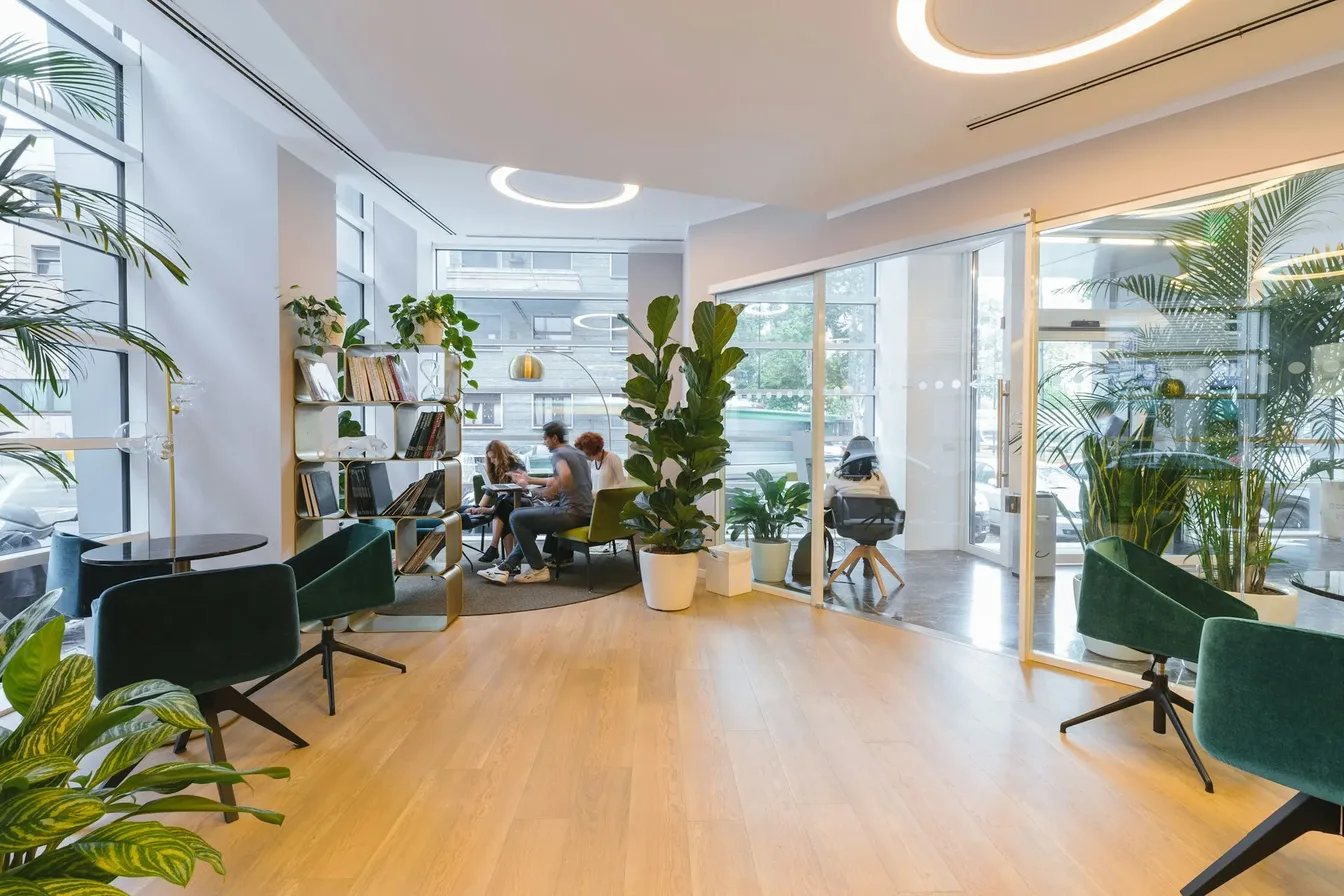
Fortunately, adding a touch of nature is a budget-friendly strategy to refresh your surroundings. If you are concerned about air quality at your desk, live plants can help you feel fresher.
They naturally absorb carbon dioxide and release fresh oxygen, and their root systems and leaves quietly filter out common airborne toxins. While the air-quality improvement may not be noticeable in a typical office, plants make the space feel greener and more lived-in.
A few low-maintenance green companions that thrive in typical office environments include snake plants, ZZ plants and Pothos vines. They all do well in low light and require little watering.
2. Natural Light
When designing a green workplace, prioritizing natural light offers a dual benefit to your office environment. Inviting the sun indoors reduces your reliance on artificial lighting, lowering energy consumption and supporting environmental goals. At the same time, this brightness directly benefits your team by potentially boosting daily focus and elevating moods.
Employees may also feel more connected to the outdoors, which helps them stay energized and alert throughout their workday. Achieving a sun-soaked atmosphere is simple if you position desks near a window. If that isn’t possible, selecting light, reflective paint colors for your walls helps bounce rays deeper into the room.
When dressing windows, choosing sheer curtains instead of heavy blackout fabrics allows light to filter through easily. Finally, opting for low-profile furniture instead of bulky pieces ensures window views stay completely clear, letting warmth and vitality fill your green workspace.
3. Sustainable Office Furniture
Your choice of office furniture is an impactful but sometimes overlooked element of sustainability. While some organizations immediately focus on energy-efficient lighting or recycling programs, and that’s still a good thing, they often forget to consider the life cycle of their desks, chairs and cabinets. Traditional furniture production requires immense amounts of raw materials and energy, and the eventual disposal of the resulting products can be challenging.
Businesses can pivot toward more eco-friendly alternatives to reduce their footprint. Making the switch allows companies to demonstrate their environmental commitments to employees, clients and stakeholders. Using wood or bamboo is a good step, as long as they aren’t overly treated, since these materials decompose faster than plastic or many other synthetic materials.
With millions of tons of furniture discarded every year, much of it ending up in landfills, choosing refurbished and responsibly sourced pieces is a straightforward way to align with your company’s environmental, social and governance goals. This positive change supports a healthier circular economy while giving your team a modern workspace they can feel proud of every single day.
4. Recycling Habits
Designing a green workplace starts with how your team manages everyday items like paper, product packaging, electronics and break room food waste. When a company establishes a waste-reduction system, individual actions add up to a massive corporate contribution.
To see this potential in action, consider that 46 million tons of paper were recycled in the U.S. in 2024 alone, which amounts to 125,000 tons of recycled paper becoming new products every single day. Your office can achieve similar meaningful results by adjusting daily routines.
Employees can build sustainable habits at the office with these practical steps:
- Use clear signage: Place brightly labeled bins throughout the office.
- Practice digital-first operations: Shift workflows online to decrease paper consumption.
- Develop tech partnerships: Arrange e-waste drop-off days with local electronics recyclers.
- Use organic collection: Set up a kitchen composting program for food scraps.
5. Energy-Efficient Lighting and Systems
Focusing on lighting and ventilation systems creates a positive impact. According to EIA data from 2018, lighting and ventilation each accounted for about 10% of total energy use in commercial buildings.
Upgrading these areas allows your team to experience superior indoor comfort while potentially boosting overall operational efficiency. You can start by switching from traditional bulbs to modern LED lighting. They shine well and often last for many years. Installing smart thermostats or advanced occupancy sensors helps maintain ideal room temperatures and fresh airflow precisely when spaces are active. Setting up convenient automatic shut-offs ensures these systems rest peacefully whenever rooms are empty.
You can also explore upgrading to high-performance, energy-efficient HVAC equipment that optimizes daily building operations smoothly and reliably. By doing so, your workplace can achieve greater sustainability. This can support environmental goals and everyday productivity.
6. Flexible and Modular Layouts
Teams grow, structures shift and needs evolve, but a flexible space allows employees to adjust their surroundings. They won’t have to keep asking for a completely new setup. Your organization can expand more easily when you choose modular desks and adaptable partitions.
Adding movable storage units also gives teams the freedom to reconfigure their storage setups on the fly, while convertible meeting spaces transition smoothly from collaborative hubs into quiet zones. This adaptability means your furniture and fixtures enjoy a longer life cycle within the building. Instead of seeing items become obsolete when a department reorganizes, your business can keep using the same components in brand-new ways.
Flexible layouts also support customization, giving employees more control over how they use the space. When workers can personalize their setup without requiring new furniture or major renovations, the office becomes more adaptable and less wasteful over time.
7. Green Building Certifications
Once you have successfully put core eco-friendly practices into action, your company might want to think about pursuing official green building certifications like LEED. This can show that your business is truly serious about long-term sustainability.
An official third-party verification can show that your workplace is built and operated using genuine, sustainable practices. For example, LEED offers a framework for healthy, efficient and cost-effective green buildings.
When a company earns this certification, it demonstrates sustainability leadership and connects the business to a broader community of green organizations. It works on a point system, with Platinum being the highest honor.
However, becoming certified or reaching Silver level still projects authority in the environmental space. It’s worth it to try and finish the certification process for this reason.
Small Changes Can Make a Big Impact in Your Workplace
Designing a green workplace doesn’t mean businesses have to overhaul everything overnight. Implementing these seven factors can happen in stages, as each small change adds up to a positive impact on the planet over time.
When businesses focus on incremental changes, they build lasting momentum. Look over the options and choose just one or two factors to kick-start your journey today. Your team and the environment will thank you for taking that first step.