Pilot line recovers high-purity silver, silicon from PV panels
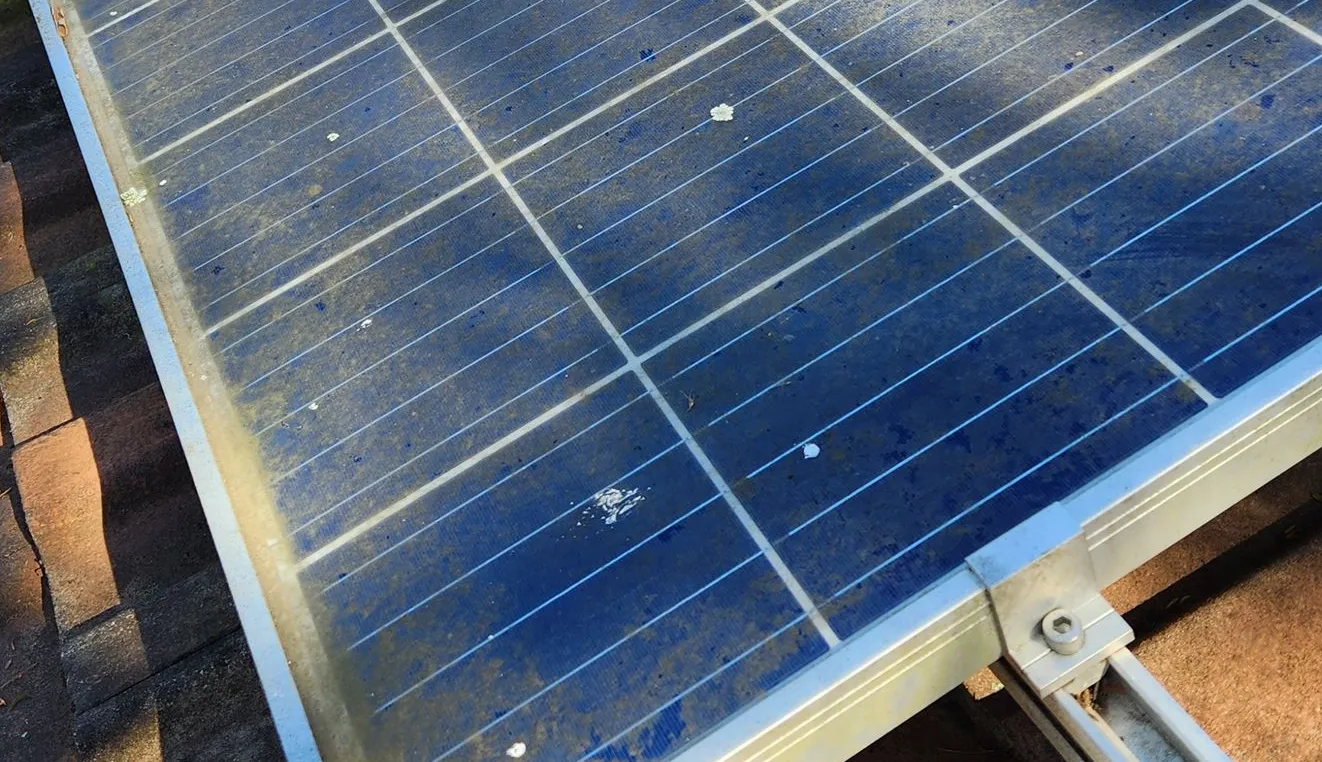
A research team led by academics from Poland’s AGH University of Krakow has found that separating solar panel layers with shockwaves, rather than heat, preserves more material while still yielding high-purity silver and silicon.
Prof. Pradeep Padhamnath of AGH University of Krakow and three collaborators said they recovered silver at above 99.99% purity and silicon at above 99.995% from end-of-life PV panels on pilot recycling lines, using either heat or shockwaves to separate the layers.
The researchers compared a thermal process with electrohydraulic fragmentation (EHF), a shockwave-based separation process. Only EHF recovered the laminating layer around the solar cells completely; the thermal process lost it.
The backsheet, the protective polymer layer on the rear of a module, was recovered at room temperature before the layers were separated.
The scientists also looked at whether EHF could be integrated into an existing PV recycling pilot line, assessing its compatibility and setting out its advantages and challenges.
“Further developments in recycling of polymers and material processing could result in entirely closed-loop recycling of EOL PV panels,” said the research team.
Earlier work
The pilot-line study builds on the group’s 2025 paper in Solar Energy. In that study, the researchers described EHF as a process in which electrodes connected to a power supply of about 50 kV create an arc in water, generating shockwaves that separate the panel’s layers. They tested laboratory-made glass-glass, glass-backsheet and glass-free panels for 240, 480 or 720 seconds.
The group’s earlier work describes the thermal route as heating panels to about 450 C to 550 C to decompose polymers such as EVA, PVDF and PET, separating the glass, metallic ribbons and solar cells.
In the 2025 study, the scientists cited EHF’s room-temperature operation, its lack of toxic emissions and its ability to recover polymers that would otherwise be burned in pyrolysis. They also found the process was sensitive to feed size and could clog when overloaded. EVA did not fully separate from the backsheet, glass-free panels separated poorly, and some fine powder was lost.
The scientists described their latest findings in “Design of pilot lines with thermal and electrohydraulic fragmentation delamination routes and analysis of materials recovered from end-of-life silicon PV panels,” which was recently published in Waste Management.
Silver is the main driver of recycling economics. It accounts for just 0.03% of a panel’s mass but can be worth more than the glass, aluminum and silicon combined, according to Fraunhofer CSP. Other pilot-scale delamination work includes a high-pressure water-jet method that recovered silver at 97% purity. An IEA-PVPS report published in May found that recovery rates for high-value materials have improved significantly since a 2024 study, in which the benchmark mechanical recycling technology recovered no silicon or silver.