Meet the Southeastern Gentoo, a New Penguin Species Discovered on the Kerguelen Islands
Happy Eco News Meet the Southeastern Gentoo, a New Penguin Species Discovered on the Kerguelen Islands
Reading Time: 3 minutesGenomes from 64 gentoo penguins show the familiar bird is really four species, including the southeastern gentoo, a new penguin species discovered on the Kerguelen Islands.
New penguin species discovered on the Kerguelen Islands? It is rare news in the penguin world. Yet the southeastern gentoo penguin is the first living penguin species named in more than a century.
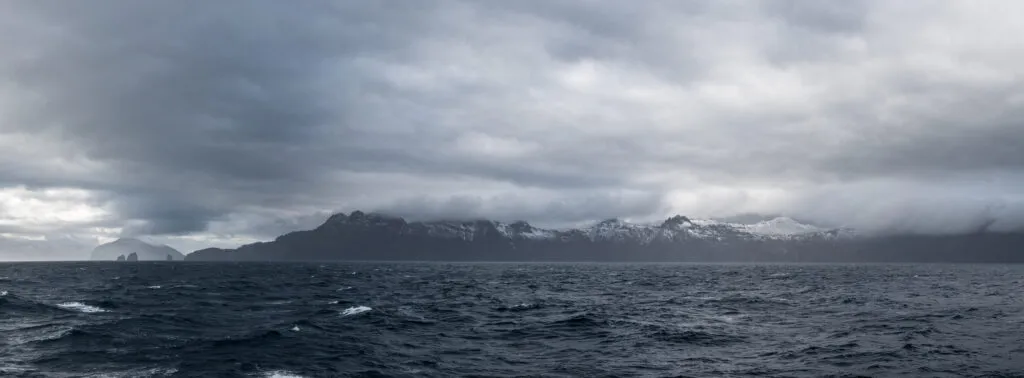
The Kerguelen Islands are a remote, windswept French territory in the southern Indian Ocean. Gentoo penguins have nested there for thousands of years. Until now, no one realized the local birds were their own species.
Gentoos are easy to spot. They have a white patch above each eye and a bright orange bill. They are also among the fastest-swimming penguins.
For more than a century, scientists treated all gentoos as one widespread species. Some proposed as many as six subspecies, but experts never agreed. A new genetic study now settles the debate.
Communications Biology published the study in September 2026. Daly Noll, a graduate student at the University of Chile, led the genetic analysis. Senior authors came from Andrés Bello National University in Chile and the University of California, Berkeley.
The team sequenced the full genomes of 64 penguins from 10 breeding colonies. Those colonies span almost the entire gentoo range. The researchers also compared body size, calls, diets, and breeding schedules.
Scientists from about a dozen countries helped identify the new penguin species discovered on the Kerguelen Islands. Contributors came from Australia, South Africa, France, Brazil, and beyond.
The data revealed four distinct species. The northern gentoo lives on the Falkland Islands and near South America. The eastern gentoo breeds on Crozet, Marion, and Macquarie islands.
The southern gentoo occupies the Antarctic Peninsula, coastal Antarctica, and South Georgia. The fourth is the southeastern gentoo (Pygoscelis kerguelensis). It lives on the Kerguelen Islands and probably on nearby Heard Island too.
Biologists call the southeastern gentoo a cryptic species. It looks almost identical to its relatives, and its differences lie mainly in its genes. Its body size and calls also differ subtly.
This new penguin species discovered on the Kerguelen Islands has a relatively small population. That makes accurate classification especially important for its protection.
The four species began to split between 300,000 and 500,000 years ago. Island isolation played a major role. The Antarctic Polar Front, an ocean boundary where water temperature and salinity change sharply, also played a role.
Island isolation and the Antarctic Polar Front helped drive the evolution of four distinct species over hundreds of thousands of years. Photo by Antoine Lamielle on Wikimedia Commons.
Gentoos also tend to return to the same colonies year after year. Over time, this loyalty to home kept populations apart. Each group then adapted to its own conditions.
A flexible diet helped too. Gentoos eat fish, krill, squid, and cuttlefish, so each population could thrive on whatever its local waters offered.
The genomes show those adaptations clearly. Southern gentoos carry genes for heat production and fat storage, while eastern gentoos carry genes for diving. Northern gentoos carry genes linked to digestion and heart function.
Dr. Jane Younger of the University of Tasmania first proposed the split in a 2020 paper. Her team later examined museum specimens and found consistent physical differences between regions. She says the new study provides in-depth evidence to support that claim.
Why does this matter beyond the name? Treating gentoos as one species produced an overall positive trend. That average hid serious declines in some regions.
Southern gentoos on the Antarctic Peninsula are thriving and spreading south. In the Falklands, avian influenza has hit northern gentoos hard in recent years. Populations on Macquarie Island are declining.
Climate change raises the stakes for each species. Under a moderate warming scenario, sub-Antarctic gentoos could lose suitable habitat on all their current islands by 2050. Few nearby islands offer alternatives.
Antarctic gentoos may fare better and could even expand their range. Emperor, Adélie, and chinstrap penguins, however, are expected to decline as sea ice shrinks and krill supplies change.
Other threats include warming seas, introduced rats and dogs, competition with fisheries, and capture in fishing gear. Recognizing each species allows conservation plans to match the threats each one faces.
Researchers are already taking next steps. Senior author Juliana Vianna is studying penguin genomes for traits linked to surviving avian influenza. The team has also asked taxonomic authorities to review the split formally.
Conservation bodies will need to assess each species separately. That work will determine how much protection the new penguin species discovered on the Kerguelen Islands receives.
A bird seen in countless photos and documentaries turned out to hold hidden diversity. Careful genetic work revealed it. The new penguin species discovered on the Kerguelen Islands shows how much remains to be learned about familiar wildlife.