“Don’t Forget Me”: When Our Ancestors Reach Across the Veil
We love the beautiful stories of your family history experiences from all around the world. They inspire and encourage and give hope to many who are working on their own lines. This week’s column documents the fact that these names we are working on in our research are way more than names: they are people with lives and a universe of experience they carried with them into the next world. They are living individuals (albeit in the spirit world) and they have feelings, needs, desires, and love to share.
If you have a family history or temple experience you would like to share with the Meridian family, please include the story, your name and where you are from by CLICKING HERE.
Exploring the Patriarchal Blessings of My Ancestors
I have never gotten into family history. I never felt any strong pull towards it growing up… I suspect it’s due to the complacency you get, being in a big family that’s been in the Church since the 1800s. I never heard the “it’s all been done” narrative, but I always supposed there were plenty of smarter, more capable people in the family who would take care of it.
What piqued my interest was a project I started earlier this year. The Church History department will send you the patriarchal blessings of all your direct-line, deceased relatives, if they had one given in their lives. Patriarchal blessings had always interested me, so I submitted an application to get my grandparents’ and great grandparents’ blessings. I also noted in the application that I wanted every direct line blessing, as far back as possible.
And boy, the Church history department delivered. I received about 40 patriarchal blessings, dating back to the beginning of the Church, including those given to my first-generation ancestors who migrated to Utah from England and Denmark. My project was transcribing them all (and learning to read 1800s penmanship).
As I worked, I could feel that those ancestors were aware of what I was doing, that they were happy about my curiosity, and were pleased I was learning about my deeply rooted my spiritual heritage. Ever since, I’ve had more curiosity about my ancestors and family history in general. My favorite fun fact about my ancestors is about my many-greats grandfather, Edmund. He was born in 1819, and he is in the tribe of Naphtali. He is the only family member I know of, besides myself, who isn’t tribe of Ephraim.
—Wendy DeVoe
The Convict Ancestor I Never Knew
My maternal aunt, Joan Armstrong, was the first in my family to join the Church. Or so I thought. Joan was baptized as a married adult with four children. I was living overseas at the time but, on my return, she introduced me to the gospel as a 15-year-old. Within a short period, I too joined after experiencing some wonderful personal spiritual events.
Joan was an avid family history researcher, but she had hit a roadblock with her father’s grandfather, Matthew Collier (or Collyer). She believed he was a convict who had been transported to Australia but that was about it. One day, by sheer coincidence, she was confiding with a friend, Marjorie Newton, about her genealogical struggle.
Marjorie, both a family history researcher and a well-regarded expert on Church history, knew much of the beginnings of our faith in Australia. When Joan mentioned the name, Matthew Collier, Marjorie was delighted to be able to tell Joan that Matthew probably was already a Church member, having been baptized in Melbourne in about 1843! She knew this because his name appeared on several occasions in the early manuscript history of the Church for this country. Later research confirmed that they were talking about the same person.
This was a great opening for further research on Matthew’s line, as well as performing the work for his wife and his descendants, our “cousins.” As it turned out, Matthew needed to be re-baptized in the temple because his details were inadequately recorded in the early Church documents. Unfortunately, the Church affiliation dropped out after Matthew died, leaving many opportunities for temple work within his family.
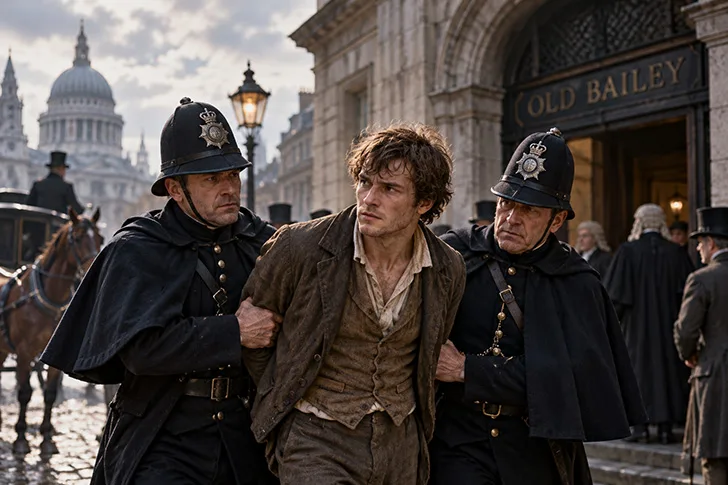
Much later, while linking across from FamilySearch to the free version of Ancestry.com available to Church members, we found a good deal of information about our convict ancestor. He was merely a petty thief, transported from London’s Old Bailey for seven years to the island of Tasmania where he ultimately rehabilitated himself. We found physical descriptions of him, which I appear to have inherited. The irony is that the records show he had reported to the police a theft of shoes on display outside his shoe shop on Sydney’s main street by two other petty thieves.
I am proud to have come to know my one convict ancestor who is also my only Latter-day Saint forebear, a pioneer witness to the establishment of the Church in Australia.
—Alan Wakeley
New South Wales, Australia
A New Name in the Night
As has become quite normal, I do family history work in my mind in the night. Usually, I forget the details by the time I awake in the morning, but last night was different. The name John Ocheltree came to me in the night with a birth date of about 1760. It was such an unusual name and such a specific date that I made myself remember it so I could follow up in the morning. I did not even know if Ocheltree was a real name nor if that was the correct spelling, but when I put it in in the search function in FamilySearch, it popped right up! The spelling was correct and the birthdate shown was 1764. I was quite amazed because I have not seen the name before in all of my work, nor do I usually find good records before 1800. I figured that it must be very important for me to follow up on my dream and do all I could do to document this family.
There were hundreds of documents found for them. I found and documented two generations above this John Ocheltree and three or four generations below him. I added many people to the family with birth dates, death dates, marriage dates, and more for all I could find. Most were in Delaware and the records were well kept and comparatively easy to match up (after my recent struggles with Boston records). A few of the descendants even ended up in Utah. I spent the whole day on this project and estimated that probably a hundred or more people were documented sufficiently to receive their temple ordinances. I have no idea if I am related to these people, but I’m glad they got the message to me to do their work.
Just a few days after this experience my wife’s ministering sisters came by for a visit. The topic of family history came up, and I mentioned my experience with John Ocheltree. One of the visitors exclaimed “That is my family!”
—Terry Stephens
The Veil Is Thin at the Temple
As our new temple was dedicated, I decided to become a temple worker in our newly operating temple. This new experience was delightful, as I learned many things of importance about the ordinances within those walls.
A year and a half into my service, I was diagnosed with Stage 4 lymphoma. Completely surprised by this, my greatest fear was that I would no longer be able to serve in the temple. I took my fears to the Lord and asked that no matter what my treatment was, He would allow me to remain serving in His house. That desire was granted to me, and I was able to continue serving in His house throughout my treatments.
As I have served, I have felt on so many occasions, in many of the sacred places where the sacred ordinances are performed, the presence of those persons the ordinances are for. As I have helped perform those things that are necessary for the family members receiving their temple ordinances, I have felt them there, present—able to be felt by myself and sometimes by the person acting as their proxy. The temple is a place where the veil is very thin. The Spirit there is very strong. You can often feel their presence in many places within the temple so strongly that tears are brought to your eyes by them. We are so blessed to have the blessings of the temple, to be able to not only do the work for our kindred but to feel their presence as we do their work. Yes, they are aware of the things that we do on their behalf.
—Starla Rees
St. George, Utah
An Anniversary Gift Never to be Forgotten
My parents were married in the Logan temple on Sunday August 17th, 1941 by special permission of Pres. Heber J Grant. It was their parents’ silver (25th) anniversary. There were only seven people present; my parents, three grandparents and my great grandfather plus President Quinne who performed the marriage. They returned to Preston, Idaho, the home of my maternal grandparents, for the wedding of my aunt and uncle the same day. The Sunday before their 60th anniversary, I was wondering how I could do something special for my parents’ anniversary as my mother was now in a care center and immobile. I was inspired to do the temple work for my aunt and uncle.
My husband and children helped me during the week to do baptisms, initiatories and endowments. On the day of the Anniversary, my eldest son and I went to the temple and performed their sealing by proxy. I then went to the care center to let my mother know that her family was complete. Aunt Mary and Uncle DeRay were sealed. Overwhelming joy and peace was brought to many souls. Especially mine.
—Margaret Udy Mansell
Salt Lake City, Utah
“Don’t Forget Me!”
One day I was looking through a spreadsheet of names another researcher had compiled from the parish register of Kolzow in Usedom-Wollin, Prussia. I was looking for someone with a married name of “Plötz.” Suddenly, I came across a woman whose maiden name was Dorothea Sophia Plötz. At that instant, a thought came into my mind: “Don’t forget me.” I looked at the name again and said to myself: “Don’t forget you? Who are you?” I didn’t recognize the name or see how it fit into what I was looking for. Nevertheless, I made a note of the name and stuck it in my records.
A month later I was preparing a batch of names to take to the temple. I thought I should probably follow up on the “Don’t forget me” lady to see if I could figure out who she was. With a little more work, I determined that I had previously identified and entered her parents, her brother, her husband, and a daughter, but I had missed her. I input her name and also found two additional children of hers whose names I could include in my batch.
The next morning, I woke up with another name in my mind: Dorothea Maria Schmidt. This name I did recognize as someone in my database. As I got up, the name kept pressing itself on my mind with such force and anxiety that, before I could even get ready for work, I finally blurted out loud, “All right! I’ll include your name, too!” I immediately went to my computer, found the name, and included it in the batch of names I was preparing.
Later I thought I would take a closer look at these names. It turns out that the two Dorotheas lived at the same time in the same area. Furthermore, Dorothea Plötz’s daughter (Sophia Christina Krüger) had married Dorothea Schmidt’s stepson (Johann Michael Deitlaff). Therefore, these two Dorotheas were related by marriage and were most likely close friends during their mortal lives.
I have never felt such intense anxiety from persons wanting to be included in a temple name batch. As it happened, this was one of the last batches of names I was submitting from the Kolzow parish for a number of years. Perhaps they knew that. In any case, it was clear to me that they didn’t want to be left out or separated, even for a moment.
—Sullivan Richardson
Springville, Utah
If you have a family history or temple experience you would like to share with the Meridian family, please include the story, your name and where you are from by CLICKING HERE.