PANORAMA Builds Replicable Conservation Solutions Database Spanning Nearly 1,900 Case Studies Worldwide
Happy Eco News PANORAMA Builds Replicable Conservation Solutions Database Spanning Nearly 1,900 Case Studies Worldwide
Reading Time: 3 minutesA decade-old platform now hosts 1,897 conservation solutions from over 1,300 contributors, turning local environmental successes into replicable conservation solutions database entries anyone can adapt.
For over ten years, PANORAMA – Solutions for a Healthy Planet has pursued a deceptively simple mission: build a global community where changemakers share, adopt, and scale up what already works. Rather than compiling passive success stories, this replicable conservation solutions database structures each entry as adaptable building blocks, distilling complex projects into stepwise blueprints practitioners elsewhere can actually apply to their own contexts.
The scale is substantial. PANORAMA now hosts 1,897 documented solutions from 1,327 contributing organizations and individuals across 11 thematic communities spanning restoration, species conservation, marine and coastal ecosystems, One Health, protected areas under the 30×30 framework, and nature-culture heritage sites. This solutions database aligns explicitly with major global directives, including the Kunming-Montréal Global Biodiversity Framework, the Paris Agreement, and the UN’s 2030 Agenda, translating local action into evidence that supports international sustainability commitments.
What distinguishes each entry within this replicable conservation solutions database is methodology rather than mere documentation. Every solution unpacks the how and why behind an effective environmental initiative, breaking successful projects into essential components others can adapt rather than simply admire. Solutions must be practical and tailored to specific scenarios, relevant to sustainability frameworks, proven through real-world results, and flexible enough for varied environments and sectors.
Recent additions illustrate this approach in practice. In Mongolia, pastoral communities facing recurrent droughts and dzud, severe winter disasters causing catastrophic livestock losses, needed climate-resilient infrastructure. The UN Development Programme (UNDP) ADAPT Project responded by establishing 48 hay and feed storage facilities across four climate-vulnerable provinces, using risk assessments combining climate, vegetation, and livestock mortality data to identify optimal locations. The solution strengthened emergency fodder reserves while improving herders’ adaptive capacity against increasingly unpredictable seasons.
Around Lake Victoria, shared by five East African nations and supporting over 45 million people through fisheries, water supply, and agriculture, declining water quality made coordinated basin management nearly impossible without shared evidence. The Lake Victoria Basin Commission, supported by GIZ, developed the first-ever State of the Basin Report, combining water quality sampling at 44 stations across three countries with consultations spanning all five partner states. This replicable conservation solutions database entry identifies wetland rehabilitation, reforestation, and catchment restoration as the most cost-effective pathways toward improved water quality, now serving as a shared baseline for planning across the entire basin.
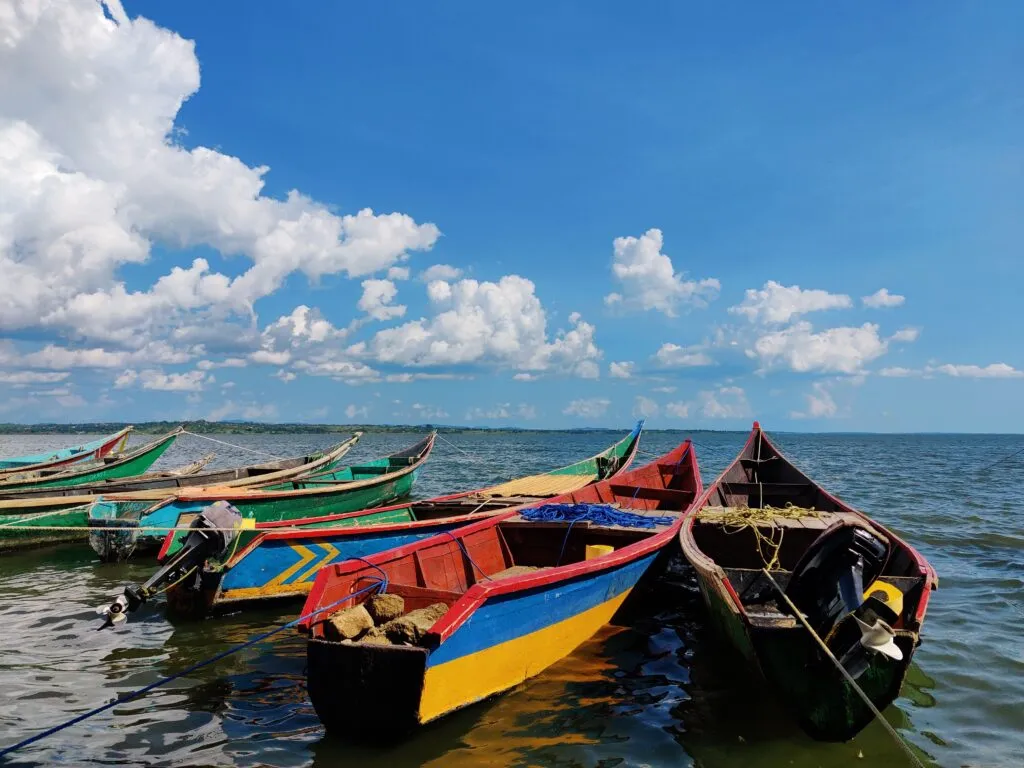
PANORAMA’s replicable conservation solutions database documents how five East African nations built a shared State of the Basin Report for Lake Victoria and how a multi-stakeholder partnership restored Ethiopia’s Lake Hawassa, both now scaled into national and regional policy frameworks. Photo by David Munyasa on Pexels.
In Ethiopia’s Rift Valley, Lake Hawassa faced accelerating degradation from deforestation, pollution, erosion, and rapid urbanization, pressures no single actor could address alone. A multi-stakeholder partnership uniting public authorities, private companies, and civil society applied a Natural Resources Risk and Action Framework developed between 2015 and 2020, jointly assessing risks and implementing nature-based solutions. The partnership succeeded so thoroughly that it transitioned to full government management and scaled into federal guidelines, now restoring water bodies nationwide.
This replicable conservation solutions database operates through a partnership network spanning 12 organizations, including GIZ, IUCN, UNDP, GRID-Arendal, UNEP, Rare, EcoHealth Alliance, ICCROM, the World Bank Group, OCTO Group, ICOMOS, and IFOAM. Together with over 1,000 individual solution providers representing institutions worldwide, this network forms the backbone connecting grassroots knowledge to global policy forums, ensuring diverse local perspectives genuinely influence international environmental decision-making rather than remaining isolated success stories.
Peer-to-peer exchange sits at the platform’s core philosophy. Rather than treating conservation knowledge as proprietary or locked within academic journals, this replicable conservation solutions database transforms tacit, hard-won field experience into explicit, shareable wisdom. A coordinator from the Fiji Locally Managed Marine Area Network described the platform as compelling solution providers to examine their own work more critically, improving quality and scalability specifically because their solutions will be judged against a global standard for replicability.
The database’s cross-cutting scope extends far beyond conservation biology alone. Communities addressing gender mainstreaming, financing mechanisms, governance structures, technology for nature conservation, and geodiversity all coexist within the same searchable platform, filterable by ecosystem type from agro-ecosystems to urban built environments, and by region spanning Africa, the Americas, Asia, Europe, Oceania, and the Coral Triangle.
As climate and biodiversity crises intensify simultaneously, the pressure to avoid reinventing solutions grows correspondingly urgent. This replicable conservation solutions database offers exactly that efficiency: proven building blocks from Mongolian herders, East African basin commissions, and Ethiopian multi-stakeholder partnerships, structured so practitioners facing similar challenges elsewhere can adapt rather than start from zero, accelerating the pace at which local innovation becomes global practice.
The post PANORAMA Builds Replicable Conservation Solutions Database Spanning Nearly 1,900 Case Studies Worldwide appeared first on Happy Eco News.