How Wildlife Crossings in Florida are Saving Panthers from Highway Deaths
Happy Eco News How Wildlife Crossings in Florida are Saving Panthers from Highway Deaths
Reading Time: 3 minutesWildlife crossings in Florida are turning deadly highways into safe passageways for one of America’s rarest cats.
Wildlife crossings in Florida now exist in dozens of locations across South Florida. These structures let panthers move without crossing traffic. The results are already changing outcomes for a species once pushed to the brink, and the wildlife crossings today serve as a model other states are watching closely.
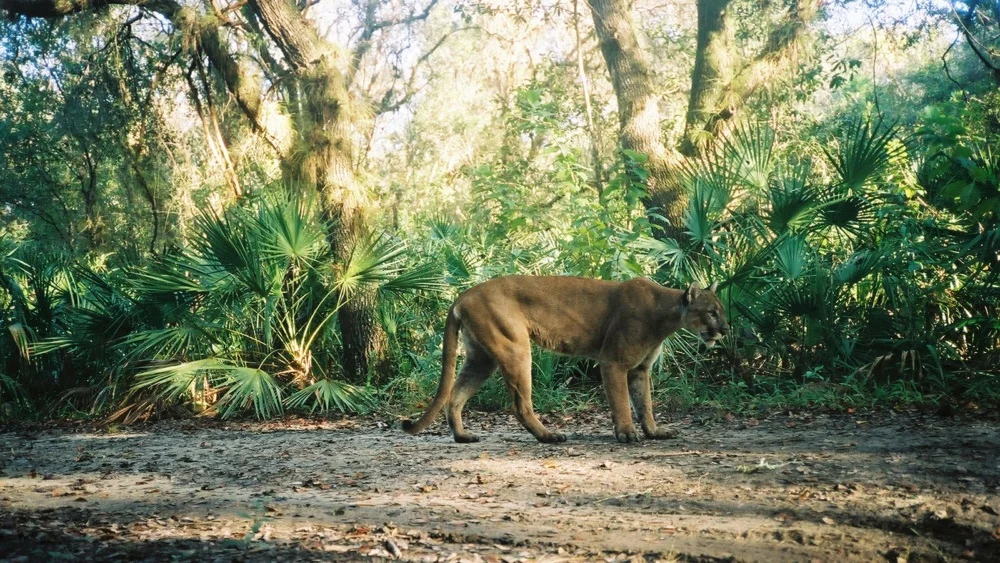
The Florida panther used to roam across the entire Southeast. Today its only breeding population lives in Southwest Florida. That population now survives on less than 5% of its historic habitat.
Panthers once shared their range with black bears, red wolves, and other predators across the Southeast. Hunting and land conversion eliminated most of these populations over the past century. Today conservationists work to protect the remaining core habitat in Big Cypress and the greater Everglades ecosystem.
Roads make that shrinking habitat even more dangerous. In 2024 alone, drivers struck and killed 30 panthers. Each loss matters for a population this small and fragile, which is why wildlife crossings in Florida have become such an urgent conservation priority.
Panthers need large territories to hunt, find mates, and raise young. When roads slice through that territory, populations become isolated. Isolated populations struggle to recover and stay healthy over time.
Interstate 75, known locally as Alligator Alley, carries millions of travelers through South Florida every year. It also cuts straight through vital panther habitat. Black bears, deer, bobcats, alligators, and otters share this same landscape.
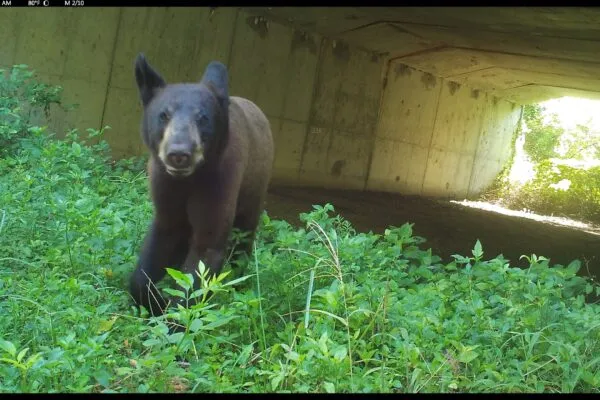
Wildlife crossings in Florida benefit far more than panthers, with bobcats, deer, and black bears all documented using the same underpasses, proving that a single well-placed crossing stretches conservation dollars across an entire ecosystem. Photo courtesy of Florida Wildlife Federation.
When builders planned this highway decades ago, they faced a 40-mile stretch of critical panther territory. Rather than leaving a permanent barrier, the Florida Department of Transportation added crossings into the design. That early decision is one of the clearest examples of wildlife crossings in Florida in practice.
Completed in the early 1990s, the project included 24 wildlife underpasses and 12 modified bridges. Planners also added continuous fencing along all 40 miles. The fencing steers animals toward safe crossing points instead of open lanes.
A Transportation Research Board study later tracked bobcats, deer, and black bears alongside panthers using these underpasses. That data confirmed multiple species benefit from a single, well-placed crossing. Shared infrastructure like this stretches conservation dollars further across the whole ecosystem.
State Route 29 tells a similar story. This road splits the Florida Panther National Wildlife Refuge from the Big Cypress Wildlife Management Area. One stretch, called Owl Hammock, ranks among the most dangerous spots for panthers, bears, and drivers alike.
Florida’s transportation department is working on a fix there, too. Crews will build a new wildlife bridge over Barron River Canal. They will also raise the road 8 feet, add a culvert underneath, and install 2 miles of new fencing.
The Owl Hammock project carries a price tag of $8.67 million. That investment reflects a broader pattern statewide. Florida now has 60 wildlife crossings and bridges in operation.
Wildlife bridges like this also protect panther genetic diversity by connecting isolated groups. Without these connections, inbreeding threatens the population’s long-term health. Genetic diversity remains one of the biggest challenges to full panther recovery.
Combining crossing structures with fencing has measurably reduced wildlife deaths. Researchers have documented panthers and other animals successfully using these crossings. Well-designed infrastructure can reconnect habitat while keeping both animals and drivers safer, reinforcing why wildlife crossings in Florida matter far beyond one species.
Still, panthers keep dying on Florida roads, especially young cats still learning their territory. That reality shows the work is far from finished. More crossings, more fencing, and more funding are needed to keep this progress going.
Congress has a chance to build on what Florida has already proven works. Reauthorizing the Wildlife Crossing Pilot Program is the next step that could extend this success well beyond Florida.
Florida’s highways show that people and panthers do not have to compete for the same ground. Smart infrastructure lets both share the landscape safely. That balance took decades of planning, and it still needs steady support to last.
The panther’s story is far from over. But every underpass, bridge, and stretch of fencing adds another chance for this species to recover. Florida’s roads are proving that wildlife crossings in Florida can go hand in hand with moving people forward.