What Happens to Your Old Clothes? Inside a Mumbai Network Turning 17500 Kg Into Income for Traders & Artisans
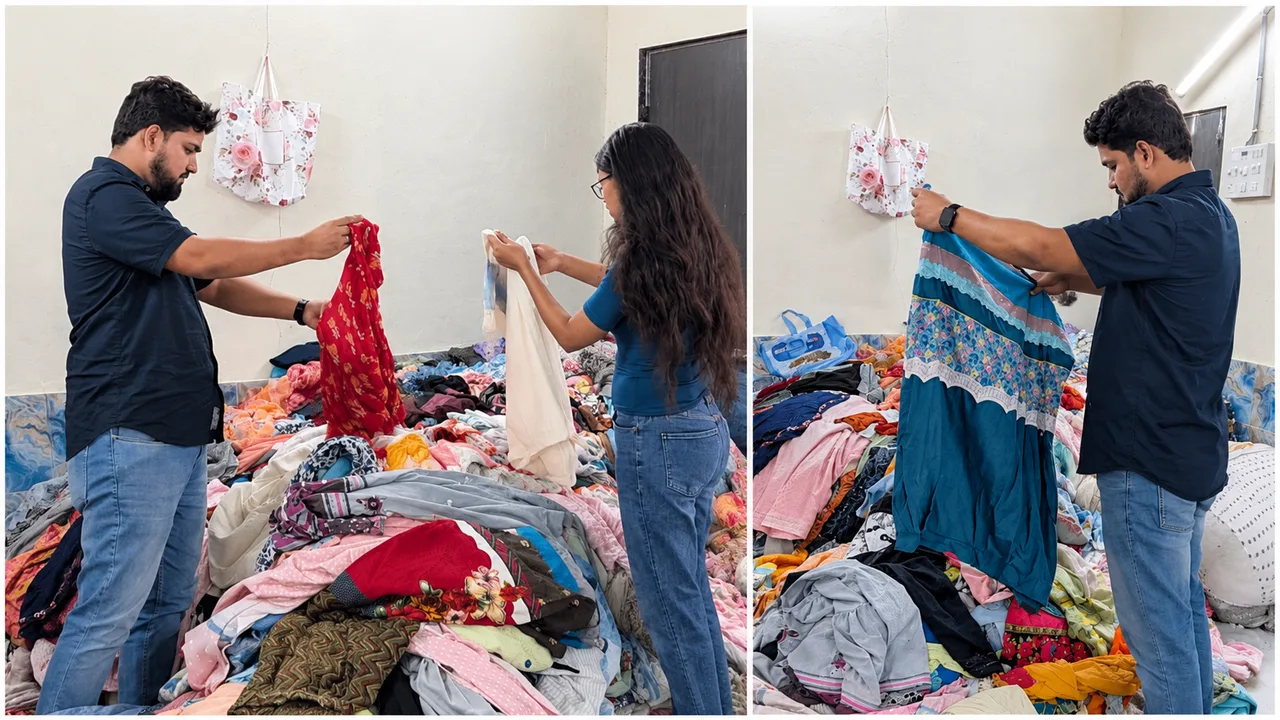
“Bhandiwala, bhandiwala.”
For years, the familiar call was part of how 35-year-old Anil Datanini earned a living. Like other bhandiwalas, he collected old clothes, traditionally exchanged for utensils, and sold what could be reused.
He had entered the trade at around 15, following work his family knew well. After moving from Gujarat to Mumbai, he continued sorting textiles and finding buyers for them.
But there was one thing he could never count on: how much material he would find. Some days brought plenty of clothes; on others, hours spent looking for them yielded very little.
That began to change in January 2026, when Anil partnered with Textile Waste Innovation Network (TWIN), a Mumbai-based enterprise founded by 29-year-old Vikram Shahi.
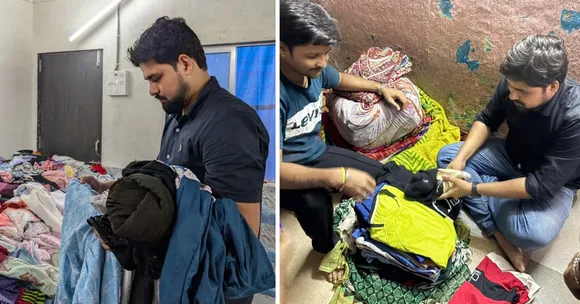
Instead of sourcing everything himself, Anil now receives a more regular supply of used clothes, which he sorts, prepares and sells through markets in villages and rural areas.
“Now the material comes to us regularly, so we can work properly,” he says. “We sort it according to the quality and condition and then send the reusable clothes to villages.”
Anil says he currently earns between Rs 25,000 and Rs 30,000 a month, sometimes more. For him, the greater relief is being able to plan household expenses and save with more confidence.
His experience captures an important part of TWIN's approach.
According to its founder, the network has collected around 17,500 kg of used textiles and reached more than 650 households. It is doing so by working with waghari workers and bhandiwalas, whose experience in collecting and reselling clothes has long kept usable fabric in circulation.
From his mother's cupboard to Mumbai's beaches
When Vikram was growing up in Mumbai, he watched his mother exchange old clothes for steel utensils with a bhandiwala. He understood the exchange, but wondered what happened to those clothes afterwards.
Born in Bihar, with family roots in Sitamarhi, Vikram moved to Mumbai with his parents when he was three.
In 2017, while studying information technology at Mumbai University, he began volunteering at clean-up drives. At Versova beach that monsoon, he noticed clothes mixed in with the plastic waste.
He saw more discarded textiles during subsequent clean-ups, including around festivals such as Holi. In 2019, he began organising drives of his own with support from Bhumi NGO.
The question from his childhood returned: where did damaged clothes go when they were no longer useful to their owners?
In 2022, Vikram enrolled for a master's in social work at the College of Social Work, Nirmala Niketan, Mumbai. A term paper on waste management helped him explore what happens to post-consumer textiles, meaning clothes and other fabrics discarded after use.
“Post-consumer textile waste was not getting the kind of attention I felt it deserved,” he tells The Better India.
The gap became clearer in 2024, when he joined ReCircle as a sales executive. He had initially applied to work in plastic waste management, but was offered a role involving textiles instead.
“At that point, I did not know much about textile waste, but once I started working on it, I realised there was a huge gap in the collection system,” he says.
People had familiar ways of passing on clothes that were still wearable: donating them, giving them to relatives or exchanging them for utensils.
Torn T-shirts, worn-out bedsheets and other unusable fabric were more difficult to deal with. Even where recycling or upcycling options existed, there was no obvious route connecting a household's unwanted textiles to the people who could process them.
A 1,200-kg experiment in the Mumbai monsoon
In August 2025, while working full time on education initiatives, including STEM labs in schools, Vikram and a few friends organised a textile collection drive in Vasai.
They gathered around 1,200 kg of material, despite heavy monsoon rain complicating the collection.
“I was still working at the time, so we were doing this mostly on weekends,” he recalls. “The first drive itself gave us confidence that people actually had this problem and were looking for a solution.”
TWIN was formally registered on 30 October 2025. Vikram continued his job until February 2026, when he began focusing on the enterprise full time.
He wanted to make textile collection easier for households while giving existing recovery workers a more dependable source of material.
“We are not trying to replace the existing recovery network. We are trying to build on it and create a more organised collection layer around it,” he explains.
What happens to clothes after TWIN collects them?
TWIN collects used textiles from households, housing societies, schools, colleges, hotels, companies, NGOs and other bulk generators across the Mumbai Metropolitan Region. Household pickups are described by the enterprise as free.
A resident can request a collection through TWIN's website or WhatsApp chatbot, sharing their name, location and details of the textiles.
The team records the request, including the quantity and type of material, in a customer relationship management system (CRM) before verifying it and assigning a collection partner.
The enterprise works with waghari and bhandiwala workers, providing training, checking backgrounds and assigning collection areas by PIN code. This helps coordinate pickups that were previously handled more informally.
The collected clothes are then sorted by condition, fabric and possible next use.
That step determines whether a shirt can be worn again or whether a damaged bedsheet might be more useful as raw material for another product.
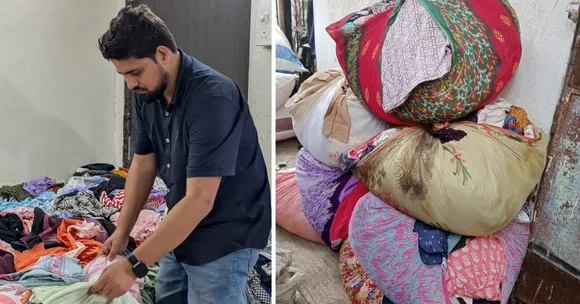
“Sorting is one of the most important parts because every textile cannot go to the same place,” Vikram says. “We look at the condition, quality and what the next best use can be.”
Wearable clothes are prioritised for reuse. Workers sell them through their existing networks in villages and second-hand markets, where buyers, including farmers, can find affordable clothing. A smaller share goes to communities through NGO partners.
Fabric unsuitable for wearing can take a different route.
TWIN sends suitable material to upcycling partners, including The Kapda Project and artisan groups, to be made into bags, pouches and bottle holders.
It also helps connect these products with buyers, including through organisations such as Sparkling Wings and Prayas Foundation.
Lower-grade textiles may be downcycled into mats, rags or wiping cloths for industrial use.
Recycling remains at the pilot stage, with TWIN and its partners testing which materials can be processed further. The network therefore offers several recovery routes, rather than claiming that every collected item becomes a new garment or recycled fibre.
For residents, the idea is straightforward: clothes that have outlived their original use need different destinations.
TWIN says it accepts wearable and torn clothes, bedsheets and curtains, but not wet or soiled material. That distinction matters when someone is clearing out a cupboard and wondering what can actually be collected.
‘Now we get clothes regularly, so there is more work’
TWIN currently works with around 15 to 20 informal textile recovery workers, of whom seven to 10 are connected to a more regular supply.
Some receive around 200 to 300 kg of sorted textiles from the warehouse in a week, while others collect material directly from households.
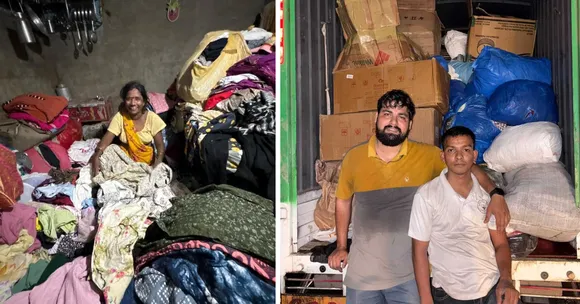
Anil, who has lived in the Sion-Dharavi area, says this has changed how he organises his work.
Earlier, much of his time went into finding textiles before he could begin sorting and selling them. Now he can spend more of it preparing clothes for buyers.
“We had to go and search for clothes ourselves,” he says. “Sometimes we would get material and sometimes we would not. The supply was not regular.”
For 22-year-old Bhavesh Dattani, the difference feels familiar.
He grew up in Dharavi, where his family continued a clothes-trading livelihood after his grandparents moved from Gujarat.
Before joining TWIN in December 2025, he went from neighbourhood to neighbourhood exchanging utensils for clothes.
“The barter system takes a lot of time. We have to go from place to place and ask people for clothes, and we do not know how much we will collect,” he says.
Now, he receives reusable garments from the team.
“Now we get clothes regularly, so there is more work and the income is also more regular,” he adds.
He does not specify his earnings, but says having material available more consistently has improved his working routine.
Another worker, Vikram Shankar Chekhaliya, about 45, comes from a family in Gujarat that has worked with textiles for generations.
Associated with the initiative since its early stages in July 2025, he had previously sourced, sorted and sold clothes independently, including lower-value fabric used for wiping.
“Sometimes we would get good clothes, and sometimes there would be very little material. Now there is a regular supply, so it becomes easier to plan the work,” he says.
These workers already know how to assess clothing and where it can be sold.
What TWIN is trying to add is a more predictable connection between the households discarding textiles and the markets that can use them.
Who earns what when an old shirt is sold again?
Although household pickups are free, the enterprise earns through the sale and recovery of collected material, as well as service-based work with organisations.
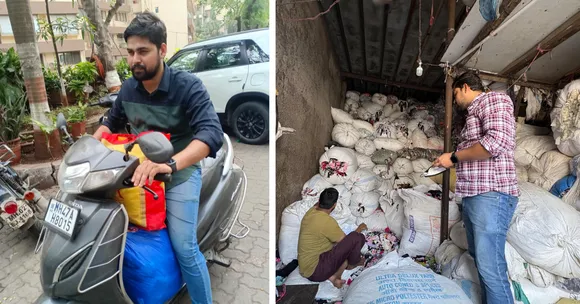
Reusable clothes move through existing traders and markets, allowing workers to earn from their sale. TWIN also generates revenue from recovered textiles.
Upcycled products made by partner artisans create another income stream when they are purchased by organisations or corporate clients.
Lower-grade materials can be sold for uses such as industrial wiping, while business-to-business services add to the model.
“The idea is not just to collect waste and then store it,” Vikram says. “There has to be a value chain after collection. We need to make sure the material moves to the right person or the right organisation and that there is a revenue stream to sustain the system.”
Vikram began with his own resources. TWIN has also received support from Mumbai Ekatra, a citizen-focused grant programme, particularly for its upcycling work.
According to Vikram, the enterprise has generated about Rs 3 lakh in business revenue, with another Rs 3 lakh worth of potential business in the pipeline.
It has yet to turn profitable, he says, with much of its income being put back into building the collection and sorting network.
17,500 kg of clothes collected. What comes next?
The WhatsApp chatbot, launched in June 2026 after TWIN initially relied on Instagram and a Google Form, has made it easier to organise incoming requests.
Vikram says it recorded more than 300 registrations in its first month.
The team can also track where clothes are coming from, how much is collected and which partner should handle each pickup.
Technology helps manage the movement of textiles, but the recovery itself still depends on people who know how to sort, repair, reuse or sell them.
For now, the work is focused on Mumbai. Vikram hopes to expand to other cities, adapting the collection network to the workers, markets and waste patterns already present in each place.
There are challenges ahead. Recycling is still being tested, the enterprise is not profitable and only part of its worker network currently receives a regular supply.
But the model has begun to connect two needs that often sit apart: households looking for a responsible way to part with old textiles, and workers looking for material they can earn from.
For Anil, that connection has a practical meaning.
He still sorts clothes, finds buyers and does the work he has known since his teens.
What has changed is the amount of time he needs to spend searching for the next batch, and the confidence that there will be work to return to.
All pictures courtesy Vikram Shahi.