New coating technology could reduce glass usage in photovoltaic modules by up to 40%
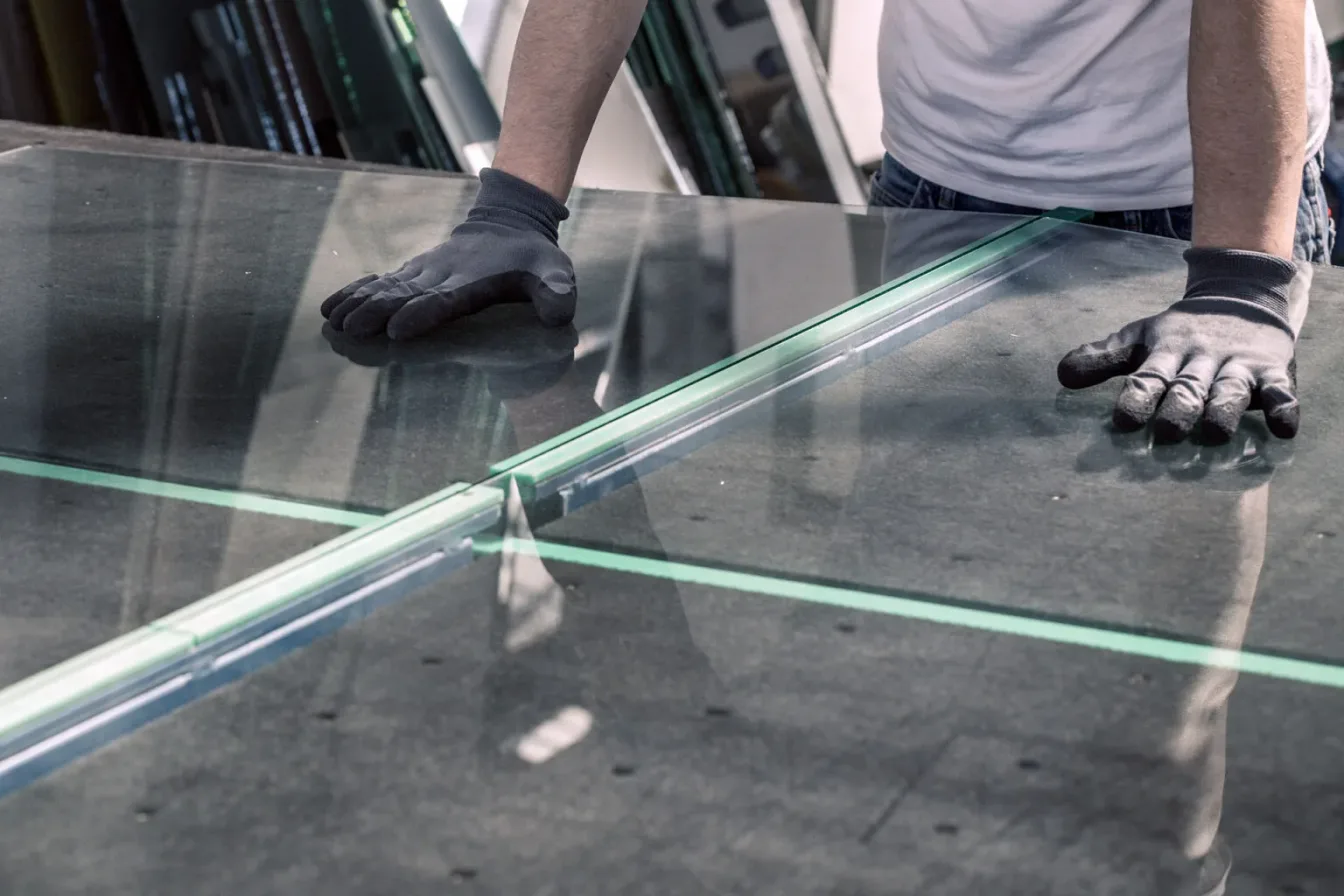
German startup Exxosqel, a subsidiary of Exxergy, has developed a coating technology designed to improve the mechanical strength of solar glass, enabling the use of thinner glass sheets in photovoltaic modules.
Developed in collaboration with the Fraunhofer Institute for Silicate Research (Fraunhofer ISC), the technology could reduce glass weight by up to 40% while maintaining mechanical performance, according to preliminary test results.
Glass currently accounts for 70% to 80% of a PV module’s total weight. Modules typically weigh between 11 kg/m² and 13 kg/m², although heavier designs can reach approximately 16 kg/m².
Reducing glass thickness could therefore lower raw material consumption, manufacturing energy requirements and associated emissions, while also reducing transport and installation loads.
Targeting microscopic glass defects
According to Exxergy, the technology addresses one of the main factors limiting the mechanical strength of flat glass: microscopic cracks that develop during manufacturing and handling. Rather than simply covering surface defects, the coating is designed to penetrate the cracks and modify their mechanical behavior.
The process uses a multicomponent composite material that forms a three-dimensional cross-linked structure. Once applied, the coating matrix establishes covalent bonds at the molecular level within the microcracks. The aim is to inhibit crack propagation and increase the energy required to fracture the glass.
Laboratory tests have shown substantial improvements in mechanical strength. Following several adjustments to the material formulation and application process, 2 mm-thick glass samples exhibited four times the strength of an untempered reference sample. For 1 mm-thick samples, strength increased sevenfold.
The results suggest that the technology could enable thinner glass in PV modules, where conventional strengthening methods face technical limitations.
Limitations of conventional tempering
Thermal tempering is a widely used method for strengthening flat glass. It involves controlled cooling to generate compressive stress at the surface, helping to prevent crack propagation.
However, the process becomes less effective as glass thickness decreases. A nominal thickness of 3.2 mm remains common in PV modules, while achieving sufficient strength with glass measuring 2 mm or less is more challenging using conventional thermal tempering.
Chemical strengthening through ion exchange offers another option. The process replaces sodium ions at the glass surface with potassium ions, generating compressive stress in the surface layer.
Although chemical strengthening can be applied to thin glass and produces fewer optical distortions than thermal tempering, it is more complex and requires more time and energy. Applying the process to large glass sheets also presents challenges.
Exxergy’s technology takes a different approach by targeting the microscopic defects responsible for crack propagation.
Up to 30% reduction in module weight
According to company estimates, reducing glass weight by up to 40% could lower the total weight of a PV module by approximately 30%, depending on its configuration.
For a relatively heavy module weighing 16 kg/m², this would translate into a reduction to approximately 11 kg/m².
Lighter modules could also reduce structural requirements, allowing mounting systems to be designed for lower static loads. The resulting weight savings could further reduce material consumption and ease transport, handling and installation.
From laboratory samples to commercial modules
The main challenge now is scaling up the technology for industrial applications. Development has so far focused primarily on small glass samples, with the next phase involving larger glass formats and, eventually, full-size commercial PV modules.
Exxergy and Fraunhofer ISC are working to scale up material synthesis, coating application and automation to enable integration into existing production lines. Fraunhofer ISC is contributing its expertise in material synthesis at volumes of up to 100 liters, as well as coating technologies.
According to Exxergy, the technology has reached technology readiness level (TRL) 6. The company said it has produced prototypes in standardized dimensions under near-operational conditions, with mechanical load testing ongoing. The next goal is to reach TRL 7 by validating the coating in an operational environment.
The development work has been supported by the “Green Solar Modules” and “Green Solar Modules Glass II” projects, funded by the German Federal Ministry for Economic Affairs and Energy and Exxergy.
The post New coating technology could reduce glass usage in photovoltaic modules by up to 40% appeared first on pv magazine Global.