A Culture of Revenge: Overcoming the Urge to Take Offense and Get Even

We live in a culture saturated with revenge. It is so deeply embedded in our entertainment and storytelling that we may hardly notice it anymore.
Consider the movies and television we watch. IMDb currently identifies nearly 20,000 titles associated with the keyword “revenge.” One scholarly analysis of a comprehensive film guide found more than 1,000 films listed under the broad category of revenge—apparently its single largest category. Revenge is not a fringe theme in popular culture. It is one of our favorite stories.
Think of John Wick, Taken, The Equalizer, Death Wish, The Revenant, and countless others. The formula is remarkably consistent: someone is terribly wronged, conventional justice fails, and the victim becomes justified in taking matters into his or her own hands.
Our culture is saturated with cinematic campaigns of vengeance.
We know the script so well that we often find ourselves rooting for the revenge. We want the bad guy to get what is coming to him. We feel satisfaction when the victim finally settles the score. We call it justice, but frequently what we are applauding is retaliation.
That matters because stories can reinforce assumptions about how the world is supposed to work. And one message appears again and again: If someone hurts you badly enough, you have earned the right to hurt them back.
Most of us will never embark on a cinematic campaign of vengeance. But we can absorb the same philosophy and practice it in much smaller ways. We talk about settling scores, making people pay, teaching someone a lesson, giving them a taste of their own medicine, or making sure they know “how it feels.”
In my last article, I described what I call the revenge cycle: resentment leads to resistance, resistance leads to retaliation, and retaliation creates another offense that starts the cycle all over again.
But perhaps the cycle begins even earlier.
Before we try to get even, we usually first decide that we have been offended.
Why Getting Even Can Feel So Good
There is a reason revenge can be seductive. Research cited in my book helps explain why. In one experiment, people who were angry and then given an opportunity to retaliate experienced increased activity in an area of the brain associated with reward. Revenge can actually produce a brief sense of satisfaction.
Revenge keeps offense and injury alive.
The problem is that it doesn’t last.
Research has also found that people who retaliate can continue thinking about the offender and the offense. Instead of helping us put the injury behind us, revenge keeps it alive. We replay what happened, rehearse what we should have said, and continue our mental relationship with the person who hurt us.
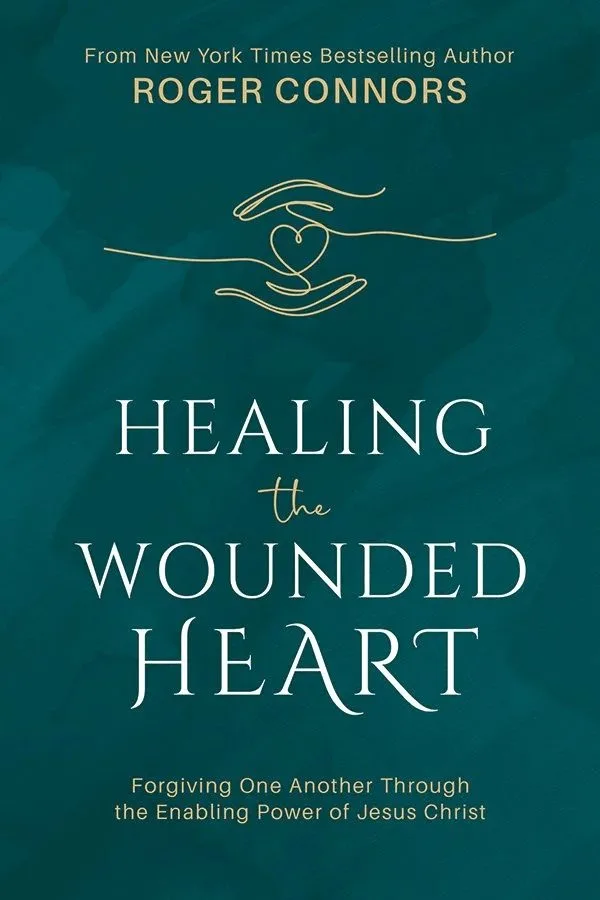
Before retaliating, therefore, it might be useful to ask ourselves four questions. I include these in Healing the Wounded Heart:
Ask Yourself
What It May Reveal
Am I trying to teach them a lesson?
If I want my actions to make them realize what they did wrong, I may be seeking revenge rather than healing.
Do I want them to feel what I felt?
Wanting them to experience my hurt or frustration is a strong indication of retaliation.
Am I keeping score?
“They did this to me, so I’ll do that to them” is retribution, not resolution.
Would I still do this if they never knew about it?
If my action loses its appeal when they won’t know I did it, perhaps my real objective is making sure they feel my retaliation.
Revenge rarely announces itself by saying, I want revenge. More often it disguises itself as fairness: They hurt me. Why shouldn’t they experience some of what I experienced?
“Even Steven”
When I was a young boy, we had a saying we’d shout whenever we managed to get back at someone who had gotten the best of us: “Even Steven!” It was our way of declaring that things were now “fair,” as if some unwritten rule of justice had been satisfied.
I wrote this short poem to express what I eventually learned about getting even:
Even Steven
I dreamed of “getting even,” thought it’d ease the weight I bore,
That once I matched each slight for slight, my heart would ache no more.
I struck back just to settle scores, determined to be right;
And oh, the rush of payback felt enticing in the fight.
But when at last the score was met, I found no sweet relief;
Just ashes and a lingering bitterness that only deepened grief.
So “even Steven” lost its charm; revenge just chained me tight.
I learned that letting go was how my soul could find its flight.
Now getting even means for me to leave the past behind,
To trade old wrongs for mercy’s peace and free a captive mind.
Before Revenge Comes Offense
Perhaps one of the most effective ways to stop revenge is to interrupt it before retaliation ever begins.
In my book, I cite a memorable teaching from Elder Marion D. Hanks. A man bitten by a rattlesnake has a choice. He can spend his precious time chasing the snake in fury while the venom spreads through his body, or he can concentrate on getting the venom out.
The snake caused the wound. But the venom is now the greater danger.
So it is with offense. Someone may genuinely have injured us. But once anger and resentment begin spreading within us, pursuing the offender does nothing to remove the poison.
Elder David A. Bednar taught a challenging principle: “To be offended is a choice we make; it is not a condition inflicted or imposed upon us by someone or something else.”
He was not suggesting that people never do offensive things. In fact, he specifically acknowledged that “clumsy, embarrassing, unprincipled, and mean-spirited things” occur in our interactions with others. His point was about agency. Something may be offensive, but we still choose what we will do with it.
Something may be offensive, but we still choose what we will do with it.
He pointed to Pahoran’s remarkable response after Captain Moroni unjustly accused him. Rather than retaliate, Pahoran responded, “It mattereth not.”
There is an enormous difference between being wronged and living offended. Sometimes our hurt is entirely justified. Other times we have misread motives, assumed intentions that were never there, or allowed emotion to color our interpretation. But whether the offense is real or perceived, we decide whether we will continue carrying it.
That may be one of the most countercultural choices a disciple of Jesus Christ can make.
The world says, They hurt you. Hurt them back. Christ says, “Love your enemies.”
The world says, Make them pay. Christ says, “Forgive all men.”
We cannot control whether someone behaves offensively. We can control whether we choose to accept that offense and trigger the inevitable cycle of resentment and the urge of retaliation.
God empowers us with the ability to “turn the other cheek,” “give our cloak,” or walk an “extra mile.” It’s a powerful choice to choose to follow Him. It’s a healing choice to live like Him. It’s an exalting choice to love like Him.