How crypto loans unwind: what a $43.8 million ether sale teaches about leverage
BTCS's sale is too small to move ether's price directly. The bigger effect is on how investors view listed crypto treasury firms, whose shares tend to trade as leveraged bets on the coins they hold. BTCS fell nearly 9%. The episode may push investors to look harder at how much other ether-heavy companies have borrowed. Spot ether ETFs are in a run of outflows and bitcoin is below $60,000, so risk appetite across crypto is fragile. Further forced-sale disclosures could hurt sentiment more than they add to supply.
-
A balance sheet that looked well covered on paper was only a 19% ether drop from forced liquidation, and BTCS paid to close that gap before Aave closed it for them.
Summary:
- BTCS sold about 27,300 ETH on November 20 for $43.8 million and used it all to repay Aave debt, per an 8-K filed November 23.
- Its Aave borrowing fell to about $10.5 million from an implied $54.3 million.
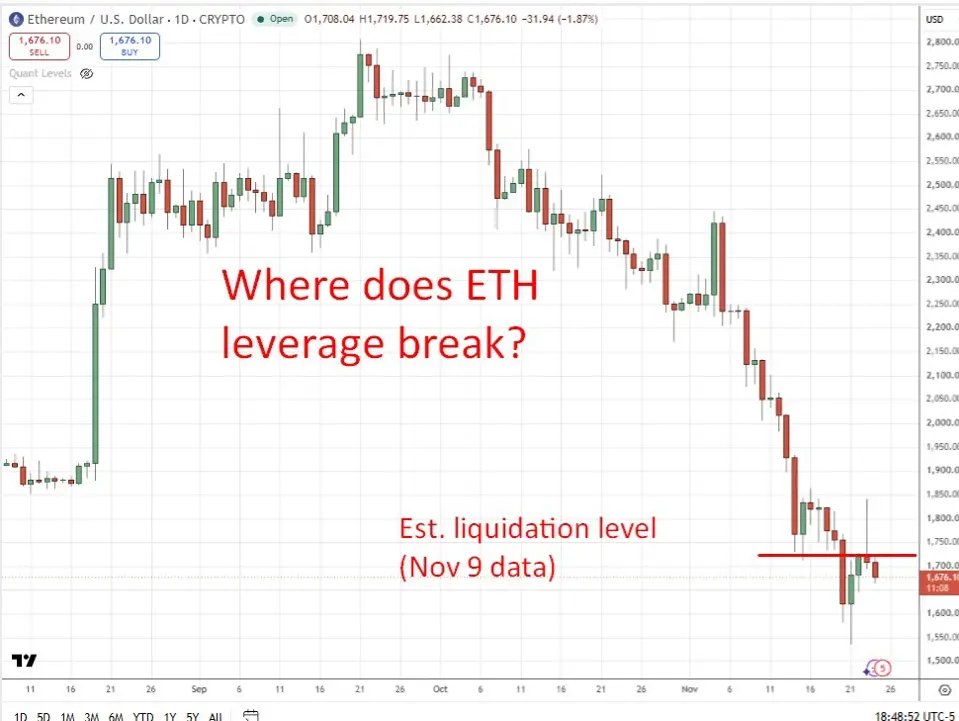
- Its November 9 position (about $64.1 million owed against 46,676 ETH) implied a liquidation price of around $1,720. Ether fell near $1,560 on November 20.
- The company is left with about 24,245 ETH. TheStreet puts its loan-to-value ratio at about 32%.
- Its DeFi unit, Imperium, has paused its liquidity pool positions, and about $17.9 million of convertible notes are due in 2027.
Nasdaq-listed BTCS sold about 27,300 ETH on November 20 and used the full $43.8 million in proceeds to repay debt on Aave, the decentralised lending protocol, according to a Form 8-K filed with the SEC on November 23. The sale cut its Aave borrowing to roughly $10.5 million. It came as ether briefly fell near $1,560, below a liquidation level that had been estimated from the company's own quarterly filing only days earlier.
The deal is small for the ether market. But it is a clear, documented example of how crypto-backed borrowing works, and of how quickly a comfortable-looking position can become a forced sale.
How an Aave loan works
Aave lends stablecoins against crypto collateral, and every loan is overcollateralised: the borrower must lock up more value than it borrows. Three measures matter.
Loan-to-value (LTV) is the debt divided by the value of the collateral. A $50 loan against $100 of ether is a 50% LTV.
The liquidation threshold is the share of collateral value Aave will count when judging whether a loan is safe. BTCS has said this is generally 80% for ETH.
The health factor combines the two: collateral value multiplied by the liquidation threshold, divided by the debt. Above 1, the loan is safe. Below 1, Aave's smart contracts can sell the borrower's collateral automatically to repay the lender, with no phone call and no negotiation.
The BTCS numbers, worked through
BTCS's quarterly filing showed it owed about $64.1 million on Aave as of November 9. That was backed by 46,676 ETH valued at about $99.3 million, using an ether price of around $2,130. The collateral covered the debt about 1.55 times over, which sounds like a wide margin.
Apply the 80% threshold, though, and the health factor comes out near 1.24. That implies a liquidation price of around $1,720 per ETH, close to CoinDesk's own estimate. In other words, collateral worth 155% of the debt left a price buffer of only about 19%.
Ether then fell roughly 27% from the $2,130 marker to its November 20 low. BTCS had already cut its debt to an implied $54.3 million before that day, which would have lowered its real liquidation line. The company has not disclosed where that line sat. What the filings do show is that it chose to sell rather than wait.
Why sell before the protocol does
A borrower facing a falling health factor has three choices: add collateral, repay debt, or let the protocol liquidate. BTCS held very little cash, reporting about $463,000 at the end of September, so adding collateral meant finding ether it did not have. Liquidation would have meant selling on the protocol's terms, at the worst moment and with a penalty attached.
Selling its own ether to repay the debt let BTCS choose the timing. Chief executive Charles Allen said, according to TheStreet, that the company preferred to cut its Aave borrowing rather than carry the debt through a falling market. The cost is permanent. The average sale price, around $1,600, locks in the loss, and BTCS is left with about 24,245 ETH. "We are a smaller company today," Allen said.
What the sale did to the risk
TheStreet reported the company's loan-to-value ratio at about 32% after the repayment. On that figure, and using the same 80% threshold, ether would need to fall about 60% before the remaining loan neared liquidation. That works out to roughly $690, based on the $1,722 price BTCS used for November 22. This is an illustration rather than a disclosed level, but it shows how much room paying down debt buys.
The trade-off is that the company now has less ether to earn from. Its DeFi unit, Imperium, has temporarily exited its liquidity pool positions. BTCS also still has about $17.9 million of senior secured convertible notes due in May and July 2027. Its shares fell nearly 9%.
Does one forced seller move ether?
Not on its own. The $43.8 million sale is roughly a quarter of 1% of the $17 billion or so in ether traded over 24 hours, according to CoinGecko data. The more useful signal for ETH holders is the pattern. Companies and traders who borrow against ether all face the same arithmetic, and a falling price can push several of them to sell at once. That is how leverage can turn a decline into a sharper one, even when no single seller is large.
The backdrop is already weak. Ether traded around $1,690 on Wednesday in Asia, down roughly 28% over the past month, after a bounce to around $1,840 on November 23 failed to hold. US spot ether ETFs recorded a seventh straight day of net outflows on November 23, according to SoSoValue data, and bitcoin dropped below $60,000 for the first time since July.
What to watch next
The next thing to watch is further disclosure. Another BTCS 8-K showing more sales, or new borrowing, would show whether this was a one-off reset or the start of a longer unwind. The same goes for other listed companies holding ether on borrowed money. Their filings will show how close their collateral sits to the 80% line.
ETF flows are the second marker. A return to inflows while ether holds above its November 20 low would suggest forced selling is easing. Continued outflows alongside new lows would raise the odds that more leveraged holders face the choice BTCS faced.
What could change the reading: if ether recovers quickly, BTCS's sale will look like expensive insurance it never needed. That would not make it the wrong call. A health factor measures how far the price can fall before someone else decides for you, and the cheapest time to act is before that room runs out.
Key terms:
Overcollateralised: a loan backed by collateral worth more than the amount borrowed.
Liquidation threshold: the share of collateral value a lending protocol counts toward a loan's safety.
Health factor: collateral value multiplied by the liquidation threshold, divided by the debt. Below 1, the collateral can be sold automatically.
Form 8-K: a US filing companies use to report major events between quarterly reports.
This article was written by Eamonn Sheridan at investinglive.com.