General Intent in Gambia v. Myanmar
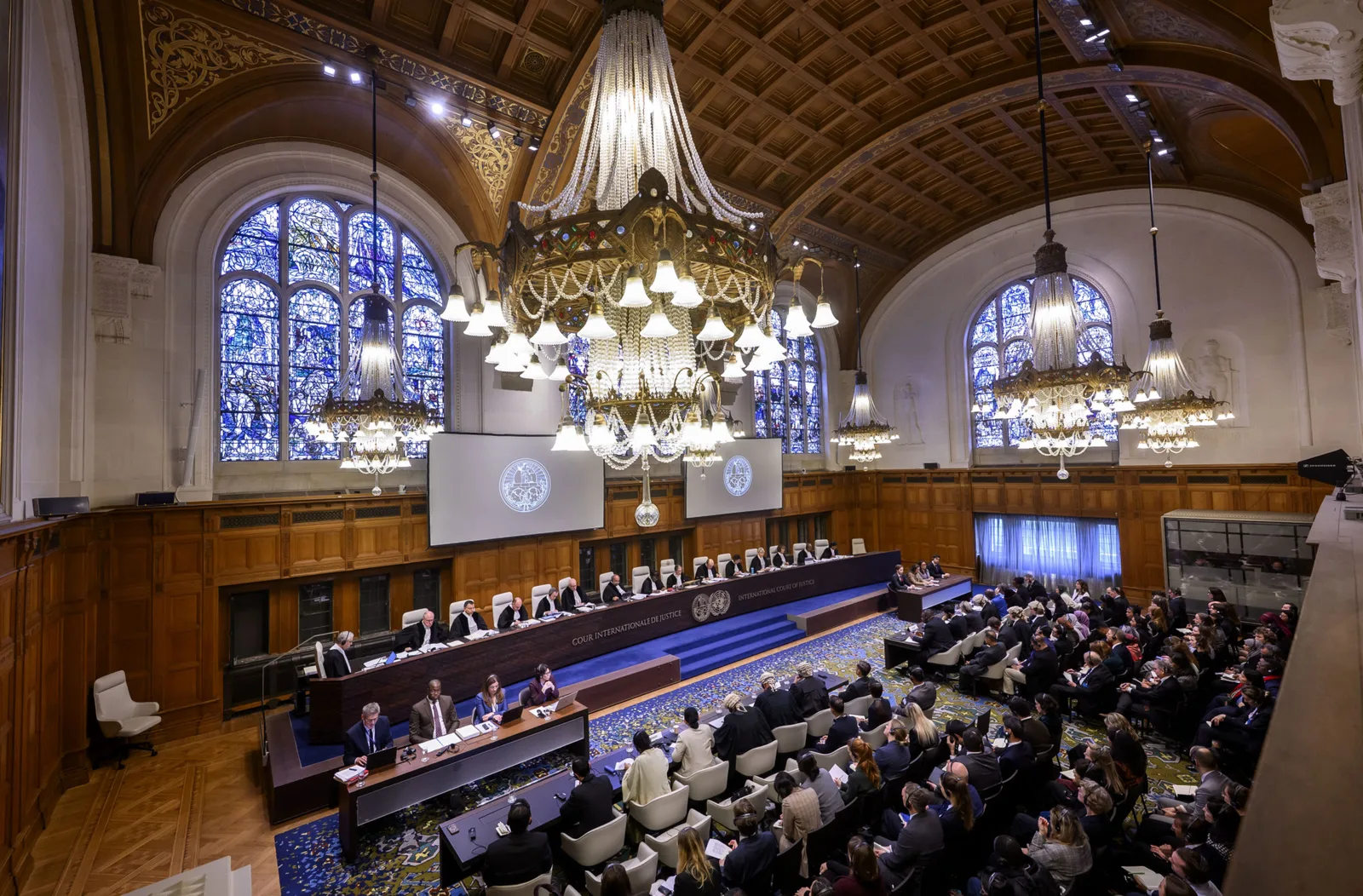
Last week, the International Court of Justice found that the Republic of the Union of Myanmar committed genocide against the Rohingya ethnic group during its “clearance operations” in northern Rakhine State in 2017. The Court found that Myanmar’s security forces committed three acts listed in the Genocide Convention—killing members of a group, causing serious bodily or mental harm to members of a group, and imposing measures intended to prevent births within a group—with the specific intent to destroy a substantial part of the group. This article focuses on the Court’s distinct finding that Myanmar’s security forces committed these listed acts with general intent. As we shall see, the Court’s findings with respect to general intent provided an indispensable foundation for its findings with respect to specific intent.
The Law
Genocide is a “dual intent” crime. Listed acts must be committed with both general intent and the specific intent to destroy a group in whole or in part. In simple terms, general intent involves the perpetrator’s mental state with respect to their own conduct and its direct consequences for individual victims, while specific intent involves the perpetrator’s mental state with respect to the broader consequences of their conduct for the victim group as such. Both are required. The Gambia had to show that Myanmar’s security forces killed, injured, and prevented births among individual victims with general intent, and that Myanmar specifically intended to thereby destroy a substantial part of the victims’ group. While specific intent involves the purpose or aim to bring about a result, the Court clarified that general intent is a broader concept.
In Bosnia v. Serbia, the Court said that
“Killing” must be intentional, as must “causing serious bodily or mental harm”. Mental elements are made explicit in paragraphs (c) and (d) of Article II by the words “deliberately” and “intended”, quite apart from the implications of the words “inflicting” and “imposing”; and forcible transfer too requires deliberate intentional acts. The acts, in the words of the ILC, are by their very nature conscious, intentional or volitional acts (Commentary on Article 17 of the 1996 Draft Code of Crimes against the Peace and Security of Mankind, ILC Report 1996, Yearbook of the International Law Commission, 1996, Vol. II, Part Two, p. 44, para. 5).
In Gambia v. Myanmar, the Court returned to the same passage of the ILC Commentary, which continues: “[t]he prohibited acts enumerated in subparagraphs (a) to (e) are by their very nature conscious, intentional or volitional acts which an individual could not usually commit without knowing that certain consequences were likely to result” (emphasis added).
In Croatia v. Serbia, the Court said
the words “killing” and “meurtre” appear in the English and French versions respectively of subparagraph (a) of Article II of the Convention. For the Court, these words have the same meaning, and refer to the act of intentionally killing members of the group (I.C.J. Reports 2007 (I), p. 121, para. 186 and Blagojević and Jokić, IT‑02‑60‑T, Trial Chamber, Judgment of 17 January 2005, para. 642).
In Gambia v. Myanmar, the Court picked up where it left off, citing the same ICTY Trial Chamber judgment in Blagojević and Jokić as well as ICTY Trial Chamber judgments in Karadžić and Krstić and the ECCC Trial Chamber judgment in Case 002/02 (Nuon Chea and Khieu Samphan). The Court observed
that the expression “intentional killing” has been given the same meaning as “murder” within the definition of crimes against humanity in the jurisprudence of international criminal tribunals. In the Court’s view, a killing is intentional within the meaning of Article II (a) of the Convention where the perpetrator meant to cause the death of the victim or acted with knowledge that death was a likely consequence of the act or omission. This does not include negligence or gross negligence (citations omitted).
Similarly, the Court found that causing serious bodily or mental harm with general intent involves meaning to cause such harm or knowing that such harm is likely to result from one’s conduct (para. 334). Finally, imposing measures intended to prevent births with general intent involves meaning to prevent births or knowing that one’s conduct is likely to prevent births (para. 369).
In his Declaration, Judge Tladi writes that “the Court acknowledges, in substance, the relevance of dolus eventualis in respect of the actus reus.” The trial judgments cited by the Court found that “killing” as a genocidal act and “murder” as a crime against humanity may involve either dolus directus or dolus eventualis. In common law terms, dolus directus corresponds to direct intent or purpose, while dolus eventualis involves acceptance of foreseen risk analogous to implied malice or depraved indifference (see Stakić). While the Court does not expressly mention the dolus eventualis element of acceptance of risk (sometimes described as “reconciliation” or “consent”), the formulation it draws from the ILC (knowledge of likely results) is close if not identical in substance.
The Court’s understanding of general intent is legally sound. It draws on the Court’s own prior decisions, the sources cited therein, as well as other judicial decisions by international courts and tribunals. Notably, none of the dissenting opinions take issue with it. Two prior articles examine general intent and dolus eventualis at greater length (see here and here). On a personal note, it was an honor to see the first article cited by Judge Tladi in his Declaration.
The Facts
On the facts, the Court found that Myanmar’s security forces intentionally killed approximately 10,000 Rohingya. According to the Court, “the killings included, inter alia, the direct targeting of civilians, including women and very young children, and killings with knives and burning of people in houses.” These acts were plainly meant to kill. The Court also found “killing by widespread indiscriminate shooting.” These acts were plainly meant to kill in the vast majority of cases, and in practically all cases were committed knowing that they would likely result in death.
The Court also found that Myanmar’s security forces intentionally caused serious bodily and mental harm, including through the rape of at least 1,834 Rohingya women and girls, often accompanied by beatings or mutilation. These acts were plainly meant to cause serious bodily harm. At a minimum, these acts were committed with knowledge that they were likely to result in serious mental harm (paras. 329 & 334).
Crucially, the Court found that Myanmar’s security forces intentionally caused serious mental harm through the forcible displacement of approximately 700,000 Rohingya across northern Rakhine State. Drawing on Tolimir and Karadžić, the Court found that serious mental harm can result from “violent separation from and loss of family members, the destruction of homes and the inability to return home, ongoing uncertainty regarding the fate of relatives and their whereabouts, ‘appalling conditions of the journey … by bus and on foot’, and ‘post-transfer suffering’” and that such serious mental harm was in fact caused to “a very significant number of members of the Rohingya group in northern Rakhine State.” The perpetrators of the forcible displacement may or may not have meant to cause serious mental harm to their victims. However, as the Court explained,
at a minimum, [] the above violent acts were committed by the Myanmar security forces with knowledge that they were likely to result in serious mental harm to the Rohingya population. They thus constitute intentional acts.
The Court’s broad understanding of general intent was apparently crucial to its finding that forcible transfer caused serious mental harm across northern Rakhine State. As we shall see, this finding was in turn crucial to the Court’s finding of specific intent.
Finally, the Court found that Myanmar’s security forces imposed measures intended to prevent births within the group, primarily through widespread sexual violence. The direct perpetrators may or may not have meant to prevent births but, as the Court explained, they must have known that their acts would likely cause that result. Here, too, the Court’s broad understanding of general intent may have been decisive.
The Court did not find that Myanmar’s restrictions on movement and humanitarian aid amounted to deliberately inflicting on the group conditions of life calculated to
bring about its physical destruction in whole or in part under article 2(c) of the Genocide Convention. According to the Court, such conditions of life must be “objectively capable of causing the death, over time, of at least a substantial part of the protected group” as a matter of “objective probability.” The Court found that Myanmar’s restrictions on movement and humanitarian aid were not objectively capable of causing so much death on their own. The Court did not expound on the accompanying general intent requirement, but it appears to amount to (i) meaning to inflict such conditions or (ii) knowing they are likely to cause such a result.
From General Intent to Specific Intent
As we have seen, the Court found that the forcible displacement of 700,000 Rohingya intentionally caused serious mental harm, because the perpetrators must have known that serious mental harm would likely result. The Court did not have to find that each individual perpetrator acted with the purpose, or aim, to cause such harms, which would have been more difficult, if not impossible. It was enough to find that the perpetrators must have known that they would likely cause these results, which seems difficult to deny.
The Court’s finding that forcible displacement caused serious mental harm with general intent, proved critical to the Court’s analysis of specific intent. From this premise, it followed that the entire Rohingya population of northern Rakhine State—some 800,000 people—was extensively targeted with listed acts by Myanmar, and not only those group members killed or subject to sexual violence in specific locations. This was the starting point of the Court’s ultimate finding that Myanmar specifically intended to destroy a numerically substantial part of the Rohingya group. Other important factors, including the general context of discrimination, selective targeting, attacks on women and children, and the systematic nature and scale of the relevant conduct, filled out the Court’s understanding of Myanmar’s conduct and specific intent.
Notably, the dissenting judges agreed that forcible displacement is capable of causing serious mental harm (para. 56), and did not dispute the Court’s broad understanding of general intent. However, the dissenting judges found insufficient evidence that the “vast majority” of displaced Rohingya in fact suffered mental harm so serious as to result in “long-term disadvantage to a person’s ability to lead a normal and constructive life.” Instead, these judges found extreme violence concentrated in specific villages, but not targeting the Rohingya group across northern Rakhine State. Accordingly, these judges were “not at all convinced, and even less ‘fully’ convinced,” that Myanmar specifically intended to destroy the Rohingya of northern Rakhine State. This was the basic point of dispute between the Court and the dissenting judges regarding specific inent.
Conclusion
The Court’s broad understanding of general intent is legally sound. In future cases, the Court may have to examine how this broad understanding applies to military operations directed at military objectives with knowledge that civilian harm is likely to result. As an earlier article explains, the Court may find that such military operations constitute “killing” or “causing serious bodily or mental harm” within the meaning of the Genocide Convention, but that full compliance with international humanitarian law will typically defeat an inference of specific (genocidal) intent. Alternatively, the Court may find that such military operations will typically constitute “killing” or “causing serious bodily or mental harm” within the meaning of the Genocide Convention only if they violate international humanitarian law. On the latter view, armed forces who fully comply with international humanitarian law may know their conduct is likely to cause death, but they do not “accept” (“reconcile” themselves to, “consent” to, or display “manifest indifference” toward) this result within the meaning of dolus eventualis. The Court’s resolution of such issues may prove both interesting and consequential.