Top 10 Countries by Rare Earth Metal Production
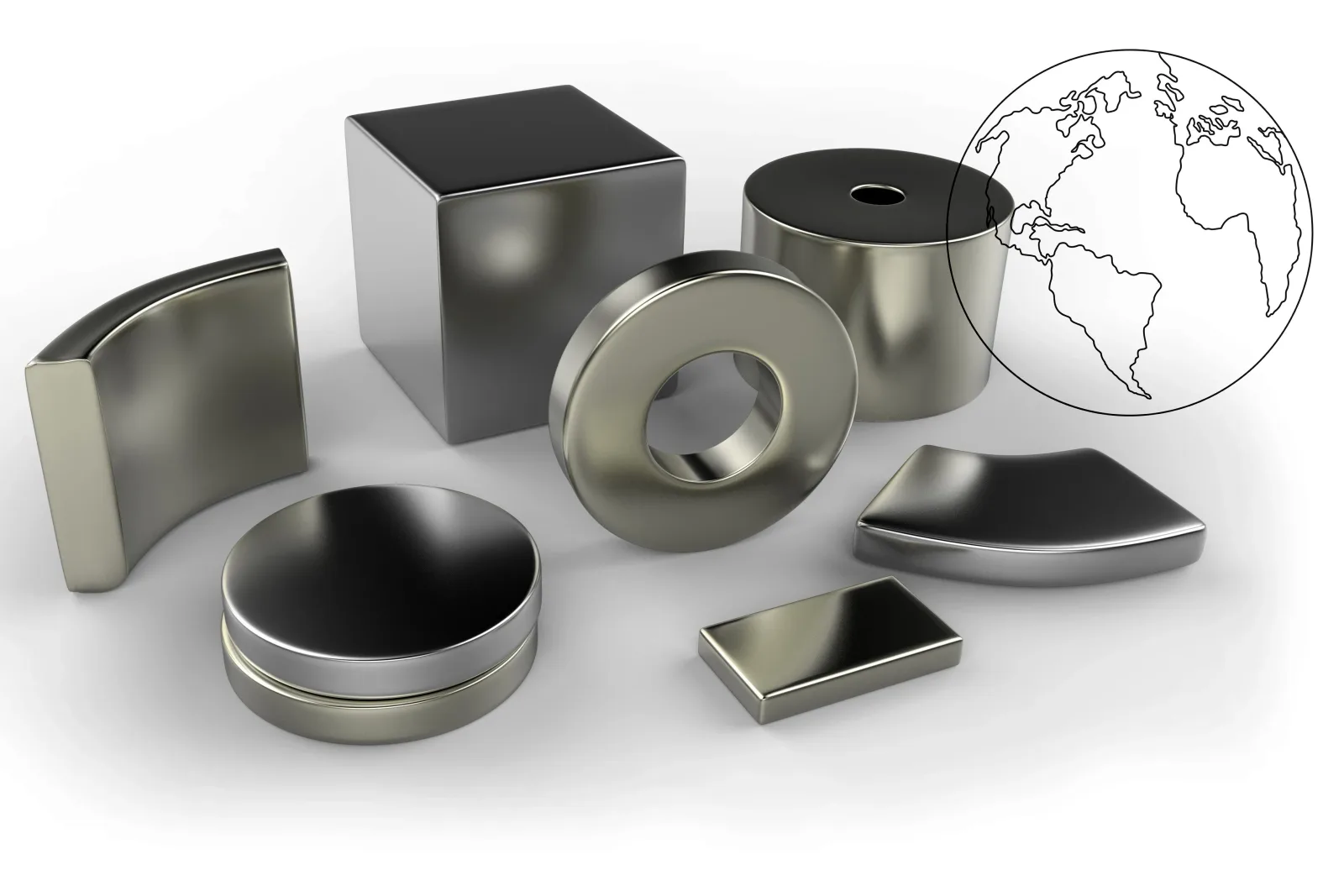
Rare earth metal production was on the rise again in 2025, jumping to 390,000 metric tons worldwide. That’s up more than threefold from 124,000 metric tons in 2015.
Rare earth mining is ramping up due in large part to their critical role in electric vehicles, renewable energy, military applications and high-tech industries. Demand for rare earth metals such as neodymium, dysprosium, praseodymium and yttrium is increasing alongside technological advancements, particularly as artificial intelligence technology gains further importance.
Ongoing tensions between the US and China, along with other geopolitical factors, are impacting the outlook for rare earths investing. Since China is the world’s largest producer of rare earths by far, the fraught relationship between the countries is directing attention to global supply chain disruption in the rare earths industry.
In 2025, 71 percent of US rare earths imports originated from China. While the United States is the second largest producer of rare earths, it trails China significantly, and its known rare earth reserves make up just 2.5 percent of total global reserves.
With that in mind, it’s worth being aware of rare earths production by country. Here’s a look at the 10 countries that mined the most rare earths in 2025, as per data from the US Geological Survey's (USGS) 2026 Mineral Commodity Summary.
1. China
Rare earths production: 270,000 metric tons
In 2025, China produced 270,000 metric tons of rare earth metals, continuing its position as the world's largest producer of rare earths by a wide margin.
As mentioned, China has dominated rare earths production for quite some time. While China dominates global production of the vast majority of the 17 different rare earth elements, its output is heavily concentrated in light rare earths, specifically the magnet rare earths neodymium and praseodymium.
The largest rare earth mining company in the world is China Northern Rare Earth High-Tech (SHA:600111), which owns the prolific Bayan Obo rare earth mining complex in Inner Mongolia.
Chinese producers must adhere to a quota system for rare earths production. Interestingly, this system has led China to become the world’s top importer of rare earths since 2018.
The quota system is a response to China’s longstanding problems with illegal rare earths mining. For more than a decade, the country has taken steps to clean up its act, including shutting illegal or environmentally non-compliant rare earths mines, and limiting production and rare earths exports.
China’s rare earths industry is controlled by state-owned miners, which, in theory, allows China to keep a strong handle on production. However, illegal rare earths extraction remains a challenge, and the Chinese government continues to take steps to curb this activity.
In October 2024, tougher regulations took effect requiring companies involved in the mining, smelting and trading of rare earths to record product flow and input the data into a traceability system. China further tightened those measures in August 2025, issuing interim measures that extended quota controls to imported ore and required producers to upload product-flow data to the traceability system monthly.
Additionally, China's rare earth dominance has allowed it to use the metals as leverage in trade conflicts. In April of 2025, the country expanded export restrictions on seven medium and heavy rare earths (samarium, gadolinium, terbium, dysprosium, lutetium, scandium and yttrium), requiring export licenses.
China expanded the controls in October 2025 to include holmium, erbium, thulium, europium and ytterbium as well, but suspended the expansion for one year in November following a trade truce with the US. On November 9, 2026, the country extended that suspension to January 10, 2027. However, the April 2025 export controls remaining in effect.
2. United States
Rare earths production: 51,000 metric tons
The US produced 51,000 metric tons of rare earths in 2025, up from 45,500 metric tons in the previous year.
Rare earths supply in the US currently comes primarily from the Mountain Pass mine in California, which is owned by MP Materials (NYSE:MP). Mountain Pass is producing high-purity neodymium and praseodymium (NdPr) oxide, a key material for high-strength neodymium iron boron (NdFeB) magnets.
In July 2025, MP Materials announced a partnership with the US Department of Defense, which agreed to invest US$400 million in the company’s preferred stock and is positioned to become its largest shareholder.
The US is a major importer of rare earth materials. The USGS estimates the value of US rare earth imports for 2025 at US$165 million, down from US$168 million in 2024. The country has classified rare earths as critical minerals, a distinction that has come to the fore due to trade issues between the US and China.
To bolster the US's domestic supply, in May 2024, the US Biden administration announced a 25 percent tariff on rare earth magnet imports from China that took effect in January 2026.
With the potential for rising East-West tensions, US President Donald Trump has been keen to secure the nation’s critical minerals and rare earths supply chain. He pushed for access to Ukraine’s minerals, including rare earths, as the basis of a deal with the country, which was signed in April 2025. Then in September 2026, the US, Denmark and Greenland signed a security agreement expanding the US military presence on the island, which Greenland’s parliament approved in November and which awaits approval in Denmark.
3. Australia
Rare earths production: 29,000 metric tons
In 2025, Australia’s rare earths production came in at 29,000 metric tons, the same as the previous year. The country holds the world’s third largest rare earths reserves and is poised to increase its output.
Through Geoscience Australia’s Critical Minerals Research and Development Hub, the Government of Australia is looking to accelerate development of the nation’s rare earths resources. In October 2025, Australia and the US signed a framework to secure supply of critical minerals and rare earths, and in 2026 Australia legislated its AU$1.2 billion Critical Minerals Strategic Reserve, with rare earths among its first focus minerals.
Additionally, the government’s National Reconstruction Fund has committed AU$200 million for the development of Arafura Rare Earths (ASX:ARU,OTCPL:ARAFF) Nolans rare earths project in the Northern Territory, which reached a final investment decision in May 2026. The government has also provided Iluka Resources (ASX:ILU,OTCPL:ILKAF) with a AU$1.65 billion loan for construction of its Eneabba rare earths refinery in Western Australia, which is scheduled to be commissioned in 2027.
The leading producer of rare earths outside of China, Lynas Rare Earths (ASX:LYC,OTCQX:LYSDY) operates the Mount Weld mine and concentration plant in Western Australia. Mount Weld ranks among the world’s top rare earth mines, and Lynas is ramping up an expansion to boost annual production of NdPr products. Downstream, the company produces separated heavy rare earths, namely dysprosium, terbium and samarium, at its facility in Malaysia.
Australian company Northern Minerals (ASX:NTU,OTCPL:NOURF) completed a definitive feasibility study for its Browns Range mining and processing plant in September 2025. As of October 2026, a final investment decision remains dependent on funding; if successful, first concentrate production is targeted for Q1 2029. Browns Range’s main products will be heavy rare earths terbium and dysprosium.
4. Myanmar (also known as Burma)
Rare earths production: 22,000 metric tons
Myanmar produced 22,000 metric tons of rare earths in 2025. This was a decrease of more than 18 percent from the 27,000 metric tons of rare earths Myanmar mined in the previous year.
Myanmar’s rare earths industry is plagued with controversy. Global Witness reported in 2024 that much is carried out by unregulated miners and linked with armed militia groups with no environmental best practices in place. Ironically, the act of mining these metals critical for clean energy technologies such as EVs and wind turbines is itself fraught with environmentally destructive practices that are harming the waterways, wildlife and vegetation in Myanmar.
China, which shares a border with Myanmar, obtains the majority of its medium to heavy rare earths feedstock from its neighbor, including dysprosium and terbium. Myanmar’s rare earths production, and hence China’s feedstock supplies, experienced further disruptions in late 2024. Myanmar’s Kachin Independence Army seized Kachin Special Region 1, near China’s Yunnan province, a critical supplier of rare earth oxides to China. This includes Pangwa, a key rare earths mining hub.
China responded by closing border gates in the area to trade. While the count although it reopened four of them in October 2025, then further lifted restrictions in November 2026. The Kachin Independence Army still holds the mining belt, and Myanmar’s military has stepped up offensives to retake it. A US State Department strategy document published in October 2026 ties peace efforts in Myanmar to access to its rare earths.
5. Thailand
Rare earths production: 4,800 metric tons
Thailand’s rare earths production came in at 4,800 metric tons in 2025, more than double the estimated 2,100 metric tons mined in 2024. The USGS estimates Thailand’s figures from China’s import data, as no data on the country’s mines is published.
While there’s not much information available on Thailand’s rare earth industry, the country is a major source of rare earth imports for China. As far as downstream rare earths product makers, Neo Performance Materials (TSX:NEO,OTCQX:NOPMF) subsidiary Neo Magnequench operates a rare earth magnetic materials manufacturing facility in Korat, Thailand.
In October 2025, Thailand and the US signed a memorandum of understanding on critical minerals and rare earths at the ASEAN summit in Kuala Lumpur. Thai Prime Minister Anutin Charnvirakul has described the deal as non-binding and a framework for cooperation should commercially viable deposits be found.
6. India
Rare earths production: 2,900 metric tons
India’s 2025 production was 2,900 metric tons, unchanged from 2024. The country’s output represents less than 1 percent of global rare earths supply. India’s rare earths production is far below its potential, considering the nation holds almost 35 percent of the world’s total beach sand mineral deposits, which are significant sources of rare earths.
India joined the Minerals Security Partnership (MSP) in mid-2023, a multi-nation group led by the United States and focused on the creation of critical mineral supply chains, including for rare earths. In February 2026, it also formally joined Pax Silica, a US-led initiative on AI and critical mineral supply chains.
Much of the country’s rare earth exploration and mining is being conducted under the auspices of the Government of India via the state-owned rare earths company IREL, which was formed in 1950. In June 2025, India reportedly asked IREL to suspend a 13-year-old rare earth export agreement with Japan to conserve domestic supplies, then in August IREL reportedly sought deeper collaboration with Japan and South Korea for the production of rare earth magnets.
Furthermore, the government approved a US$802 million scheme in November 2025 to build rare earth permanent magnet manufacturing capacity, and the mining minister said in February 2026 that India aims to start producing magnets by the end of the year.
7. Madagascar
Rare earths production: 2,700 metric tons
Madagascar produced 2,700 metric tons of rare earths in 2025, nearly double the 1,400 metric tons produced in 2024. The USGS estimates Madagascar’s output from China’s import data.
The country’s Ampasindava peninsula is reportedly home to 628 million metric tons of ionic clays with a significant concentration of rare earths, particularly dysprosium, neodymium and europium. It’s considered one of the largest rare earth deposits outside China.
Harena Rare Earths is advancing its Ampasindava rare earths project on the peninsula, aiming to start production by mid-2028. In October 2026, Madagascar formalized an exploitation permit for Ampasindava, and in July, the US International Development Finance Corporation announced a commitment for up to US$4.48 million in funding for the project.
In October 2024, Energy Fuels (TSX:EFR,NYSEAMERICAN:UUUU,ASX:EF2) acquired Base Resources and its advanced Toliara heavy mineral sands project in Southwest Madagascar. Energy Fuels plans to separate monazite concentrates from the project, which it renamed Vara Mada in January 2026, at its White Mesa mill in Utah, US. It said in January that talks with the government on fiscal terms were continuing, and that a final investment decision is dependent on formalizing terms.
8. Russia
Rare earths production: 2,600 metric tons
Russia produced 2,600 metric tons of rare earths in 2025, unchanged from 2024. In terms of global rare earths reserves, Russia ranks fifth.
Russia reportedly hopes to increase the nation’s share of global rare earths production to 10 percent by 2030. in November 2025 President Vladimir Putin ordered the government to approve a roadmap for developing rare earth mining and refining.
The country’s largest rare earths deposit, Tomtor, was previously developed by TriArk Mining, a joint venture owned by industrial conglomerate Rostec and billionaire Alexander Nesis. In November 2024, Russian President Vladimir Putin accused the operator of delaying development and suggested it partner with a third party, such as the state, or raise investment. In May 2025, Rosneft took full control of Tomtor’s operator.
Then, in June 2026, India’s IREL entered into talks with Rosneft to source samples from the deposit, as it works to secure its own critical mineral supply chains.
9. Brazil
Rare earths production: 2,000 metric tons
Brazil produced 2,000 metric tons of rare earths in 2025, up from just 560 metric tons in 2024. The country has the world’s second-largest rare earth reserves at 21 million metric tons, behind only China, but its production remains small by comparison.
Brazil’s output comes from Pela Ema mine in Goiás state, which is the country’s only commercial rare earth producer. USA Rare Earth (NASDAQ:USAR) is now the owner of the mine after it closed its acquisition of former owner Serra Verde for about US$2.8 billion in September 2026.
Earlier in the year, in February, Serra Verde secured a US$565 million financing package from the US International Development Finance Corporation that includes an option for the US government to acquire a minority stake. With funding in place, Serra Verde said it aimed to expand production to 6,500 metric tons of total rare earth oxides by the end of 2027. As of November, USA Rare Earth has begun exporting mixed rare earth carbonate to the US.
Brazil has moved to tighten control over its critical minerals sector. In September 2026, President Luiz Inácio Lula da Silva signed a national critical minerals policy into law, creating a council within the presidency that prioritizes processing rare earths in Brazil rather than exporting them as raw materials.
Several other ionic clay projects are in development, including Meteoric Resources' (ASX:MEI,OTCPL:METOF) Caldeira, Viridis Mining and Minerals' (ASX:VMM) Colossus and Aclara Resources' (TSX:ARA,OTCID:ARAAF) Carina.
10. Nigeria
Rare earths production: 1,500 metric tons
Nigeria’s rare earths production in 2025 was 1,500 metric tons, unchanged from 2024, which ranks the country tenth among producers. The USGS had originally estimated its 2024 production at 13,000 metric tons, but revised it heavily this year based on government and industry reports. As Nigeria’s rare earths mining industry is still in the early stage of its development, little is known about the extent of its rare earths reserves at this time.
In June 2026, Nigeria’s government said it had discovered a new mineral province in the northern state of Kaduna containing deposits of precious metals, copper, lithium, rare earth minerals and more.
Nigeria has been working to build out its natural resource sector. In late 2024, the government of Nigeria signed a memorandum of understanding with the government of France to jointly develop critical minerals including rare earths. Then, in September 2026, it announced a framework agreement with the US designed to attract more American investment into the sector.
Don’t forget to follow us @INN_Resource for real-time news updates!
Securities Disclosure: I, Dean Belder, hold no direct investment interest in any company mentioned in this article.