France Faces a Debt Shock as Riots Send Borrowing Costs Soaring

France’s borrowing costs are now higher than Italy’s. Weekend riots pushed the French 10-year yield to about 4.85% on Monday, the sharpest rise in the G7.
Italy, long seen as Europe’s riskier borrower, pays about 4.52%. For French households, that gap is already reaching mortgages, savings, and jobs.
Why France’s Costs are Skyrocketing
Protests over school conditions and living costs turned violent this weekend. Authorities arrested close to 2,400 people, the Guardian reported.
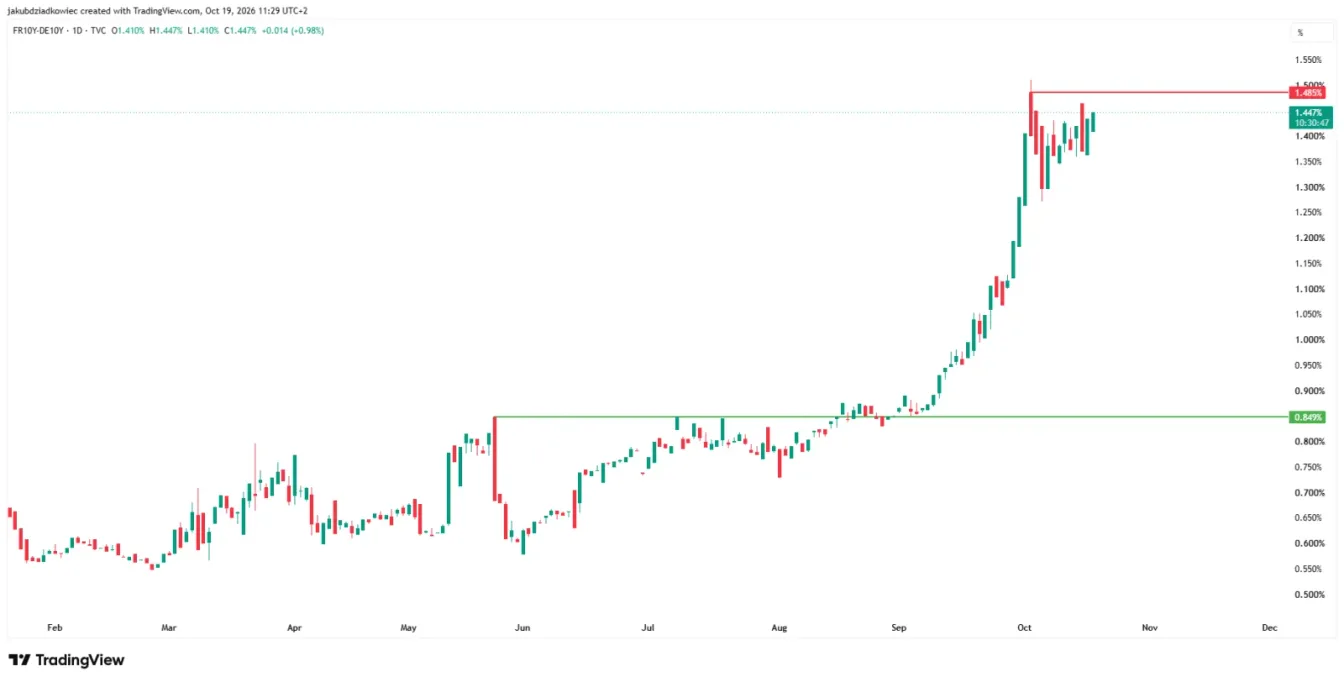
Investors track the gap between French and German 10-year yields as a gauge of French risk. It now sits near 145 basis points, or 1.45 percentage points. In early September, it stood around 85.
Meanwhile, the deficit is expected to reach 5.4% of gross domestic product (GDP) this year. The EU limit is 3%.
Prime Minister Sébastien Lecornu needs about €54 billion in savings for 2027. However, he lacks a parliamentary majority.
“With France already facing a difficult fiscal backdrop and the 2027 election approaching, the weekend adds another layer of political risk for markets.”
Jim Reid, analyst at Deutsche Bank
Are French Stocks Flashing a Warning?
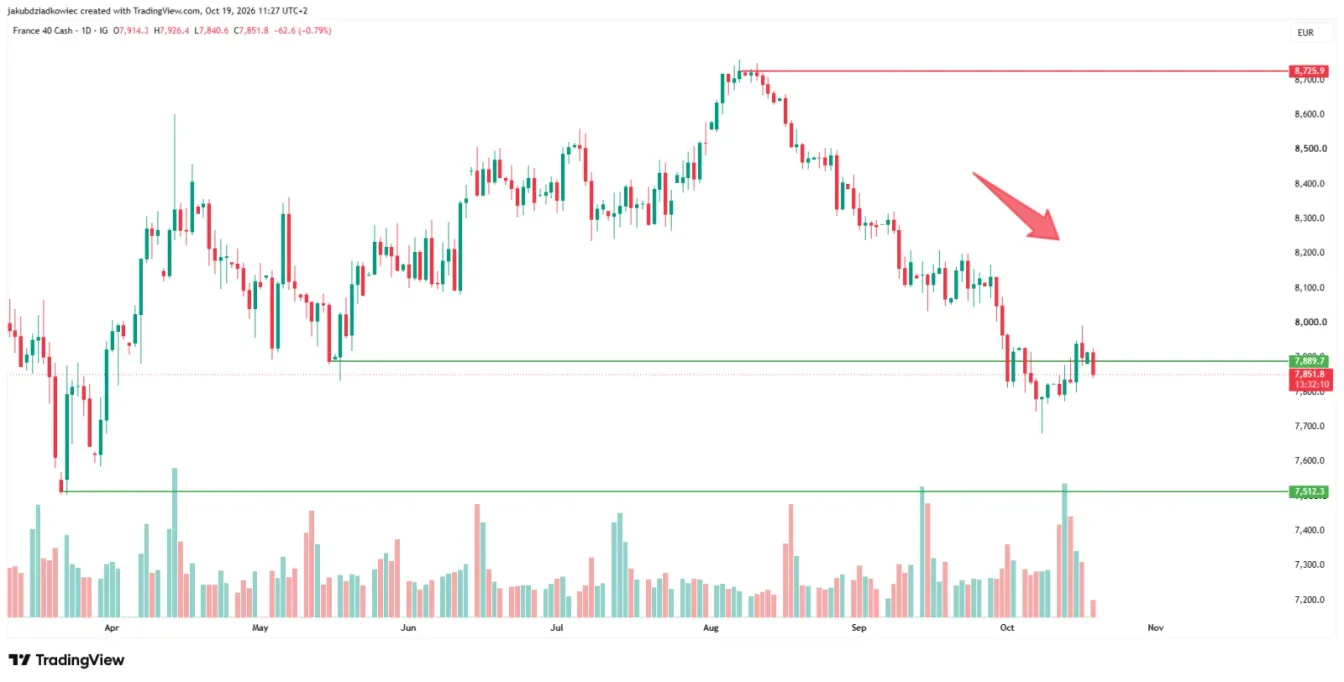
The CAC 40, France’s benchmark index, trades about 10% below its August peak. Each rebound since then has stalled lower.
On Monday, it slipped back under support near 7,890. The next floor sits around 7,510.
Banks led the drop. BNP Paribas, Crédit Agricole, and Société Générale each fell more than 2%, according to the Telegraph.
What Should French Households Check Now?
- Mortgages. The average 20-year rate reached 3.66% in October, up from 3.17% early this year, per broker Pretto. On a €250,000 loan, that adds about €63 a month. Buyers may benefit from securing a written rate offer early.
- Savings. The Livret A, France’s tax-free savings account, pays 1.70%, roughly matching inflation. Eligible lower earners get 2.50% on the means-tested LEP account. Bank deposits remain protected up to €100,000 per bank.
- Life insurance. Euro funds in assurance-vie policies returned 2.63% on average in 2025. Higher bond yields tend to lift these returns gradually.
- Jobs and shops. Carrefour expects repair costs above €10 million, with some franchise staff placed on furlough. That state scheme pays 60% of gross salary. Many shop policies require theft reports within two working days.
- Travel and imports. The euro slipped to about $1.12, near its weakest since May 2025. Dollar-priced trips and goods now cost more.
Can Friday’s Moody’s Review Break the Cycle?
Moody’s reviews France’s Aa3 rating on Oct. 23, with a negative outlook already attached, according to the national debt agency. S&P follows on Nov. 27.
A downgrade could push yields higher still. In turn, that would feed the living costs that sparked the protests.
With an election due next spring, bond yields may become the clearest gauge of what this unrest costs households.