Zhengyuan Quantum Raises Angel Funding For 1,000-Qubit Computer
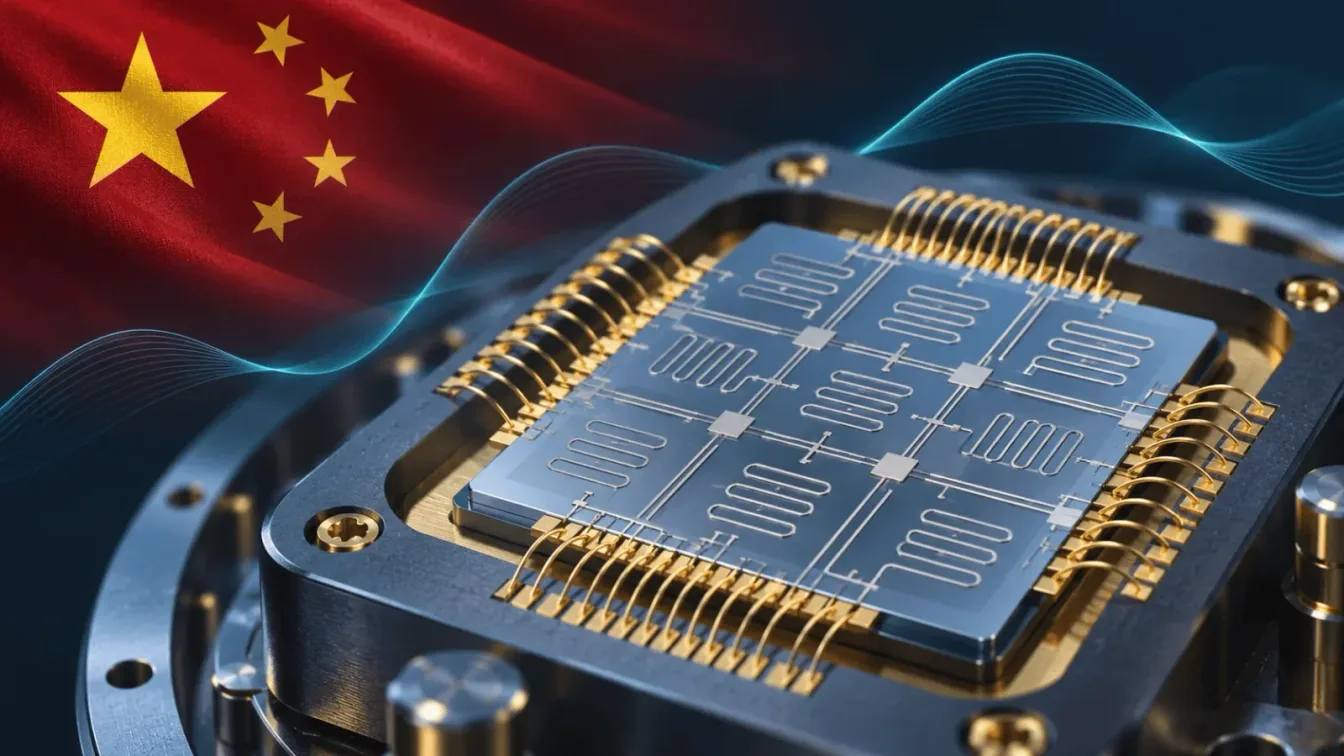
Insider Brief
- Zhengyuan Quantum has completed an angel funding round of undisclosed size to develop a 1,000-qubit superconducting quantum computer, according to media reports.
- The funding will support computer development and testing of three-dimensional packaging, low-temperature connections, and integrated measurement and control technologies.
- Dealroom reported that the startup has secured component orders and is discussing complete systems with potential customers, but disclosed no delivery timeline for its planned computer.
Chinese quantum computing startup Zhengyuan Quantum has completed an angel funding round to support development of a 1,000-qubit superconducting computer, according to media reports.
The company announced the financing Nov. 10, according to a Jiemian News report republished by Sohu. Investors include Shenzhen Capital Group, Pudong Venture Capital, Dening Capital, Xiangjiang Xincheng and Shenzen Angel Fund of Funds, according to Dealroom. Duowei Capital served as the exclusive financial adviser.
The size of the round was not disclosed and no delivery timeline for the computer was offered, according to the reports.
The funding will primarily support research and development of the machine and testing of three technologies needed to connect and operate its hardware: three-dimensional packaging, connections that work at extremely low temperatures, and integrated measurement and control, according to Jiemian News.
Founded in 2026, Zhengyuan is pursuing the 1,000-qubit system as a step toward general-purpose quantum computing, Dealroom reported.
Qubits are the basic units of information in a quantum computer. Superconducting systems use electrical circuits cooled to extremely low temperatures to perform quantum operations. It’s important to note that 1,000 qubits does not guarantee a useful quantum computing because building a larger machine requires more than adding qubits. Engineers must also deliver control signals and read results while limiting interference and unwanted heat.
Dealroom described those connections as a main focus of Zhengyuan’s technology. As the number of qubits increases, space for wiring around a chip’s edges becomes crowded. Additional lines running through the cooling equipment can also introduce heat and interfere with signals, according to its account.
Zhengyuan is developing connections that pass vertically through silicon, along with three-dimensional packaging, to route signals out of the chip, Dealroom reported. The approach would give engineers another route for making connections beyond the chip’s perimeter. Whether it can support the company’s planned system remains to be demonstrated.
The reported spending priorities also extend to the equipment needed to manage a complete machine. Low-temperature connections must carry signals within the cooled hardware, while measurement and control systems direct operations and collect results. Jiemian News described these areas as targets for technology verification, rather than completed capabilities.
Alongside its computer development, Zhengyuan has secured orders for quantum chips and signal amplifiers, according to Dealroom. Its report did not identify the customers or disclose the value of those orders. It also said the company is discussing demand for complete machines with potential customers; those discussions were not described as signed system orders.
Dealroom identified the founder as Zheng Yarui, who holds a doctorate from the Chinese Academy of Sciences’ Institute of Physics and previously led superconducting quantum hardware work at a major internet company. The report did not name that employer. Co-founder Wu Dachao worked on research associated with the Zuchongzhi 3.0 quantum processor, according to Dealroom.