Robert Pattinson is the new James Bond: But Fleming’s real 007 will never reach the screen
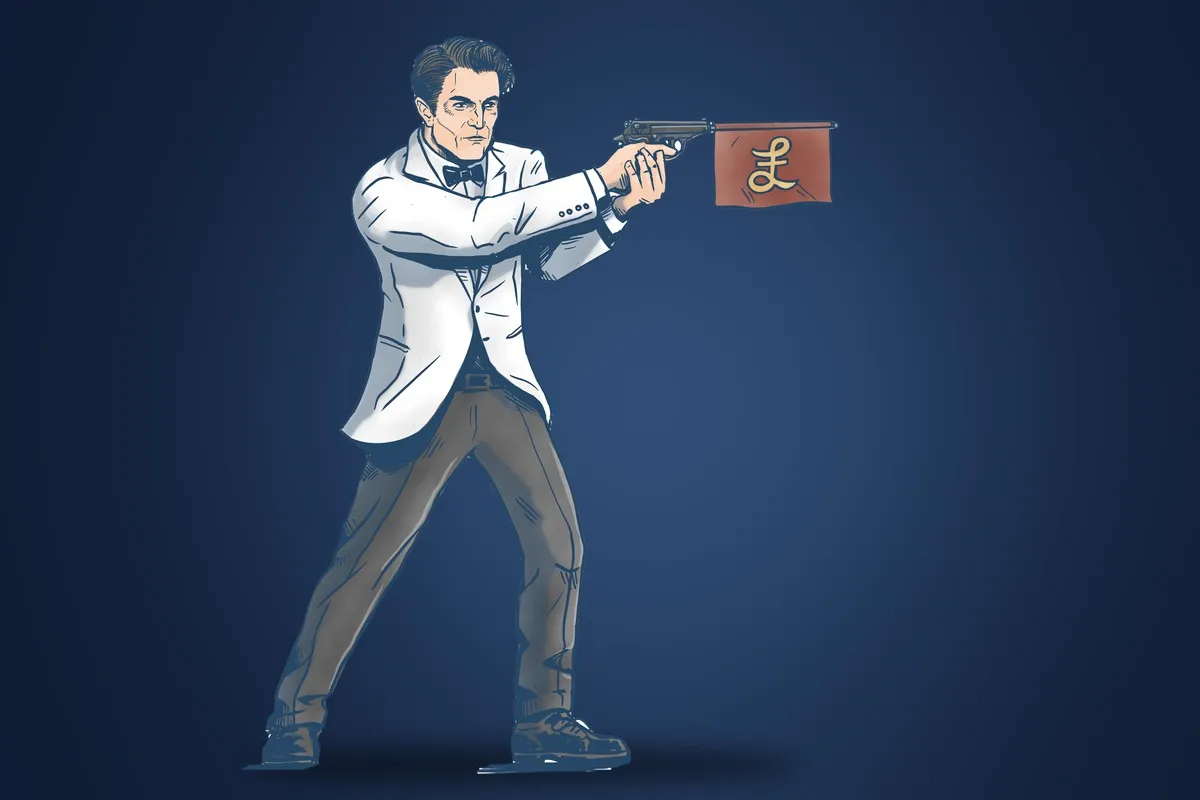
Most of you will know by now that Amazon MGM Studios has cast Robert Pattinson as the next James Bond. He will be the seventh incarnation within the official 007 canon, and is inevitably a controversial choice, although honestly, no-one would have been uncontroversial. There was the familiar apoplexy at the ritual suggestion that Bond could be a woman, or non-white (Rege-Jean Page, John Boyega and 54-year-old Sir Idris Elba were touted). One very meta hypothesis said that “007” was merely a codename and that the new bearer need not be James Bond at all.
Dr No and the first Bond premiere
The seven-year gap between No Time To Die and Bond 26 will be the longest hiatus in the franchise since the first film, Dr No, opened on Friday 5 October 1962. No-one knew if an adaptation of Ian Fleming’s solidly selling espionage thrillers would be a success, and the budget was only $1.1m (in Hollywood terms, between $15m and $20m today). The premiere reflected that: apart from the cast, the stars were Fleming himself, La Dolce Vita star Anita Ekberg and 88-year-old writer and former intelligence officer Somerset Maugham, whose refined but damaged hero Ashenden, reporting to a superior known only as R, had been an obvious influence on Fleming.
It was the same day that the Beatles released their first single, Love Me Do.
Christopher Nolan and the period Bond reboot
One possibility raised during the current interregnum was to reboot the franchise by making the next film in the period of the novels and Fleming’s life, 1953 to 1964. Three years ago, Sir Christopher Nolan was reportedly talking to Bond producer Barbara Broccoli about directing the next “two or three” films in the franchise; but one of his conditions was that they would be faithful, in-period adaptations of the novels.
Nolan had previously said it would be “an amazing privilege” to direct a Bond film, but acknowledged that “you’re working with a particular set of constraints”. The constraint he had set himself was too much, and no deal was agreed. It was not the first time the idea of going back in time has been aired: it was mooted as soon as everything was in place for No Time To Die. And it would certainly be a dramatic departure for a franchise which depends on familiar building blocks – high-tech hi-jinks, modern glamour and a degree of irony.
So what would a period Bond look like? If we take the hero of Fleming’s first (and I think best) novel, Casino Royale, how would a 1953-vintage 007 present himself to us?
Ian Fleming’s James Bond in Casino Royale
Commander James Bond, Royal Naval Volunteer Reserve, is six feet tall, taut and wiry rather than muscle-bound. He has black hair, a comma-shaped lock of which falls over his forehead, and cold, blue-grey eyes; the three-inch scar down his right cheek completes a severe appearance. You don’t get many laughs.
He is in his mid-thirties, and, of course, a veteran of the Second World War. His naval commission was a convenient cover which he has maintained, ending the War a commander; the shadowy brutality we come to see in Bond is deeply practised and inhaled.
Did he take part in the commando raids? On the Lofoten Islands, Vagsoy or Haugesund in Norway? He is entirely at home on skis, a legacy of his Scottish father and Swiss mother, who were killed in a climbing accident in the Aiguilles Rouges when he was 11. Bond has the closed-off self-sufficiency of the orphan, case-hardened by boarding school: he was removed from Eton after a year – “some alleged trouble with one of the boys’ maids” – and sent to Fettes in Edinburgh. When he left at 17, he’d been taught duty and sacrifice, and had boxed for the school.
Smoking, drinking and the Vesper martini
This tough athleticism has kept Bond going. He still carries that fatalism of wartime, because in a sense the War has never ended for him. The adversaries are different but death tastes the same in any cuisine. He smokes, like most men in the 1950s, but 60 or 70 cigarettes a day is recklessness. You notice the aroma about him straight away. The mixture of Turkish and Balkan tobacco, with a very high nicotine content, doesn’t dissipate. You may find the smell refined, luxurious – but it’s with Bond all day, getting stronger and stronger.
He is enthusiastic about food, but part of you wonders how he can taste anything. And if he does, how can he remember? His drinking is as reckless as his smoking.
“I take a ridiculous pleasure in what I eat and drink,” he once said.
You can’t argue with the second part. He favours a martini, of course, or a Vesper, his own twist on it. All you can say is it seems a lot of liquor going into one glass. When he travels, which is often, he prefers to drink locally: mint juleps in Kentucky, Sazeracs in New Orleans, Rum Collins in the Bahamas. But he also likes champagne – Taittinger is a favourite – and bourbon and Scotch. There’s a souring sense of it keeping demons tamped down, and a man who drinks such quantities of hard booze always has a sharp tang about him.
A hero who is hard to like
In truth, 007 is hard work as a conversationalist. He revels in a brutal honesty, tearing away your illusions and comforting euphemisms as well as having none of his own. He hates, fears, sentimentality.
“Yes, dammit, I said ‘was’. The bitch is dead now.”
He’s been hurt badly, grievously, you can tell that. His attitude to women shows the pain. They are disposable luxuries, most of the thrill being in the chase. If they have feelings too, Bond gives no sign of noticing. Pain can make people hard or soft. With Bond, he wants everyone to share.
Do you like the man? No, it’s very hard to like him. He’s hard and cold, his smooth, public-school voice all clipped consonants and efficient vowels. He gives little away, and has few stories he can tell you. He excels at what he does, and it has to be done, but it’s a job which does nothing to breathe warmth into a man’s chilly nature.
Could a James Bond reboot ever work?
It makes you wonder whether even a film-maker of Nolan’s gifts could package this protagonist, remaining faithful to the source material but giving him popular appeal. Fleming’s Bond isn’t an anti-hero, Fleming was too much part of the Establishment for that, but he’s an invitation to understand that the rough men who stand ready to do violence while we sleep peacefully are just that: rough. They haven’t the luxury to be anything else.
It won’t happen. But there’s little doubt that a period Bond, soured by life and haunted by grief, would be a more challenging and more fascinating cinematic artefact than a 26th iteration of the existing formula. There’s a reason we talk about the Bond franchise, though. Part of the deal is that it stays the same.