ICYMI: China's 90 billion yuan rescue: record state ETF buying struggles to halt AI sell-off
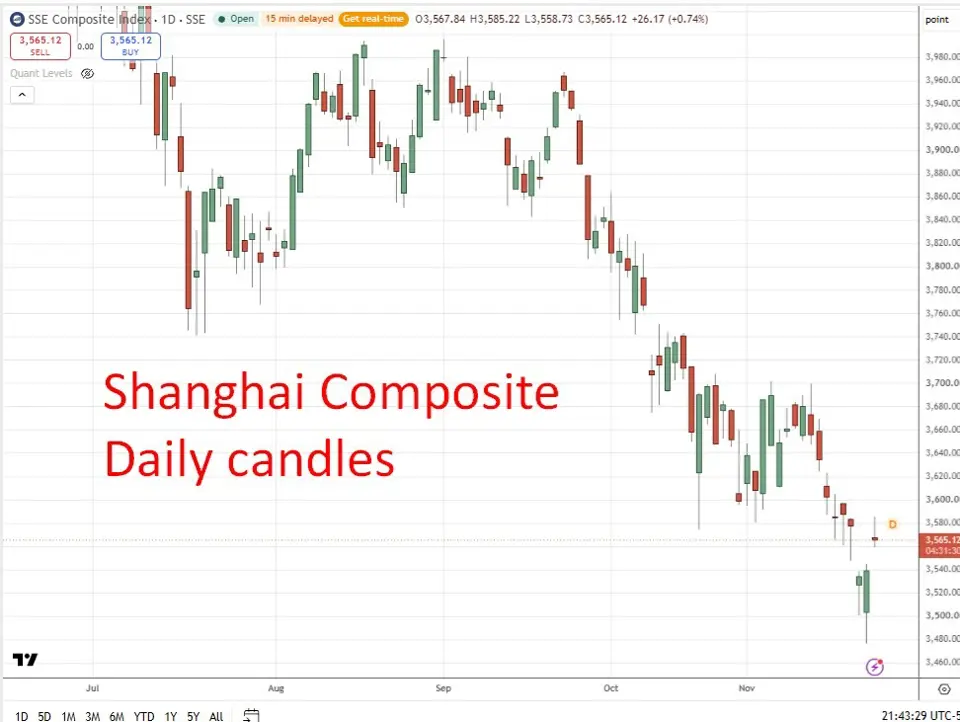
Today's session is the first real test after Wall Street's Nvidia-led rebound. A sustained recovery in Chinese and Korean stocks without further state buying would suggest the interventions mark a floor, while renewed selling would raise the odds of larger, more direct support. The weekend's looser margin rules could amplify moves in both directions. For currencies, aggressive Korean intervention alongside this week's expected BOK hike adds to the balancing act for the won. Chinese AI and semiconductor names remain exposed to US export-control headlines, which state buying of large-cap index funds does little to offset.
---
Beijing has brought out its biggest tool, but a record day of state buying followed by fresh lows on Monday shows how hard it is to buy your way out of an AI sell-off.
Summary:
- China's state-backed "national team" funds put a record 90 billion yuan ($13.5 billion) into nine ETFs on Friday, beating the previous high of 87 billion yuan
- Regulators lowered the minimum margin ratio to 80% over the weekend, making it easier to buy stocks with borrowed money
- Mainland stocks still fell to their weakest in more than a year on Monday, with the Shanghai Composite dipping below 3,500
- South Korea announced emergency measures, including a stabilisation fund of about 10.8 trillion won, after the Kospi fell 5.2% on Friday
- The Kospi is down roughly 45% from its June peak above 9,100
China's state-backed funds made their biggest one-day push into the stock market on record on Friday, pouring 90 billion yuan ($13.5 billion) into exchange-traded funds in an attempt to halt an AI-driven sell-off. The scale of the buying is as revealing as the support itself: it shows how deep the selling pressure across Asia's technology-heavy markets has become.
What Beijing did
According to data compiled by Bloomberg, inflows into the nine ETFs known to be actively traded by the so-called national team, the group of state-linked funds Beijing uses to steady markets, totalled 90 billion yuan on Friday. That beat the previous record of 87 billion yuan. The Harvest CSI 300 ETF drew a record 23 billion yuan and the ChinaAMC SSE 50 ETF an all-time high of 21.7 billion yuan, both of which track China's biggest listed companies.
Regulators followed up over the weekend by lowering the minimum margin ratio to 80%, reducing how much of a leveraged share purchase investors must fund with their own money. In plain terms, Beijing has made it easier to buy stocks with borrowed cash.
Why it may not be enough
The intervention did not immediately turn the tide. Mainland stocks fell to their weakest levels in more than a year on Monday, with the Shanghai Composite slipping below 3,500 at one point, as tighter US controls on advanced AI chips and the global sell-off in AI stocks kept pressure on the market. Bloomberg described the record rescue as masking deepening investor gloom.
The challenge is that state buying is concentrated in broad, large-cap index funds, while the selling has been driven by technology and AI names. Goldman Sachs estimated in October that AI-related stocks accounted for 42% of the market value of mainland and Hong Kong-listed Chinese shares and 57% of trading volume, leaving the whole market exposed when sentiment toward the sector turns. Easing margin rules also carries a risk: it can support prices in the short term, but encouraging more borrowing into a falling market can magnify losses if the slide resumes.
Beijing has used this playbook before. State-backed funds bought heavily during the 2015 stock market crash, and again in early 2024, when purchases of index ETFs helped put a floor under prices. Those episodes showed the national team can slow a sell-off, but turning sentiment around has usually required a change in the underlying drivers.
Seoul readies its own fund
China was not alone. South Korea announced emergency measures on Sunday after the Kospi plunged 5.2% on Friday to its lowest close in 10 months, including preparations for a market stabilisation fund that would buy index-linked products, a temporary easing of share buyback restrictions and a three-month crackdown on illegal short selling. Finance Minister Lee Hyoung-il said on Monday the government was ready to activate its fund of about 10.8 trillion won ($8 billion) depending on market conditions and could adjust its size, as the Kospi fell as much as 5.5% for a second straight session of steep losses. The index has dropped roughly 45% from its June peak above 9,100.
What to watch
Monday's sharp rally on Wall Street, led by Nvidia after Jensen Huang's reinstatement, gives Asian markets their first real chance to recover. The test for Beijing and Seoul is whether that rebound holds without further state buying. If it does, the interventions may be remembered as a floor at the bottom. If selling resumes, pressure will build for larger and more direct support, and for policymakers to address the AI and export-control concerns behind the sell-off.
This article was written by Eamonn Sheridan at investinglive.com.