AT&T CFO’s Final Call
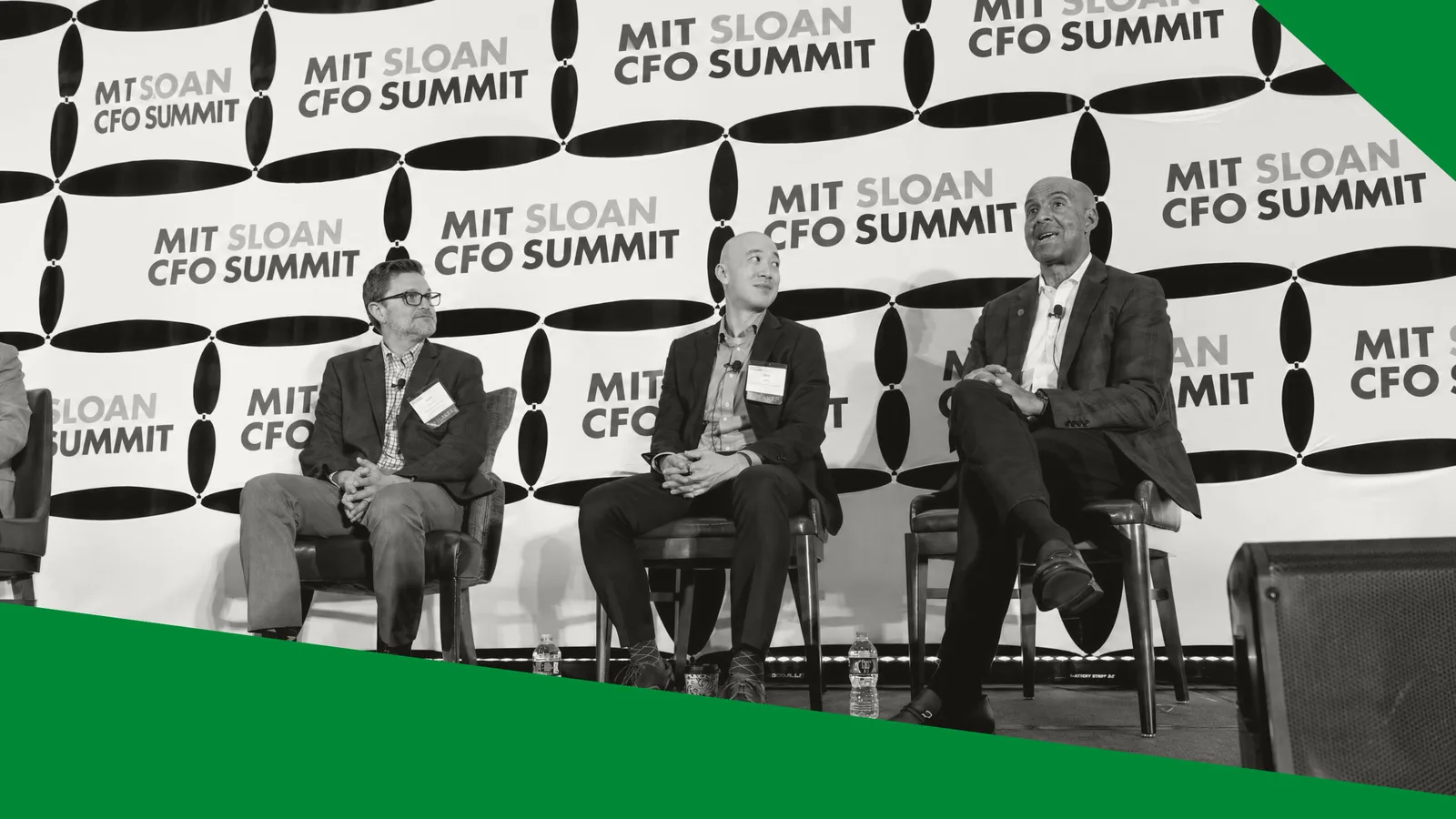
Pascal Desroches is leaving AT&T’s top finance job at the end of the year with a reminder for his midmarket peers: The decisions made behind that desk will keep shaping the business long after its occupant moves on.
“The judgments we’re making today are going to position us for the next decade,” Desroches said at the MIT Sloan CFO Summit on Nov. 19. In his final public appearance as a CFO, he reflected on decisions that changed AT&T’s direction and the responsibilities facing executives navigating today’s technology landscape. He will retire Dec. 31, with Jennifer Biry succeeding him Jan. 1.
Seated alongside Southwest Airlines CFO Tom Doxey and Target CFO Jim Lee, Desroches described accurate reporting and delivering on budget commitments as “table stakes.” The greater contribution comes from helping the organization continuously transform and working with the CEO and board to fund future growth while withdrawing investment from areas with weaker prospects, he said. “Those are hard decisions,” he said, “but they are at the core of what is necessary in order to succeed as a company.”
Cutting the Cord
That responsibility was immediate when Desroches became AT&T’s CFO at a time when the company needed spectrum for the transition to 5G and investment to upgrade its broadband infrastructure from legacy copper to fiber.
Its media business faced an expensive shift to streaming, while DirecTV was in decline. AT&T also had an annual dividend obligation exceeding $15 billion, he said, with a yield of about 8%. “Why? Because investors believed it wasn’t sustainable.”
He detailed how supporting those competing demands required deciding what the company could stop doing, crediting CEO John Stankey with making that call. “In order to play offense, in order to invest in the biggest part of our businesses, we needed to divest some of our other businesses,” he said.
Reducing the annual dividend obligation from roughly $15 billion to $8 billion was the hardest decision, he recalled. AT&T first signaled the cut in May 2021, roughly six weeks into his tenure as CFO. “Talk about welcome to the job.”
Looking back nearly six years later, Desroches pointed to consistent growth in broadband and wireless, alongside the ability to return capital through dividends and share repurchases. His experience highlighted the judgment required to weigh the risks of selling parts of the business against the cost of preserving commitments that could limit future growth.
That same willingness to reconsider existing arrangements informed his approach to technological change. “In order to get ahead of it, you have to fundamentally continuously transform your business,” he told the audience. Desroches cited productivity gains from AI in call centers, field service, network operations and software coding. “Those that don’t get ahead of it fall behind,” he said. “I think those that do are not only going to survive, but they’re going to thrive.”
His case for adopting AI rested on the economics of being in a mature business. “In order to win, we actually have to go out and take [from] somebody else,” he said. “And in order to do that, you have to have the best possible cost structure to be able to deliver the best value for your customers.” Improving productivity gives the company more room to compete on value, while waiting for competitors to pull ahead can narrow that room.
“You can’t play it safe. You really can’t. You have to lean into the enormous benefits of AI,” Desroches said. “The way you do that is to lean into these tools and you innovate within your business using these tools,” he said, “because the status quo is just not enough.”
Taking those chances, Desroches said, also requires giving employees permission to pursue them. Discussing innovation at large companies, one panelist described leaders’ responsibility to commit resources and support people through uncertain outcomes. “We have to make bets and put things in place and give them the permission to go after it and be supported, no matter how challenging the outcome,” he said.
The Human Connection
Desroches placed a direct obligation on executives to strengthen their teams. “Every single leader has to make talent management a key priority because you are only going to be as good as the team,” he said. He described talent management as “an affirmative responsibility,” with leaders accountable for developing the people whose judgment the business will need.
He emphasized finding curious people committed to continuous learning, then giving them opportunities to improve. Hiring for those qualities is the beginning of the work. “The rest of it has to come from development and opportunity to continue strengthening,” he said. As technology becomes more prevalent, his emphasis remained on people’s ability to think critically and solve problems.
The discussion also connected the pace of change with the reassurance employees need. “Really finding ways to recognize the change and then reassure people that you are going to make it through to the other side is going to be critical,” he said.
Desroches described how his own experience illustrated how leadership at a company like AT&T can siphon time and energy from life outside work. “I decided after 40-plus years that I gave up too much of my own personal life, and I needed to be back into some balance,” he said. He had deliberately protected important family occasions but was candid about the moments he missed. “Yeah, I miss a lot of things, but the things that were truly important, I was there.”
Dial Up: He also stressed making time for exercise and sleep. His advice to younger executives was to find what restores their energy and make time for it. “You have to carve out and figure out what gives you replenishment every day,” he said. “These jobs are hard,” he added. “You’re going to get punched in the nose every single day.”