Cyber resilience: how businesses can prepare for the threats ahead
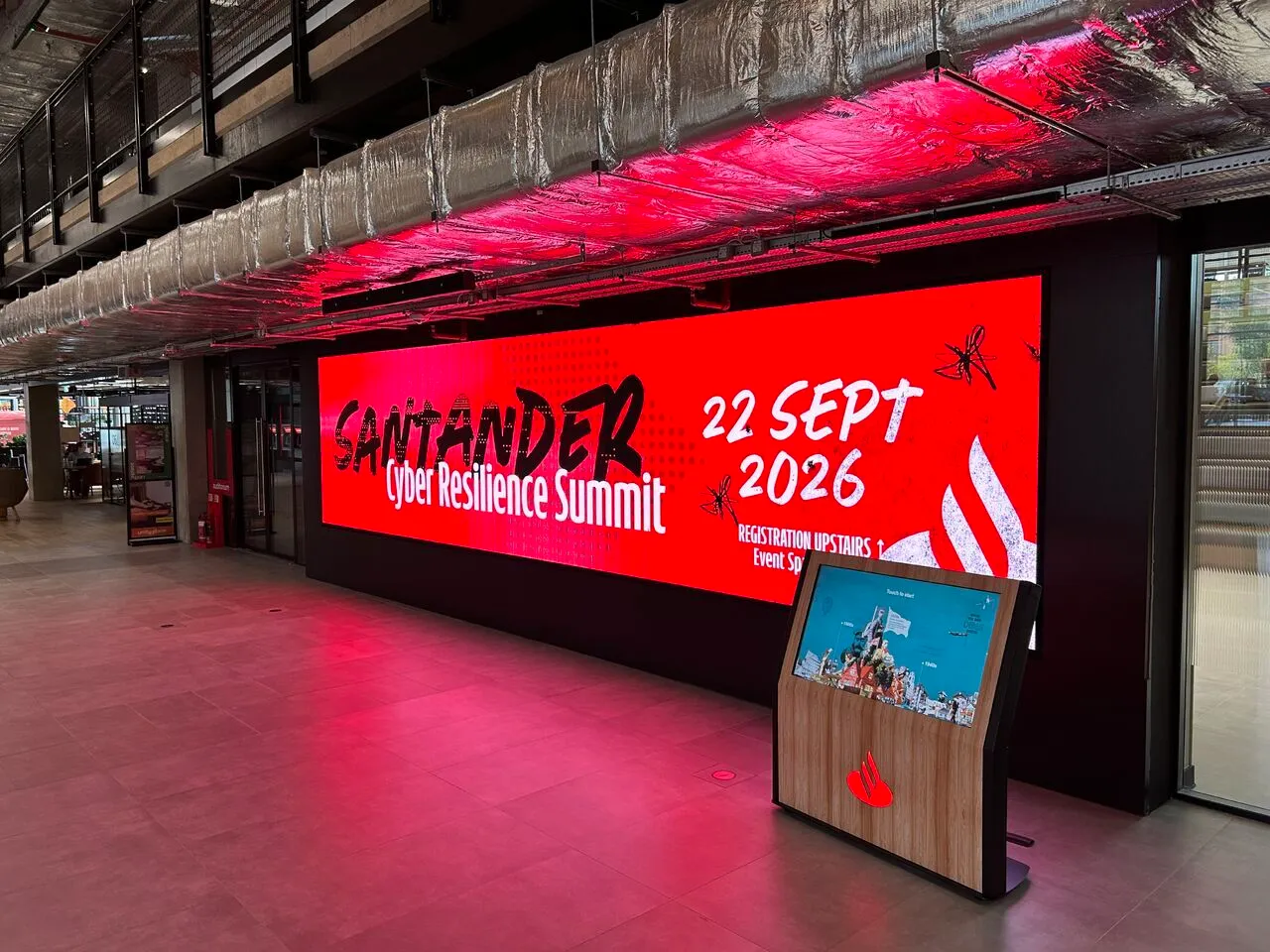
Digital technology has transformed how businesses operate, but greater connectivity has also created new vulnerabilities. Against this backdrop, Santander UK Corporate & Commercial Banking’s Cyber Resilience Summit explored how organisations can prepare for disruption and strengthen resilience.
John Baldwin, CEO of Santander Corporate and Commercial Banking, said cyber readiness should be treated as a priority by companies of every size.
“Cyber resilience is no longer solely an IT issue. A cyber incident can disrupt operations, damage customer trust and have serious financial and reputational consequences,” he said.
“When it comes to cyber risk, knowledge is power. The better businesses understand the threats they face, the better equipped they are to prepare, respond and recover.”
The impact can extend far beyond the organisation initially targeted. Disruption can spread through supply chains and potentially impact the wider economy.
“Businesses cannot tackle this threat alone,” Baldwin added. “As a relationship-focused bank, Santander’s role is not only to support our clients’ growth ambitions, but also to help them understand and navigate cyber risks, strengthen their resilience, and continue to operate and succeed with confidence in an increasingly digital world.”
Emily Darlington MP for Milton Keynes Central and speaker at the Summit, said artificial intelligence was creating significant opportunities for businesses while also changing the nature and scale of cyber risk.
“Despite being one of the smaller countries in the world, the UK remains one of the biggest targets for cyber attacks. Building resilience for an AI-powered future will require close collaboration,” she said.
“Banks have an important role to play by helping businesses understand emerging risks, prepare for potential disruption and strengthen their resilience.”
She added that bringing government, industry, financial institutions and businesses together could “strengthen collective defences and enhance the UK’s technological capabilities and support a secure and resilient economy.”
THE CYBER EXPERT
Craig Rice, CEO of the Cyber Defence Alliance, said the shift from talking about security to talking about resilience reflects a crucial change in thinking.
The Cyber Defence Alliance is a not-for-profit cyber threat intelligence organisation that works alongside industry experts, trade bodies, law enforcement and government agencies to help defend against existing and emerging cyber threats.
“[The term] Cyber security described a world where, if you gave IT security specialists enough resources, they could defend against everything the bad guys could do,” he said. In comparison, “Cyber resilience is an acknowledgement that we can’t, and that disruptive and destructive attacks and operational outages are going to become part of everyday life. We need to prepare for that.”
Rice said resilience depends on testing response plans before an incident occurs. “Before an event, it is about thinking through those contingencies, recovery and, more importantly, rebuilding. It is then stress-testing those plans and not experiencing cyber as a theoretical construct, but simulating incidents and learning from them.”
During an incident, the immediate priority is to establish its cause and impact, and to contain the damage.
“Is this an existential threat that means I need to shut everything down, or can I segment the network to contain the intrusion?” he said. “It can be very confusing when there is a cyber incident. The quality of individuals is still the major differentiator, even in this age of AI, in how quickly you can get on top of it.”
Collaboration also allows organisations to learn about threats before they face them directly. Commenting on the formation of the Cyber Defence Alliance; “The idea was to move beyond information-sharing and create a genuine operational capability where you come to the defence of a competitor,” Rice said. “It is much better to defend within your competitor’s infrastructure and learn about that threat today than to be unsighted when it strikes you tomorrow.”