B2Gold charts path back to million-ounce producer ranks
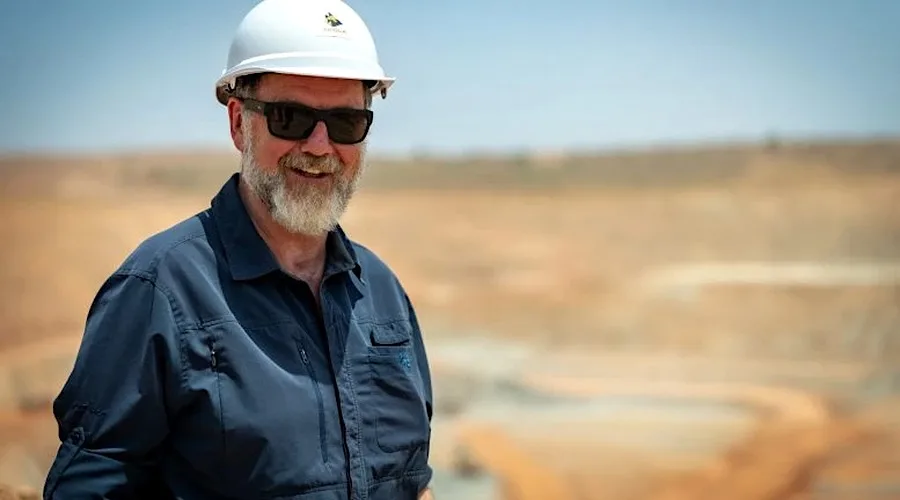
B2Gold (TSX: BTO) expects to restore annual gold production to more than 1 million ounces from 2028 as it expands its flagship Fekola operation in Mali and ramps up its new Goose mine in Canada.
The Vancouver-based miner has cleared permitting hurdles at its Fekola Regional project, paving the way for it to truck ore from satellite deposits to the main processing plant starting next year, while its Canadian operation is targeting annualized production of 300,000 ounces in 2027, president and CEO Michael Cinnamond told MINING.COM.
“We think we can get the Fekola complex at 500,000 ounces plus for a while and when I look at 2028 to 2030, those are big years for Fekola,” Cinnamond said in an interview in London.
The operational recovery could help the mid-tier producer narrow its share price discount to peers and capitalize on higher gold prices without resorting to acquisitions. A potential new mine in Colombia could also help offset declining production at its more mature operations.
B2Gold produced more than 1 million ounces annually from 2020 to 2023 before output slipped to 804,778 ounces in 2024 due to lower ore grades at Fekola.
The company cut this year’s production guidance to 820,000–920,000 ounces from an earlier forecast of 820,000–970,000 ounces following permitting delays in Mali and operational setbacks at Goose, where a crusher fire disrupted operations.
Malian authorities approved permits for Fekola Regional in August after several delays as the West African nation overhauled its mining laws. The satellite deposits are expected to contribute 150,000 ounces annually from next year. Fekola is forecast to produce 390,000–420,000 ounces this year.
In Canada, Goose is expected to produce about 200,000 ounces this year, with the operation targeting a sustainable annualized rate of 300,000 ounces by the first half of 2027, Cinnamond said.
Sustaining group production beyond 2028 will also depend on B2Gold’s ability to extend output from its Otjikoto mine in Namibia and Masbate operation in the Philippines.
B2Gold’s $740 million Gramalote faces key permit test
The company plans to decide next year whether to develop its Gramalote gold deposit in Colombia. It could consider a smaller operation producing about 225,000 ounces annually during its first five years and 200,000 ounces thereafter, Cinnamond said.
The project’s estimated $800-million development cost needs updating because the underlying study was conducted three years ago, he said.
“If you add Gramalote in the mix it would supplement some of the downturn at Masbate and Otjikoto,” Cinnamond said.
Deals take backseat
Cinnamond, formerly B2Gold’s chief financial officer, took over as president and CEO in June from Clive Johnson, who had led the company since its founding in 2007.
The new CEO is reluctant to pursue acquisitions in the near term. B2Gold paid C$1.1 billion for Sabina Gold & Silver in 2023, securing its first gold assets on home soil.
“We have grown through acquisitions and done it successfully, we still have got that entrepreneurial spirit,” Cinnamond said.
“But it’s not the right time for our company, I mean you should be aware what’s out there, but we have to get ourselves through the key catalysts first.”
B2Gold’s shares have lagged those of its peers despite the gold price rally and strong returns, Cinnamond said. While regulatory uncertainty in Mali was largely beyond the company’s control, development delays and cost overruns at Goose have also undermined investor confidence.
“Now we need to demonstrate that we have these fully executed and that’s when we see the unwind of the (share price) discount,” Cinnamond said.