An American lawyer helped open a backchannel between Biden’s White House and Putin. A Financial Times report details the exchanges, a later unofficial peace bid, and how it fell apart.
The Financial Times has published details of back-channel talks between U.S. leaders and Vladimir Putin in 2022 and early 2023. The effort began with Richard Conn, an American lawyer who had worked in Russia for many years and, after the war began, grew concerned that Putin might use nuclear weapons, with unpredictable consequences. In the fall of 2022, Conn worked through several Russian and American intermediaries to deliver a “conciliatory” message from Joe Biden’s administration to Putin. He later received a response to subsequent peace proposals. But by early 2023, official negotiators Yuri Ushakov and Eric Green had effectively brought Conn’s channel to an end, even before the Biden administration left office. The many subsequent U.S. attempts to negotiate a peaceful end to the war have involved other people and have yet to succeed.
Who is Richard Conn, and how did he get involved in talks between Russia and the U.S.?
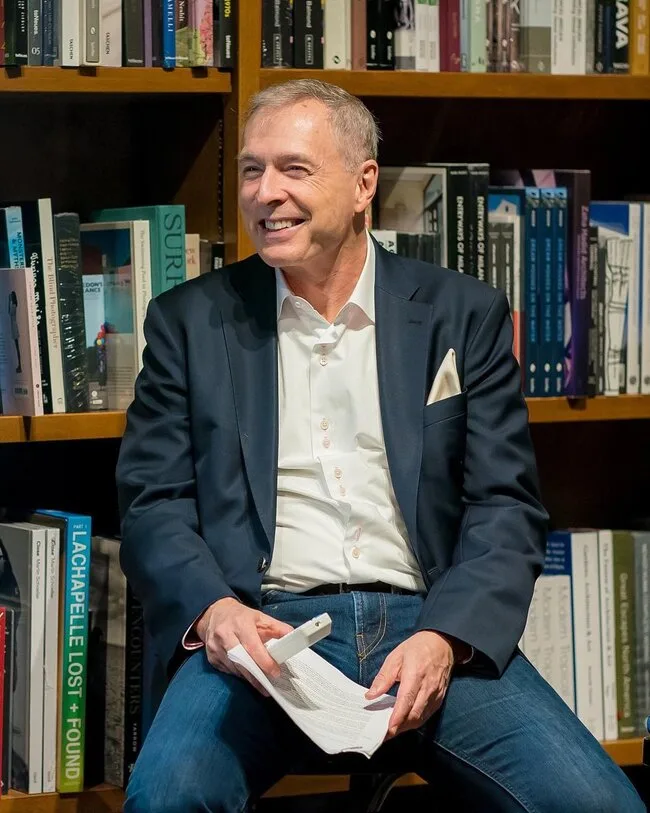
Richard Conn is an American corporate lawyer and investor who began working in Russia in 1992, when he founded the Russian office of the law firm Latham & Watkins. The back channel originated in early March 2022, when Conn received a call from an unnamed Russian businessman who feared that the failure to capture Kyiv was pushing Vladimir Putin toward using tactical nuclear weapons in Ukraine. Conn decided he could use his longstanding contacts among American investors in Russia to establish direct contact between Washington and the Kremlin, bypassing Russia’s Foreign Ministry and other officials.
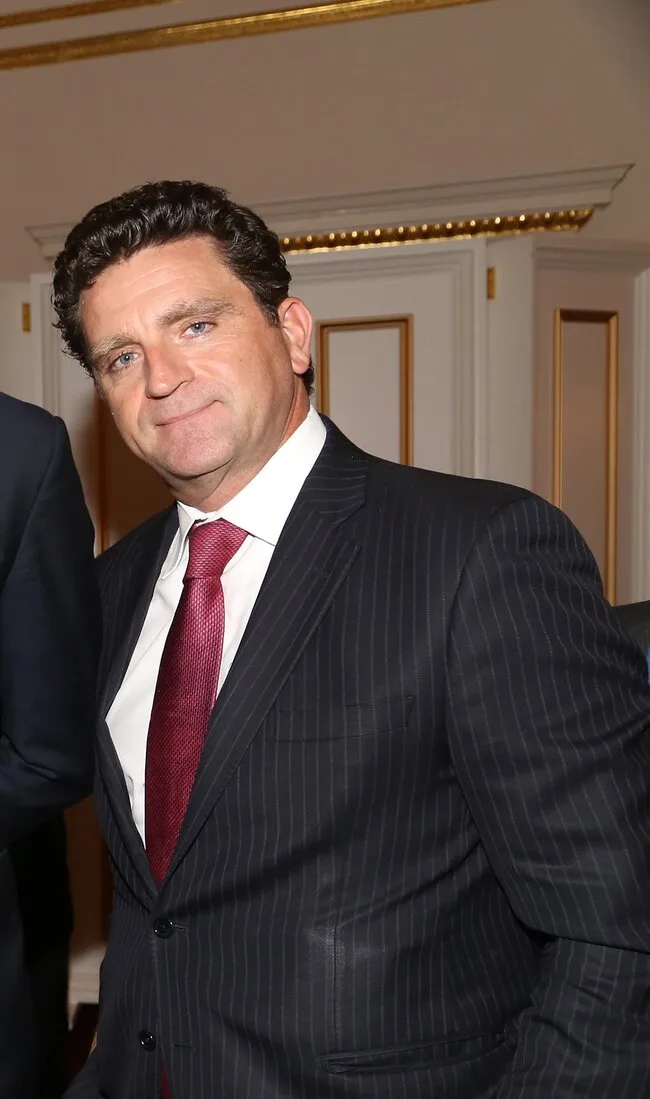
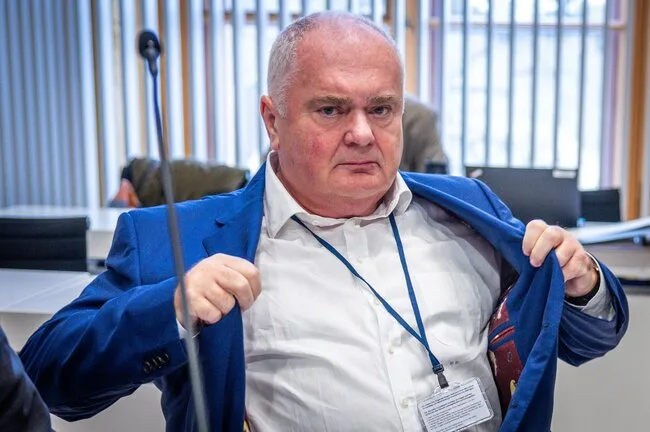
To reach Putin, Conn contacted Bob Foresman, an American investor specializing in Russia. Foresman had held senior positions at several banks and investment firms with ties to Russia, including ING Barings, Renaissance Capital, Barclays, UBS, and Dresdner Bank. Through his work at Dresdner, Foresman knew Matthias Warnig, a longtime friend of Vladimir Putin. Before the fall of the Berlin Wall, Warnig was an economist and an officer in the Stasi. He began doing business in Russia in the early 1990s and eventually became head of the Nord Stream and Nord Stream 2 projects. People who spoke to the FT said Warnig was one of the few people with direct access to Putin, thanks to their longstanding relationship.
On the U.S. side, Conn enlisted Eric Green, an acquaintance who oversaw Russia policy at the U.S. National Security Council. They had discussed the idea of a back channel as early as 2021, shortly after Green took on that role.
How events unfolded
- Immediately after speaking with the unnamed Russian businessman, Conn contacted Eric Green and proposed establishing direct contact with Putin to deliver a message from Joe Biden’s administration. This would bypass officials who, Conn suspected, might be shielding the Russian president from outside information to serve their own interests.
- Green agreed, but Conn did not manage to reach Putin until September 2022, after official talks in Istanbul had failed and Russian troops had withdrawn from the outskirts of Kyiv. The threat of tactical nuclear weapons being used had not disappeared entirely, but by then it had become clear that the threat had not materialized in the war’s first six months.
- On October 4, 2022, Conn and Foresman met with Warnig in Zurich. Afterward, Conn received a White House message from Green and passed it to Warnig at a separate meeting in Germany. The FT quoted it verbatim: “The US is not pursuing regime change. We’re not trying to destroy Russia. There is no existential threat. We’re trying to support international order and the UN. We want peace.”
- On October 26, at Frankfurt Airport, Warnig relayed Putin’s response, which he had written down in a notebook, to Conn and Foresman. The FT also presented this as a quotation, though it is not entirely clear whether these were Putin’s words or Warnig’s understanding of them: “I have no choice but to conduct military operations, but I am entirely open to negotiations. I want to discuss ways to resolve the problem. I want peace for Ukraine. We need to resolve this problem. I want a solution that will last 100 years. If there is no other choice, I will press ahead, knowing it will be painful. But I cannot turn back, and I am ready to fight.”
- The next day, speaking at a plenary session of the Valdai Discussion Club, Putin took a much more conciliatory tone on nuclear escalation. Discussing the possibility of Ukraine using a “dirty bomb,” he stressed that using nuclear weapons made “no political or military sense” for Russia. Conn and Foresman took this as a sign that their efforts had succeeded and the nuclear threat had diminished. The FT noted, however, that confidential talks on the subject were also taking place through official channels at around the same time, between Joe Biden’s national security adviser, Jake Sullivan, and Yuri Ushakov.
- Encouraged by this apparent success, Conn and Foresman decided to go beyond delivering a U.S. message to Putin and act as unofficial mediators between Russia and Ukraine. To do so, Conn needed businessman Michael Calvey to put him in touch with Ukrainian producer Alexander Rodnyansky, who knew Volodymyr Zelensky.
- At Conn and Foresman’s initiative, Warnig and Rodnyansky delivered peace proposals to the leaders of Ukraine and Russia. Under the proposals, Russia would withdraw its troops from most of the regions Putin had just annexed, with the border following the boundaries of Crimea and the parts of Donbas occupied before 2022. Ukraine would recognize Russian control over Crimea and grant Russia free passage along the “land bridge” to the peninsula. To ensure compliance with the ceasefire, Ukraine would receive protection from NATO countries, while Russia would begin discussions with the U.S. on a separate agreement on security guarantees.
- The FT reported that Warnig delivered these proposals to Putin on February 1, 2023, and that Putin had “gone through the document line by line, circling passages and scribbling comments.” Putin ruled out Ukraine joining NATO but allowed for EU membership, with some other military security guarantee as an alternative to the alliance, “like the one discussed at the Istanbul talks.”
- Meanwhile, Rodnyansky had great difficulty persuading Zelensky and Andriy Yermak even to hear the proposals developed at Conn’s initiative, the FT reported. In early 2023, the Ukrainian military was riding high after liberating large parts of the Kherson and Kharkiv regions and was actively preparing for its 2023 counteroffensive. Zelensky and his chief of staff refused to make any of the concessions in Conn’s proposals.
- The parallel talks effectively ended on February 18, 2023, when Conn and Foresman met with Warnig again in Zurich. Warnig said Putin had told Ushakov and several other senior Russian officials about the back channel. Putin also demanded that Ushakov confirm with Jake Sullivan that the American businessmen really did represent U.S. interests. According to Warnig’s account of what Putin told him, Sullivan did not confirm that Conn’s channel was authorized and said official contacts between the U.S. and Russia were sufficient to discuss these issues.
- The success attributed to the negotiators Conn brought together thus rests solely on the timing: “nuclear de-escalation,” if it happened at all in October 2022, followed shortly after Matthias Warnig delivered a direct message to Vladimir Putin.
The FT article includes one personal detail with no direct bearing on the talks or their outcome. It recounts a private meeting between Warnig and Putin after Warnig came under European sanctions and encountered many difficulties in his daily life in Germany. Even the approximate date of the meeting is unclear, except that it definitely took place after Russia’s full-scale invasion of Ukraine in 2022.
At the meeting, Warnig and Putin sat at opposite ends of the famous 33-foot table in the Kremlin that the Russian president used to keep his distance from others during the COVID-19 pandemic. Putin was sympathetic to Warnig’s difficulties under sanctions and suggested that he move his family to Russia, but Warnig declined. Warnig, for his part, said Putin’s strength had always been his personal touch, but prolonged isolation had robbed him of it. “Power is a drug,” Putin said in response.
At Meduza, we are committed to transparency about our use of artificial intelligence in the newsroom. The story you’re reading was written by one of our living, breathing journalists and translated from Russian using an AI model configured to follow our strict editorial standards. This translation process is the result of extensive testing and refinements to ensure our English-language coverage is timely and accurate. A Meduza editor reviews every draft before publication.
If you find any errors in this translation, please contact us at reports@meduza.io.
To read Meduza’s exclusive content in English, please subscribe to our newsletter.