When faiths act together, they can quench world’s spiritual thirst, Latter-day Saint apostle says
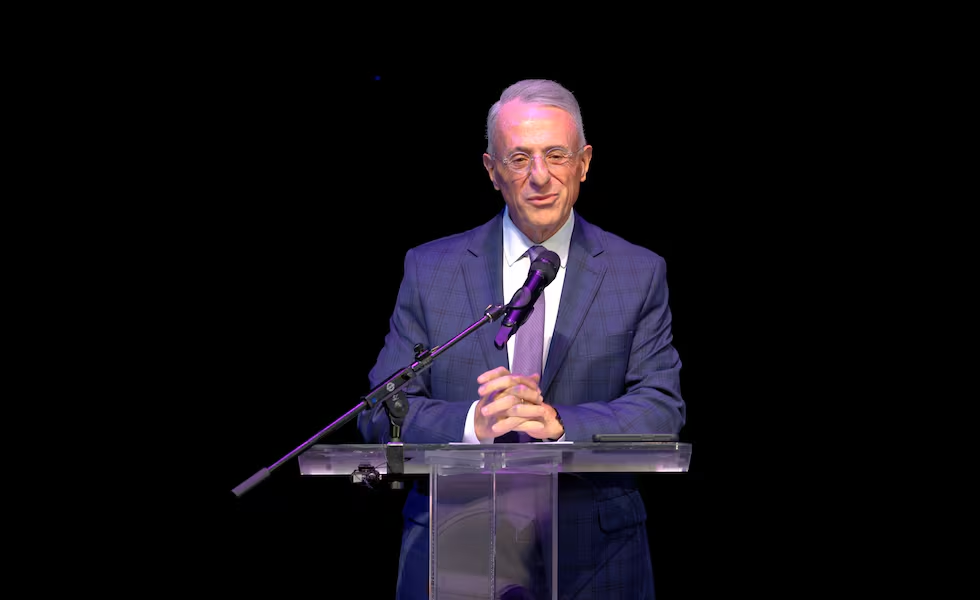
Sincere public disagreements often feel threatening today. People may be labeled opponents before they can be seen as neighbors. Some see a need to restrict one person’s freedom to protect their own.
“That is a dangerous misunderstanding of our common humanity,” Elder Ulisses Soares of the Quorum of the Twelve Apostles said Wednesday at the Forum on Faith in New York City.
And it’s a real problem for the believers and faith leaders who hope to show that religion can have a healing influence on the world, said Elder Soares, one of the senior leaders of The Church of Jesus Christ of Latter-day Saints.
How a parable explains expanded Latter-day Saint, evangelical effort to feed the hungry
“Religious, political, ethnic and cultural differences are sometimes used as wedges to divide rather than links to bind us together and strengthen us,” he said at the Skirball Center for the Performing Arts on the campus of New York University in Greenwich Village.
The solution is for people of faith to band together around shared beliefs without abandoning their differences, Elder Soares said.
“Let us build bridges without abandoning conviction, protect freedom without creating fear and turn our differences into opportunities to serve,” he said.
One value is the linchpin.
“The world is better when faith reminds us that we are all children of God and, therefore, brothers and sisters to one another,” he said. “... Before we are members of any group, we are human beings. Before our convictions distinguish us, we are united by our divine origin and by our shared need for love, safety, purpose and belonging.”
Interfaith charities report back about how they spent the past year working together
That perspective emphasizes another key religious principle — love.
“When we understand that we belong to one human family, love occupies the space between us,” Elder Soares said, his voice cracking with emotion. “Love is no longer reserved only for those who resemble us; it becomes a principle of public life. It influences how we write laws, exercise authority, conduct debate, welcome strangers and use our influence.”
Love also changes the underlying question, he said, from “How do I win?” to “How do we win? How can we build something in which all thrive?”
A quest for religious unity like that does not demand uniformity, he said. “Believers can disagree honestly while serving together faithfully.”
The leverage created by the combined power of people of faith is worth the effort, he said.
“When we extend encouragement, support and love to one another, our individual gifts become a powerful force for good — capable of carrying hope to a spiritually thirsty world,” he said.
Latter-day Saints, Baptists, Methodists, Catholics provide relief together after hurricane
The Brazilian-born Elder Soares illustrated his point with a colorful metaphor about his home nation’s greatest landmark, the Amazon River.
Two rivers join to create it but come from different origins with different temperatures and chemical compounds. The two different waters flow separately side by side for miles before they blend, making the Amazon so powerful that at its end it drives far out into the Atlantic Ocean.
Fresh water can be found many miles out to sea.
That is the message of the Forum on Faith: Interfaith action is a powerful force for good in society. The benefits can bless both believers and nonbelievers.
One forum panel considered why faith is the answer to peacemaking in a polarized America. Another shared what various faith traditions teach about the language and methods of peacemaking.
None of it is intended to be just words. The conference is action-oriented.
The closing session began with a talk titled “From dialogue to repair: What faith can do for a fractured world.” The speaker, the Rev. A.R. Bernard, has led his Christian Cultural Center megachurch to work across divides to feed the hungry.
The forum’s organizing principle is action. As Elder Soares framed it, “How can faith help the human family live with greater peace, dignity and hope?”
The answer is realizing that the common good is a shared responsibility, “not the possession of one religion, one party or one institution,” he said.
Religions can labor together, he said, to:
- Strengthen families
- Protect children
- Care for the poor
- Defend human dignity
- Resist hatred
- Support mental and spiritual well-being
The impulses present in today’s online and political discourse can make working together more difficult, he said.
Huge majority of Americans believe in the golden rule
“Sometimes we try to protect our identity by diminishing someone else’s,” Elder Soares said. “Sometimes we perceive only the best version of our own motives and the worst version of others’. And sometimes we hear a voice but fail to understand the heart behind it.”
Doing better requires work the apostle described as the work of belonging.
“(It) requires humility,” he said. “The humility to acknowledge that our own perspective is incomplete, the courage to learn from another tradition, and the patience to remain in conversation when understanding does not come quickly.”
Nonbelievers are watching the religious, and so is God, Elder Soares said.
“A community that prays for peace must also practice patient acceptance of others if its prayers are to be answered,” he said. “A community that teaches compassion must practice charity if it expects anyone to listen.”
Religions are well positioned to be a force for good, he said.
“We have buildings, networks, teachings and people prepared to sacrifice for the sake of others. We know how to gather, organize, comfort, teach and serve.”
But again, people are watching.
“When these skills are directed outward, faith magnifies not only in what we preach, but also in what we do for the vulnerable, the lonely, the displaced, the poor and the forgotten,” he said.
God can change any heart, starting with our own, Latter-day Saint leaders teach
Another shared value to leverage is religious freedom, Elder Soares told the forum.
If believers safeguard the conscience of someone whose beliefs they do not share, respect is shared and religion is strengthened.
“The protection of freedom becomes credible when it is offered generously rather than selectively,” he said. “We become stronger when we help create a society in which all people of goodwill may worship, serve, speak and live according to conscience within the bounds of law and peace.”
Meet 5 leaders recognized in London for building bridges in business, arts and education
The kind of shared assurance of security to follow one’s beliefs requires not just law but also culture, which “shapes the habits of the heart,” Elder Soares said. Individuals, families, schools and congregations must join civic institutions and governments in listening before judging, speaking of others with charity, making room for minority voices and refusing to turn disagreement into contempt, he said.
This year’s Forum on Faith included Jewish, Catholic, Muslim, Sikh, Baptist, Buddhist, Episcopal, Hindu, Greek Orthodox and other religious leaders. They were joined by government officials, business executives, academics and other community leaders.
Other notable speakers included Rabbi Joseph Potasnik of the New York Board of Rabbis; New York University President Linda G. Mills; and Kate Forbes, the former deputy first minister of Scotland.