South Africa downplays AGOA blow
The News
South Africa moved to contain fears of major economic damage after the White House’s decision to exclude it from a US preferential trade program, saying its biggest mineral exports never relied on the duty-free program and the tariff increase on affected goods is manageable.
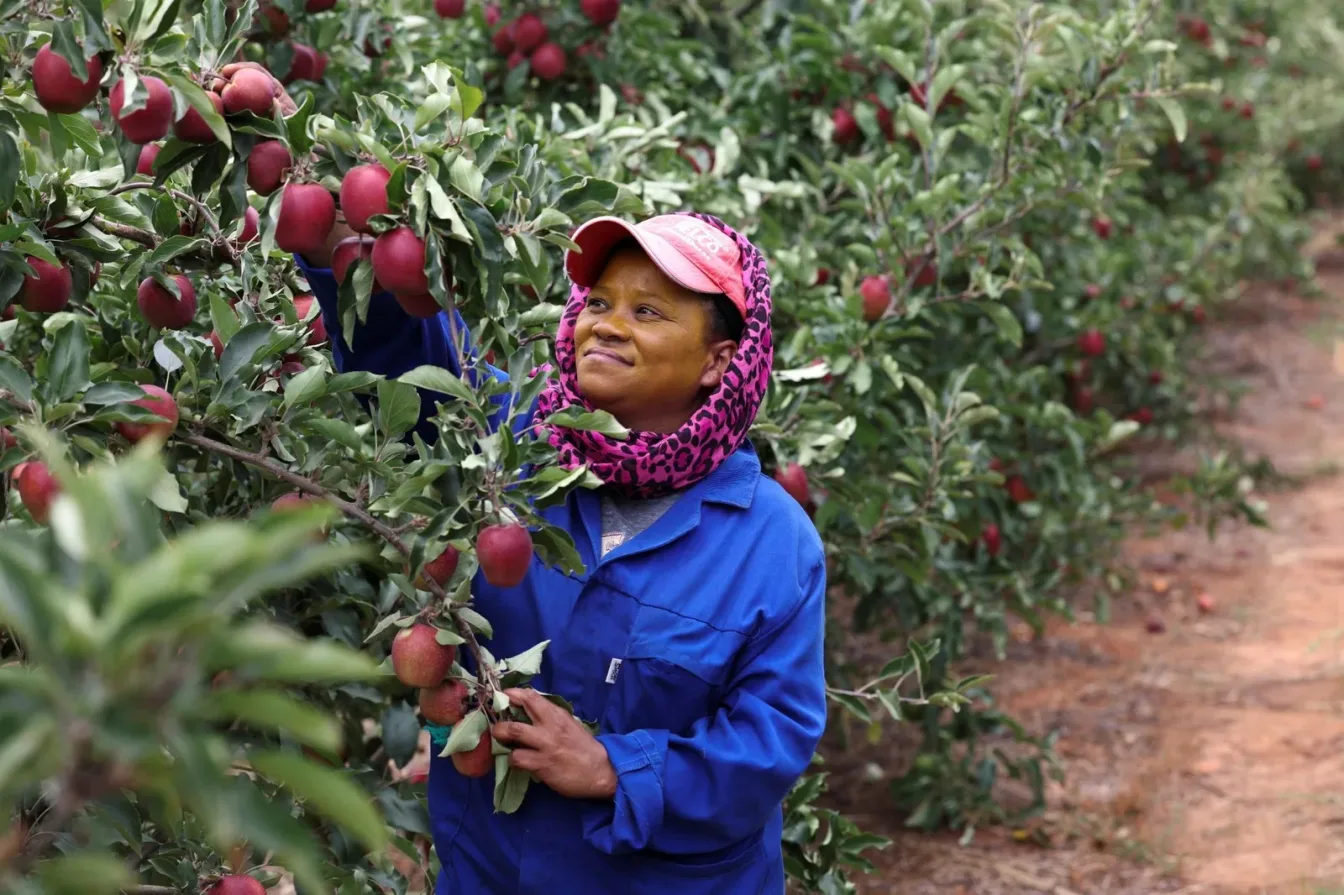
Washington announced plans this week to remove South Africa, along with Rwanda, from the African Growth and Opportunity Act from next year. South Africa’s fruit and nut exporters have benefited from the 26-year-old program that allows thousands of products from eligible sub-Saharan countries to enter the US market duty-free. The US, explaining its latest move, cited concerns ranging from barriers to American trade and investment to corruption and foreign policy. Farmers and exporters warned, however, that the wine and citrus sectors could face job losses as their products become less competitive
The decision deepens a rupture between Pretoria and Washington, entangling a trade dispute with the two countries’ wider political differences, raising the prospect of a prolonged standoff that gives South African an incentive to pursue opportunities in markets including China. It comes weeks after the US imposed travel restrictions on unidentified officials. These were introduced over South Africa’s race-based business and land policies, which seek to address the inequities of apartheid, as part of an escalating campaign that has included false claims by US President Donald Trump of a genocide against Afrikaners.
Even so, South African government officials say much of the country’s biggest trade with the US is already outside AGOA protection. President Cyril Ramaphosa’s agriculture envoy Wandile Sihlobo told Semafor that losing the program was not a “train smash.” The country’s exports already face a 12.5% US tariff, meaning the loss of duty-free access adds an estimated 3.4 percentage points to the average levy, Sihlobo said. “It’s not necessarily as catastrophic as we have faced in the past,” he wrote in a note shared with Semafor.
Eckart Naumann, an economist at Trade Law Centre, a South African policy think tank, struck a similar note, calling South Africa’s removal from AGOA regrettable but “does not spell doom for South Africa”.
South Africa exported about $1.7 billion of goods to the US under AGOA in 2025, representing around 10% of the country’s sales to the country and roughly 1% of its global exports. But some of South Africa’s largest exports sit outside AGOA. Platinum group metals, which account for roughly a third of exports to the US, already enter duty free because they are deemed important to the economy. A Trade Law Centre analysis found that about 80% of South African exports by value are exempt from the current 12.5% tariff. South African-built cars effectively lost much of their AGOA advantage when Washington imposed a 25% tariff on vehicle imports in 2025.
Addressing the diplomatic dispute, Deputy Trade Minister John Steenhuisen told a local radio station that South Africa had been “very generous” in trying to resolve the tensions but some US objections collided with Pretoria’s red lines. He said land reform and racial transformation were non-negotiable. The latest US demands extended to corruption, and “who we trade and do business with in the rest of the world,” Steenhuisen said. “It’s been pretty much a moving target. Trade and politics have collided and are so deeply enmeshed that it’s going to be difficult to separate them.”
The pressure could push South Africa further into China’s orbit. Trade Minister Parks Tau, in a statement, said the loss of AGOA would accelerate South Africa’s search for opportunities in other markets including China, even as the US cited Pretoria’s relations with “governments of concern” among the reasons for withdrawing AGOA benefits.
Know More
Pretoria has for the past 18 months tried to mend relations with the US, appointing an Afrikaner as an ambassador to Washington, offering to buy up to $12 billion of US liquid natural gas over 10 years, and lifting the avian-flu related ban on US poultry.
But the dispute has increasingly moved beyond trade, with Tau saying Washington had introduced “new issues” that had not formed part of negotiations that began in 2025. “This decision does not define the broader relationship between South Africa and the United States, however a solution depends on the willingness of both parties to find solutions,” Tau said.
Steenhuisen acknowledged the US decision would have “sectoral impacts — particularly in some parts of the agriculture sector.” The government has promised to support affected industries, but has yet to spell out what that assistance will entail.
Washington’s decision to eject South Africa from AGOA came on the eve of the US midterms, after Trump spent much of his second term tuning his false Afrikaner-genocide narrative which plugs into pre-existing politics of white victimhood on parts of the American right.
Tiisetso’s view
South Africans can probably live without AGOA. The more troubling question is whether the country’s deteriorating relationship with the US stops there. It hit a low point with the May 2025 Oval Office showdown and went downhill from then.
The preferential trade program was already losing economic significance for South Africa, with only 1% of its total exports going to the US under AGOA last year. Cars, previously among the biggest beneficiaries, have their own 25% tariff problem. PGMs, which account for a far bigger chunk of US-bound exports, don’t rely on AGOA for favorable access.
So far, so manageable.
But Washington has advertised its willingness to go further. When the US imposed visa restrictions in September, Ambassador L. Brent Bozell III called them the “first step in a series of escalatory measures.” Seven weeks later, Washington moved to remove South Africa from AGOA, citing, not only trade and investment barriers and corruption, but US national security and foreign policy interests.
It would be a leap to conclude that Washington intends to target South African mineral exports next. Nobody is saying that. But once trade policy becomes part of a wider political fight, their favorable treatment becomes more interesting
Losing AGOA may turn out to be the tariff fight Pretoria could afford to lose, but the biggest risk is discovering that Washington has not finished looking for pressure points.
Room for Disagreement
The Citrus Growers Association, a Cape Town-based trade body, described South Africa’s exclusion as a “serious blow,” and warned of employment losses. Meanwhile, the Exporters Western Cape, a lobby group, told Ramaphosa before the decision that the province’s exports to the US had already fallen 41% with particularly steep declines in juice, grapes and citrus.
Notable
- South African vehicle exports to the US fell 83% in 2025 after a 25% Section 232 tariff, which Naamsa says “nullif[ies]” AGOA’s benefits, Freight News reported.