Forget Mars. A spacecraft just reached this planet after 8 year journey
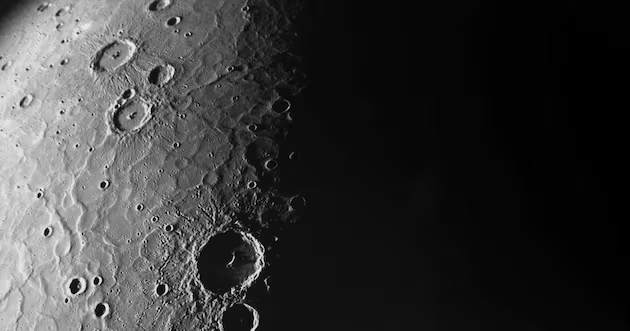
After more than eight years traveling through the inner solar system, BepiColombo entered orbit around Mercury on Saturday. The joint mission of the European Space Agency and Japan Aerospace Exploration Agency is only the second ever to orbit the planet closest to the sun.
Getting there required a winding route: BepiColombo flew past Earth once, Venus twice and Mercury six times, using each encounter to help adjust a path pulled along at extreme speeds by the Sun’s gravity. The journey covered more than 6 billion miles and required more energy than it would to reach Pluto.
The spacecraft’s arrival was a significant milestone in space exploration, but didn’t come without its hiccups. Flight controllers waited several hours for confirmation that the craft had been captured by Mercury’s gravity, as a software glitch with the thrusters left some questions about its success. Despite the technical issue, ESA confirmed it had achieved orbit Sunday.
A close call during the critical maneuver
Mercury is close to the sun, whose gravity accelerates approaching spacecraft to extremely high speeds. This requires spacecraft to lose enough speed to then be captured by Mercury, whose much smaller gravity is less able to bring it into orbit.
The orbit insertion depended on a carefully timed thruster burn to slow BepiColombo enough for Mercury’s gravity to pull it in. On Sunday, ESA said the burn was “shorter than planned due to a software issue.”
“The spacecraft is safe and teams at ESOC are working to understand what happened,” the agency wrote in a post online. ESA said it planned to provide an update Monday.
Yesterday, we confirmed BepiColombo’s successful capture into orbit around Mercury. During the manoeuvre, the thruster burn was shorter than planned due to a software issue. The spacecraft is safe & teams at ESOC are working to understand what happened. Updates provided on…
— BepiColombo (@BepiColombo) November 22, 2026
Mercury’s heat presents another obstacle. Its surface can reach more than 800 degrees Fahrenheit, putting the spacecraft and its instruments under intense thermal stress.
“The spacecraft and its instruments need to be kept as cool as possible,” Geraint Jones, lead project scientist, told The Associated Press. “Which is a huge technical challenge in itself.”
The arrival is one step in a longer sequence of maneuvers. The two science orbiters remain connected and are expected to separate in December, while ESA’s Mercury arrival timeline schedules the mission’s science phase to begin in April 2027.
2 spacecraft, different views
BepiColombo is made up of two orbiters: ESA’s Mercury Planetary Orbiter and JAXA’s Mercury Magnetospheric Orbiter, also called Mio. Once separated, they will orbit Mercury from different vantage points and study the planet together.
That arrangement could help scientists compare observations taken simultaneously. Lead project scientist Jones told AP the mission will allow “unprecedented measurements taken by two spacecraft at the planet at the same time.”
The space race has gone nuclear
The orbiters are designed to study Mercury’s interior, surface and magnetic environment, including its large iron core, cratered terrain and magnetic field. Scientists hope to better understand why the small planet has a magnetic field, how it formed and why ice can exist in craters near its poles despite the planet’s proximity to the sun.
A planet full of puzzles
Mercury is the least explored of the four inner planets, and scientists still have basic questions about how it works. In addition to studying the planet’s interior and magnetic environment, the ESA says the mission will help scientists better understand Mercury’s structure and evolution.
Mercury’s magnetic field remains a puzzle because it is generated by activity inside it. By studying the field and how it interacts with solar wind, the two BepiColombo orbiters will give scientists a closer look at how the rocky planet formed, cools and interacts with its stars, including the sun. This is of particular interest to researchers because Earth is the only other inner planet with a global magnetic field.
Trump signs order to create new Space Academy
Mercury also has ice craters near its poles, despite being the planet closest to the sun. Those craters remain in permanent shadow, where temperatures can stay cold enough for ice to persist. BepiColombo will study the planet’s polar regions and help scientists investigate further how water ice can survive there.
Together, the orbiters’ observations could help explain how Mercury’s interior, magnetic field and stark surface fit together. The mission is designed to give scientists a fuller picture of how the planet formed and evolved, and better understand why this small, sun-baked world behaves in such surprising ways.