Government faces US$800 million IMF payment, eyes Central Bank dollars
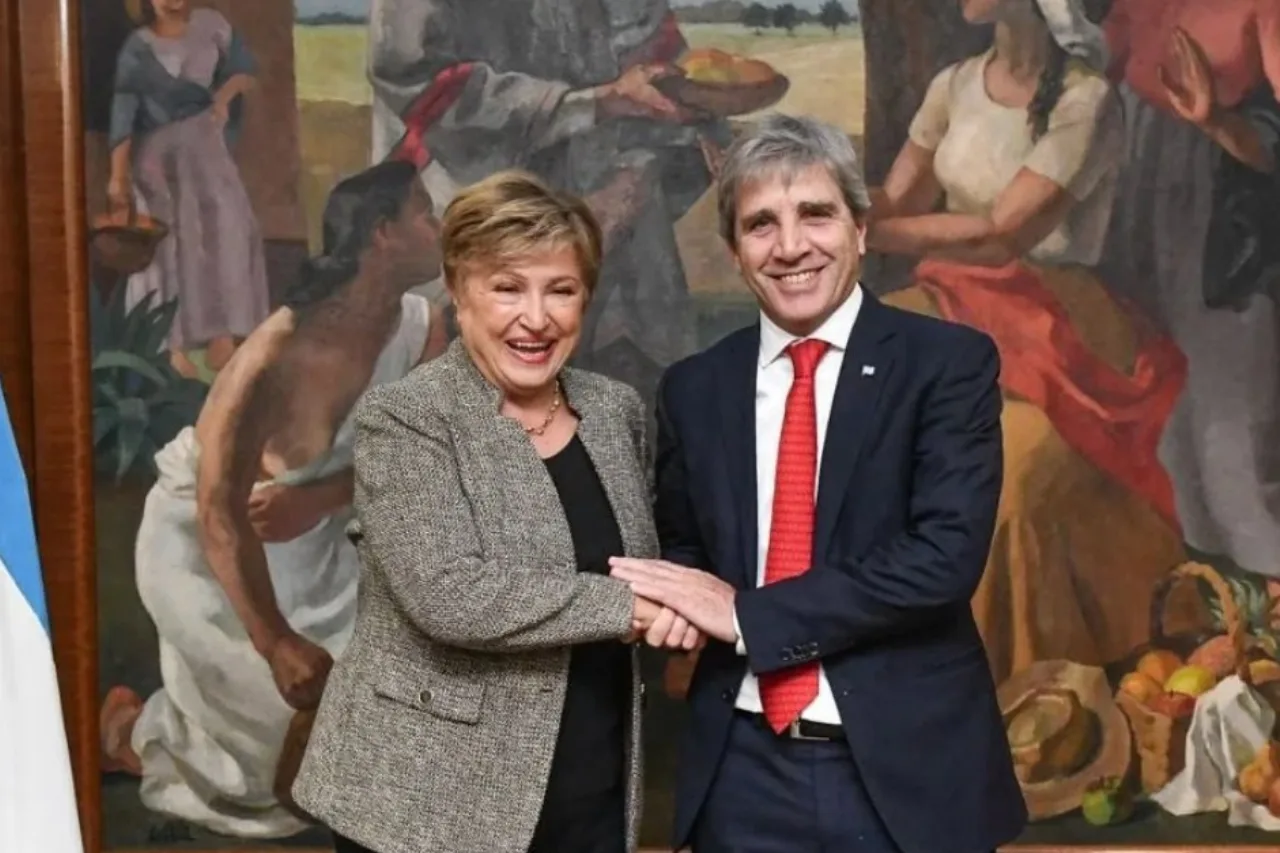
The government faces an interest payment of around US$800 million to the International Monetary Fund (IMF) on Monday, with limited dollar reserves in Treasury accounts and a new disbursement still waiting approval.
To meet the obligation, the Economy Ministry is considering using its dollar deposits or purchasing foreign currency from Argentina’s Central Bank (BCRA, in Spanish).
The payment comes just days after IMF staff reached a technical agreement with Argentina on the third review of the country’s program, which could unlock a disbursement of approximately US$900 million.
However, the funds still require approval from the IMF’s Executive Board, expected in early December, as well as fulfillment of the outstanding measures agreed upon with Argentine authorities.
Treasury weighs buying dollars from Central Bank
According to the latest available data, as of Wednesday, October 28, the Treasury had US$851 million in foreign-currency deposits at the Central Bank, only slightly more than the amount due this week.
If those funds were used to pay the US$800 million, the remaining balance would be approximately US$51 million.
For this reason, market players have not ruled out the possibility that the Economy Ministry could purchase dollars from the BCRA to maintain some liquidity in its accounts.
The Treasury also has approximately 8.9 trillion pesos (US$5.7 billion) in deposits, which could be used to buy foreign currency.
Consultancy firm 1816 warned that the government’s available foreign-currency funds were practically in line with the amount needed to meet the obligation, making a dollar purchase from the Central Bank a likely option.
The situation follows a week in which the Treasury reportedly intervened in the foreign-exchange market to moderate the wholesale exchange rate ahead of the setting of the benchmark rate used to settle maturities on dollar-linked bills (Lelinks).
According to private-sector estimates, the government sold approximately US$100 million on Monday and subsequently bought back US$44 million.
A potential purchase of dollars from the BCRA would have implications for net international reserves, as it would involve a transfer of foreign currency from the monetary authority to the Treasury. By contrast, using dollars already deposited at the Central Bank would have a different accounting impact on the reserve position.
In addition to deciding where the funds will come from, the government will need to obtain Special Drawing Rights (SDRs), the international reserve asset used by the IMF for its operations.
In previous payment rounds, Argentina turned to the United States Treasury to purchase them.
IMF awaits further reforms
The payment coincides with a new phase of negotiations between the government and the IMF. Last week, the Fund’s technical staff endorsed the third review of the agreement, although final authorization for the disbursement remains pending.
The IMF plans to submit the review to its Executive Board in early December, once the agreed measures have been completed. If approved, Argentina would receive a disbursement of nearly US$900 million, equivalent to approximately 600 million SDRs.
Outstanding commitments include a tax reform proposal aimed at reducing tax exemptions and creating fiscal room to move ahead with cuts to export duties and the tax on bank credits and debits.
The IMF also expects the Revenue and Customs Control Agency (ARCA, in Spanish) to establish a formal registry of the main tax-compliance risks before December, with particular attention to large taxpayers.
Another commitment is to move forward with a reform of the Fiscal Responsibility Law to incorporate the principle of zero deficit.
Meanwhile, the IMF continues to monitor other government initiatives, including approval of the 2027 budget, Central Bank reform and measures to deepen capital markets, expand mortgage financing and facilitate investments under the Large Investment Incentive Regime (RIGI, in Spanish).
IMF spokesperson Julie Kozack highlighted the continuity of the government’s economic policies and said maintaining the current course would help reduce country risk.
The institution also stressed the need to facilitate the remonetization of the economy and promote prudent credit expansion.
Originally published in Ámbito
La entrada Government faces US$800 million IMF payment, eyes Central Bank dollars se publicó primero en Buenos Aires Herald.