Are you really who you think you are?
Who are you?
You might think you know, but science offers a more complicated answer. In fact, Lisa Feldman Barrett, PhD, a University Distinguished Professor of Psychology at Northeastern University, says the inquiry may be unanswerable.
A question that can be answered: Who are you in a given moment?
Take, for example, someone who has a habit of interrupting while others are talking. They may see themselves as engaged — so enthusiastic that they’re compelled to interject with what they think the speaker is about to say.
The person being interrupted, meanwhile, may experience their conversation partner as rude.
So, do the interrupter’s intentions matter more than how they’re perceived?
According to Barrett, no. The perception of rudeness is just as real — not because it matters more than the interrupter’s intentions, but because it matters just as much.
“The characteristics or traits that we think are inherent to a person are not inherent to that person,” she says. “They exist to describe that person in relation to other conditions.”
Your personality isn’t as fixed as it feels
So, if traits are relational, then what does that mean for who we are?
We often assume characteristics such as being introverted or extroverted are immovable parts of a person. According to relational realism, however, we aren’t the sole authors of our identities.
Context matters.
You may be extroverted when you’re interacting with people you know and you’re well-rested. You may not be so extroverted, however, when you’re in a room full of strangers and you’re hungry.
“What describes you — who you are — is highly situated,” Barrett says. “As a person, that feels inherently wrong to me. But as a scientist, it seems right.”
This idea violates the subjective sense many of us have that we’re made up of enduring characteristics that describe us no matter where we are and who we’re with. Science, Barrett says, doesn’t bear this out.
Other people help shape who you are
The human brain contains a set of patterns, and based on the statistics of the past, it begins to make an action plan for the next moment. Barrett refers to this as “meaning making.” It happens predictively and largely outside of our awareness.
“Everything you do is an act of meaning making,” she says. “Even asking the question, ‘Who am I?’ and creating a story is an act of meaning making.”
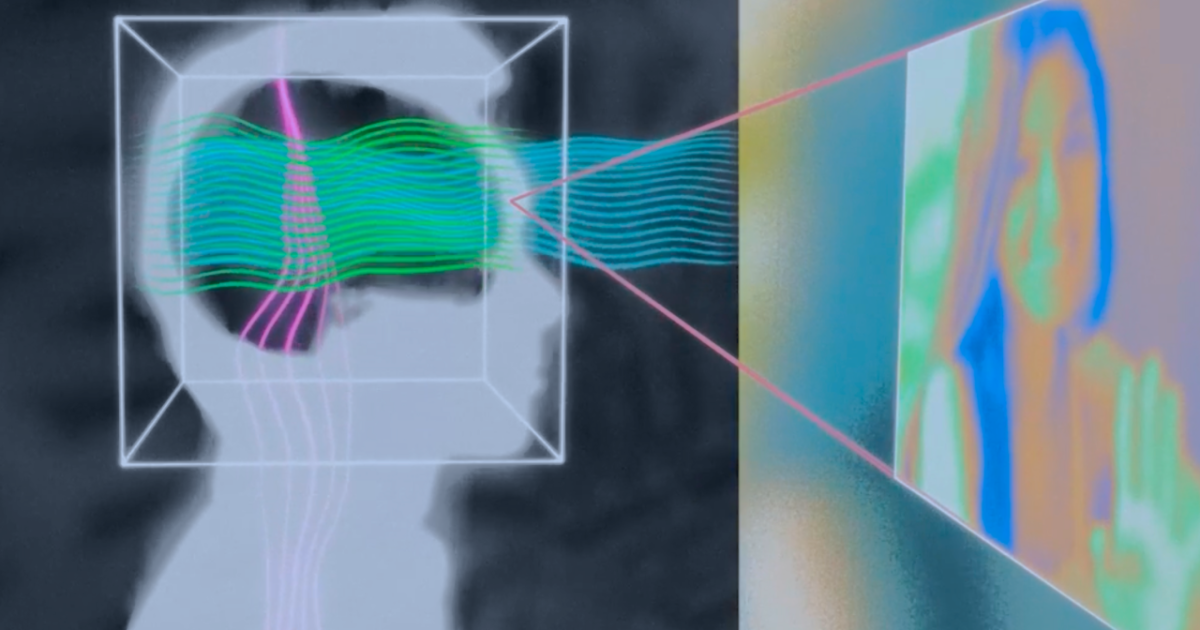
This process of meaning making is your Perception Box, but it doesn’t have fixed walls. Instead, it consists of a constantly fluctuating set of signals your brain uses to make sense of what’s happening in your body and the world around you.
And if “who we are” emerges in part from those interactions, that means other people help shape who we are — just as we help shape them.
“The logical thing to carry away here is that we have more responsibility for the identities of other people than we might think,” Barrett says. “And the people who we interact with have more influence over who we are in a moment than we might like.”
Thus, one way to have more control over who we are is to take deliberate responsibility for who we interact with, and how we interact with them.
When her daughter went to college, Barrett offered her this advice: Seek out people who allow you to be the best version of yourself.
“Find the people who help you to be that person,” she said. “That’s the message.”
We interviewed Lisa Feldman Barrett for Relational Realism, a Big Think interview series created in partnership with Unlikely Collaborators. As a creative non-profit organization, they’re on a mission to help people challenge their perceptions and expand their thinking. Often that growth can start with just a single unlikely question that makes you rethink your convictions and adjust your vantage point. Watch the fourth and final episode above, and visit Perception Box to see more in this series.
This video Are you really who you think you are? is featured on Big Think.