Inside fast-growing consumer brand Clean Cult’s carton crusade
Paper-based cartons and other fiber packaging alternatives to plastic continue to expand in the food and beverage sector, with sales nearing $500 billion in 2026.
But even as brands including Pacific Soup find more shelf space and spirits companies such as Diageo and Absolut flirt with paper bottles and boxes, companies that make cleaning supplies and personal care products have been slower to embrace the format.
The reasons are largely cultural and technical, according to packaging specialists. Consumers are used to seeing paper cartons in refrigerators but not under their sink or in their laundry room, said Jason Bergquist, CEO of North America for packaging consultancy RecycleMe.
In addition, the viscosity of soap makes it difficult to use existing equipment to fill cartons, while the chemical makeup of cleansers requires special attention to make sure carton barriers will hold up during the shelf life of the product.
“You have compatibility issues,” Bergquist said. “It’s going to take more and more companies to build up the infrastructure.”
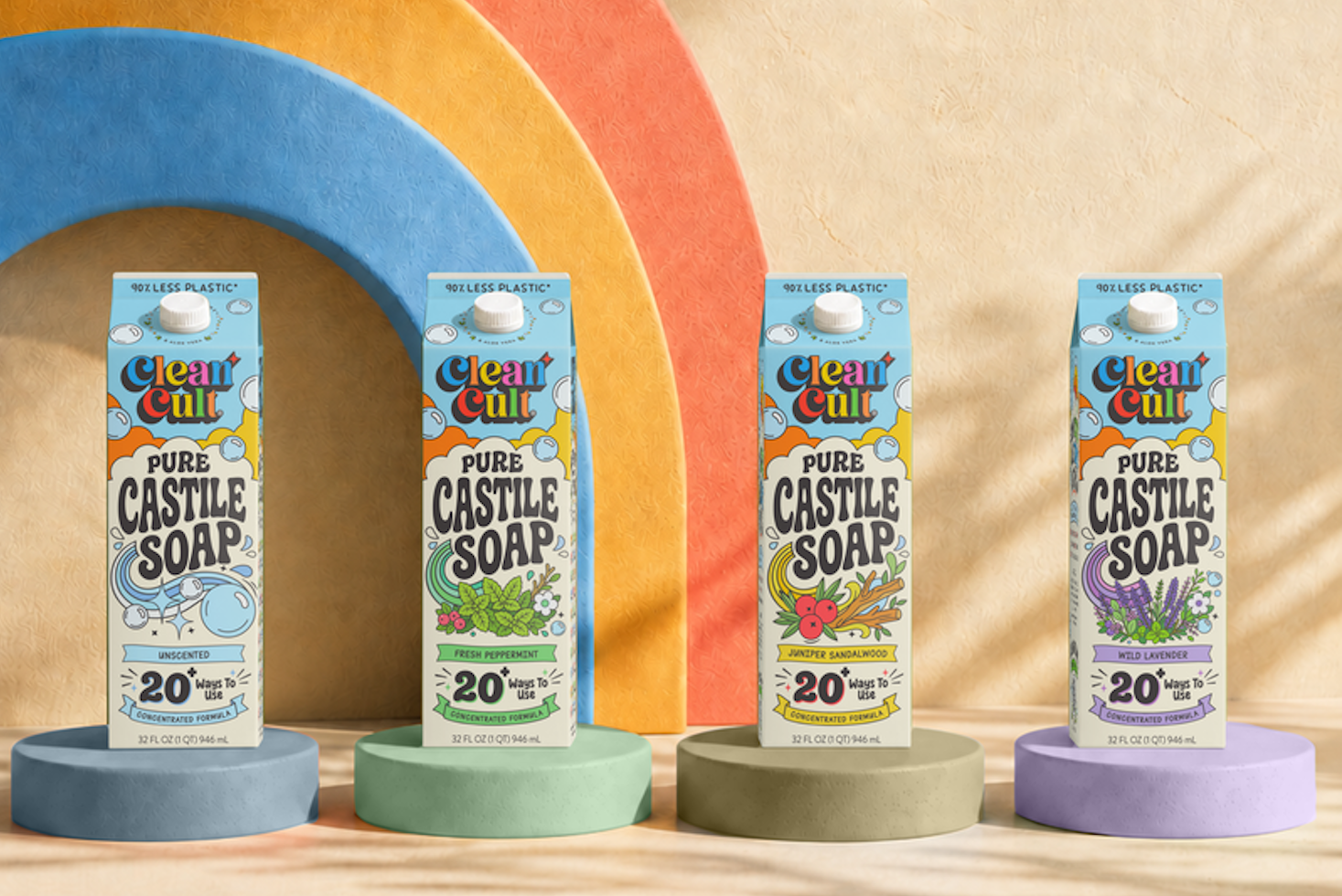
Clean Cult, a fast-growing natural cleaning brand sold at Costco, Kroger, Target and Walmart, is showing the consumer products sector what’s possible. It sells liquids including laundry detergent, cleansers and its latest introduction, castile soap, in the same sort of waxy cartons typically used for milk or fruit juices.
The company has embraced cartons since it was founded in 2019, originally selling direct to consumers. That mission has helped Clean Cult raise more than $54 million. It’s now ranked among the top 15 natural cleaning brands at retail, with year-over-year sales growth of 40 percent over the past five years, said Clean Cult Co-founder and CEO Ryan Lupberger.
“What’s been really exciting is you’re finally starting to see this awareness of plastic on health,” Lupberger said. “This is a big unlock for the industry.”
Carton pioneer
Clean Cult markets its cartons as “refills” for canisters that consumers might display on their kitchen or bathroom counter. It leans heavily into messaging that talks up natural ingredients and talks down the single-use plastic bottles that are virtually ubiquitous for categories such as laundry detergent.
Clean Cult also sells its products in aluminum, pitching those packages as refillable, but close to 97 percent of its sales are from the carton format. That’s fine with Lupberger, who cites margin pressure related to U.S. import tariffs on aluminum. Some Clean Cult retailers, including Target, only sell cartons.
The company’s pricing is generally competitive with other brands, although Clean Cult sells its new 32-ounce castile soap line on Amazon and at Sprouts for $14.99, which is 10 percent less than market leaders in this category, including Dr. Bronner’s.
Clean Cult considered other formats, such as powders and glass, before embracing cartons. Weight was one consideration. Empty cartons can be shipped flat to manufacturing facilities, which means fewer trucks are needed than for containers such as glass, Lupberger said.
But Clean Cult soon realized that using cartons would require investments in its own production equipment. Many packaging contract manufacturers that work with cartons focus exclusively on the food and beverage sector, for regulatory and technical reasons.
Technical challenges
Clean Cult uses gable top carton filling machines, which automate the process of unfolding and erecting the cartons, adding the liquid and sealing them. Industrial versions of the equipment can fill more than 20,000 cartons per hour.
The company started with standard equipment but was forced to adapt it. “We were literally Frankensteining the process in the early years, because there was a host of problems,” Lupberger said. Two primary considerations:
- Piston filling systems that use pressure to force liquids into cartons cause soaps to foam. Clean Cult opted for gravity filling, but it had to adjust for the viscosity of the liquid, which are much thicker than something like dairy or plant-based milk. Otherwise the nozzles become clogged.
- The carton seals also required a modified approach to accommodate the higher pH, or potential of hydrogen, of cleaning products, detergent and soaps. Early Clean Cult packages were prone to leakage, as the company refined its process.
“We have to basically assemble the carton because it’s literally origami,” Lupberger said. “We then have to bottom seal it, fill it and top seal it. Then do the cap applicator.” If any of those variables is off, because of temperature or positioning, the product will leak, he said.
Clean Cult operates three U.S. production lines that can handle between 12 million and 15 million cartons annually and is considering additional ones. The company doesn’t currently use all of its existing capacity, although it could do so by the end of 2027.
Clean Cult holds 16 patents related to its equipment innovations and is exploring licensing opportunities to help expand production. “You have to get the technology right,” Lupberger said.
While Clean Cult is a U.S. outlier when it comes to using cartons, the format is gaining a following with some European brands, including Orkla Home & Personal Care, which uses the format in Norway; cleaning products company McBride, which sells some laundry and cleaning supplies in cartons; and Sainsbury’s, which was the first U.K. retailer to package laundry detergent this way starting in 2023.
Extended producer responsibility regulation aimed at reducing packaging waste and plastic waste streams is also fueling interest in cartons, RecycleMe’s Bergquist said.
But the format is still a single-use application, he said. Consumer awareness around recycling cartons is nascent, and the format’s reliance on fibers could put pressure on forests and deserves careful consideration by brands.
Clean Cult uses fiber certified by the Forest Stewardship Council, which means it was sourced from forests managed under strict environmental, social and economic standards.
That’s important, but the packaging industry needs access to more recycled fiber, Bergquist said: “We are heading toward a potential conflict between responsible forestry and recycled content, similar to what we’re seeing with plastic.”