Fridges are failing — and some are getting hacked
A refrigerator might seem like an unlikely cybersecurity concern — until someone turns up the temperature.
Suspected cyberattacks hit supermarket refrigeration systems in Sweden and elsewhere in Europe on Monday, with one Swedish store reporting its controls had been set to 122 degrees Fahrenheit.
Coming after similar attacks in France and a Pentagon investigation into refrigeration failures at U.S. military commissaries in August, the incidents put a fresh spotlight on the systems that keep groceries safe, as well as the consequences when they fail or fall into the wrong hands.
“This is a completely unprecedented, unexpected, and extremely serious attack,” Dominique Schelcher, the president of French grocery giant Cooperative U, told French radio. “In my entire professional career, I’ve never seen anything like it.”
Someone turned up the heat in Europe
Supermarket refrigerators from Sweden to Belgium experienced temperature spikes overnight into Monday in what retailers described as suspected cyberattacks.
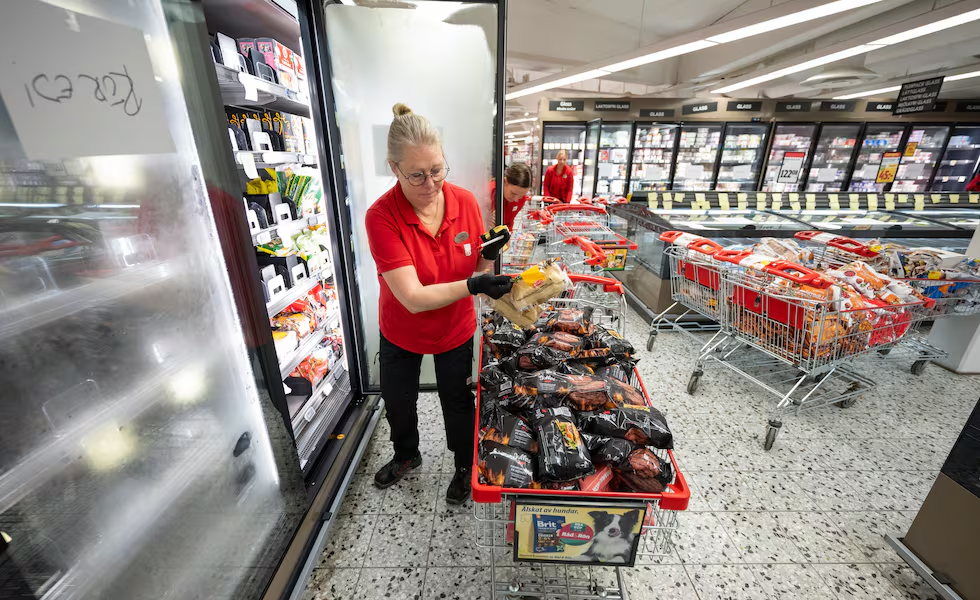
In southern Sweden, grocery giant ICA said several of its stores had been attacked, including a Kvantum store in Sjobo where hackers set refrigerator and freezer temperatures to 50 degrees Celsius, or 122 degrees Fahrenheit. The incident resulted in large quantities of food spoiling and prevented stores from opening on time.
Coop, another Swedish chain, said six of its roughly 800 stores had to throw out food. Ahold Delhaize and Colruyt operate in Belgium and Luxembourg, respectively, and both referred to refrigerator temperatures soaring throughout dozens of their stores as an “IT incident.” Similar occurrences were reported in Ireland, Finland and Estonia.
Monday’s incidents across Europe are currently under investigation and have mostly been described as suspected rather than confirmed cyberattacks.
The alleged attacks look a lot like the confirmed attack on French supermarkets three weeks ago, in which hackers raised fridge and freezer temperatures at hundreds of French supermarkets to 122 degrees Fahrenheit, spoiling food and even causing fires.
“It was a catastrophe,” one worker at a supermarket in Paris told The Guardian. “They pushed the freezers here up to 62 degrees Celsius. Everything had to be thrown away. It was such a waste.”
After another weekend of protests, France faces a test of its promises
The losses were estimated to be tens of millions of euros overall, and individual stores lost anywhere from tens of thousands of euros to more than 130,000. France’s cyber agency said two refrigeration management product lines were affected, and that hackers forced continuous defrost cycles which first thawed and eventually cooked the food.
Supermarket cold aisles are often connected to the internet for remote maintenance and system failure alerts. Initial investigations in France found that hackers controlled refrigerator thermostats only after disabling alarm systems, ensuring that grocers were not alerted to the incident until employees arrived at work the next morning. No one has claimed responsibility for the attacks.
Trouble in military commissaries
The trouble in the cold aisle isn’t limited to European supermarkets. The Pentagon is investigating a military commissary refrigeration incident as a possible cyberattack and leading a joint probe with French investigators.
In late August, freezers failed at more than a half-dozen of the subsidized grocery stores on U.S. military bases, spoiling food and briefly preventing some stores from selling refrigerated or frozen goods. After the French attack, the Pentagon began treating those failures as a possible cyberattack.
DOJ accuses 17 Iranians of ‘massive’ cyber theft campaign
Two things raise suspicion. First, Fort Huachuca in Arizona said there was no power outage, but the freezers went into defrost mode, which is the same method French attackers forced in October.
Second, the timing is close: U.S. failures happened in August, and French failures happened just a couple months later. If the incidents are confirmed as connected attacks, U.S. bases may have been an early target, not a copycat case.
The Defense Criminal Investigative Service is leading the joint investigation, and the Pentagon told Reuters that a Cyber Command unit is “working in close coordination with interagency and law enforcement partners” to uncover the reason behind the refrigerator and freezer failures.
Why target a refrigerator?
A refrigerator may seem like an unlikely target, but interfering with its temperature controls can cause damage without anyone setting foot in a store.
Supermarket fridges are run by computer controllers, many of which are connected to the internet so repair contractors can manage them remotely. That convenience also creates a weak point. A few remote commands can ruin a whole store’s stock overnight, and is an easy way to cause real-world harm, financial losses and public anxiety about the food supply.
The silent cyber war hiding in your router
Experts and officials see two likely explanations: someone showing off what they can do, or state-backed “hybrid” sabotage meant to unsettle the public. Gerome Billois, a partner in the cybersecurity and technology company Wavestone, believes it is the latter.
“As for the attack’s signature, the most likely scenario is still a destabilization attack,” Billois told The Guardian. “One designed to convey the message to populations that they are not safe, to convey the impression that the government is falling apart, and ultimately to instill fear.”
Many of the systems behind grocery cold aisles are still exposed. Retailers have demanded transparency from Danfoss, a Danish vendor, which says the hacked units ran outdated software and that the company has “long advised customers to keep supported systems updated.”
Next steps could include fixing the software and cutting off internet access to controllers.
The incidents raise a question that reaches beyond the frozen food aisle: the security of connected systems people rarely think about. A refrigerator doesn’t hold passwords or bank records, but losing control of it can still carry a steep cost.