Judge rules USDA secretary’s holiday messages went ‘too far’
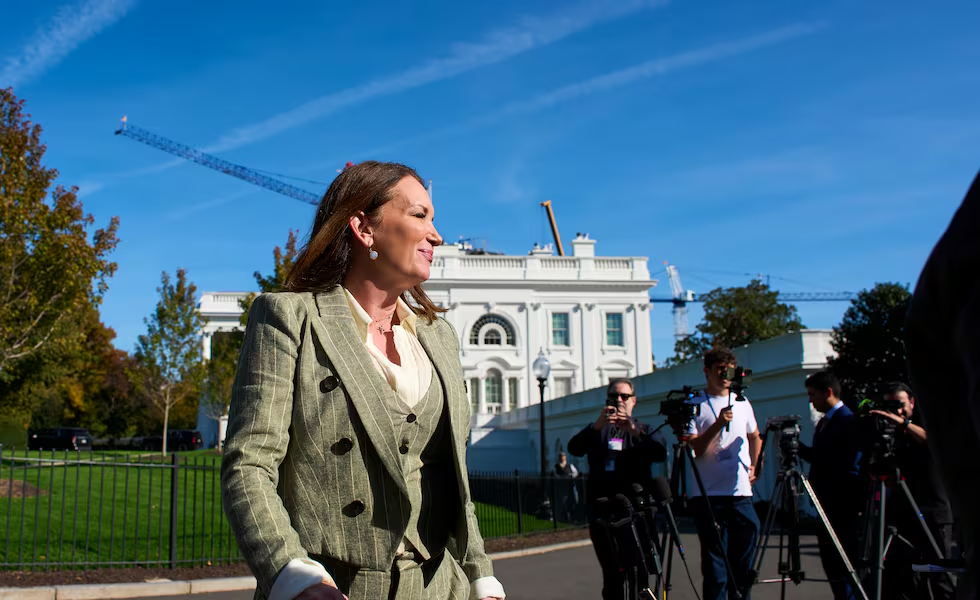
A federal court ordered Agriculture Secretary Brooke Rollins to stop sending Christian messages to USDA employees, ruling that the messages violated the Constitution.
Rollins, who has sent several holiday emails and statements concerning her Christian faith to the approximately 70,000 USDA employees in her capacity, was sued earlier this year by federal employees who alleged Rollins’ Easter message, sent in April of this year, violated the establishment clause of the First Amendment.
The complaint, filed by the plaintiffs in May, said that Rollins has “adopted a practice of sending increasingly proselytizing communications to the entire USDA workforce, promoting her own preferred brand of Christian beliefs and theology to the captive audience of employees that report to her, directly and indirectly.” Plaintiffs alleged this practice “reached a crescendo” with her Easter email.
Employees said they felt pressure to conform to the secretary’s religious beliefs and feared negative consequences if they did not.
‘Deseret Voices’ Episode 40: Protecting the freedom to choose — or reject — faith
In response, the USDA said the Constitution “does not mandate secularism in government affairs” and argued that the emails “fit well within this Nation’s deeply rooted history and tradition of religious invocations in official discourse, including on holidays.”
Judge Trina L. Thompson of the U.S. District Court in Northern California ruled Thursday that the secretary’s Easter message had gone “too far” and “suggest(ed) acquiescence that amounts to coercive pressure; a pressure of conformity sufficient to raise an Establishment Clause violation.”
The court ruled Rollins “must recognize certain boundaries when communicating religious messages” and cited a USDA memorandum written by Rollins that says employees may “discuss your religious beliefs with interested colleagues” and “share why your faith is meaningful to you” but “cannot use official authority to pressure subordinates” and “must stop if a colleague asks you to stop.”
The court noted that “the good faith intentions of the Secretary are not the issue here … neither is the role of religion in public life.”
“This Court’s judgment says nothing about the value of prayer or those who believe in its power,” the ruling said. “Precisely because the tradition of worship and prayer is so personal and so cherished, protecting private devotion and spiritual reflection from government influences comes to the fore.”
Background to Rollins’ controversial Easter message
Rollins has sent department-wide messages to USDA employees in honor of the July 4, Thanksgiving, Christmas and Easter holidays since she was sworn in as Agriculture secretary in February 2025.
In April of this year, Rollins sent an Easter message that discussed the resurrection of Christ, characterizing the event as “the greatest story ever told, the foundation of our faith, and the abiding hope of all mankind.”
Shortly after, the National Federation of Federal Employees, a national union representing approximately 110,000 government workers across the United States, and seven individual employees sued Rollins, claiming that her messages violated the First Amendment.
Why the courts are siding with religious liberty
The plaintiffs said Rollins’ message was “exactly the sort of government-sponsored religious coercion, religious sermonizing, and denominational preference that the Establishment Clause prohibits,” adding that they “felt violated by the Secretary’s exploitation of her authority and access to all USDA employees to preach about Jesus.”
Rollins “has sent no message even acknowledging — let alone celebrating or sermonizing — other religions’ holidays,” the plaintiffs noted, adding that Rollins’ “denominational preference has caused Individual Plaintiffs to feel alienated, unwelcome, and as outsiders in the agency.”
In response, the department said that Rollins’ messages “do not request, much less coerce, anyone to do anything. Nor do they establish a denominational preference. So they do not violate the Establishment Clause.”
Why Trump’s Religious Liberty Commission wants to rethink ‘separation of church and state’
“Our history is replete with invocations of God by public officials in all three branches and at all levels of our government,” the department said, adding that Rollins’ holiday emails were “in keeping with that tradition.”
Public figures on both sides respond to the court’s ruling
Randy Erwin, president of the National Federation of Federal Employees, celebrated the ruling.
“Federal employees shouldn’t feel pressured to participate in religious expression or be made to feel that their faith, or lack thereof, affects their standing in the workplace,” Erwin said in a statement, according to Politico.
“This ruling is an important victory for the First Amendment and for the core American principle that workplaces, especially those within the federal government, must respect the religious freedom of every employee,” Erwin continued.
In a statement reported by The Associated Press, a USDA spokesperson said the ruling was “a completely unprecedented attempt to muzzle a Cabinet Secretary,” adding that the agency is considering appealing the decision.
How the Gen Z gender divide on politics could reshape religion
The court was clear to say that it “expresses no view whatsoever on what the Secretary can and cannot do in her personal capacity.”
“The Court does not purport to regulate the religiosity of the Secretary — nor could it,” the ruling states.