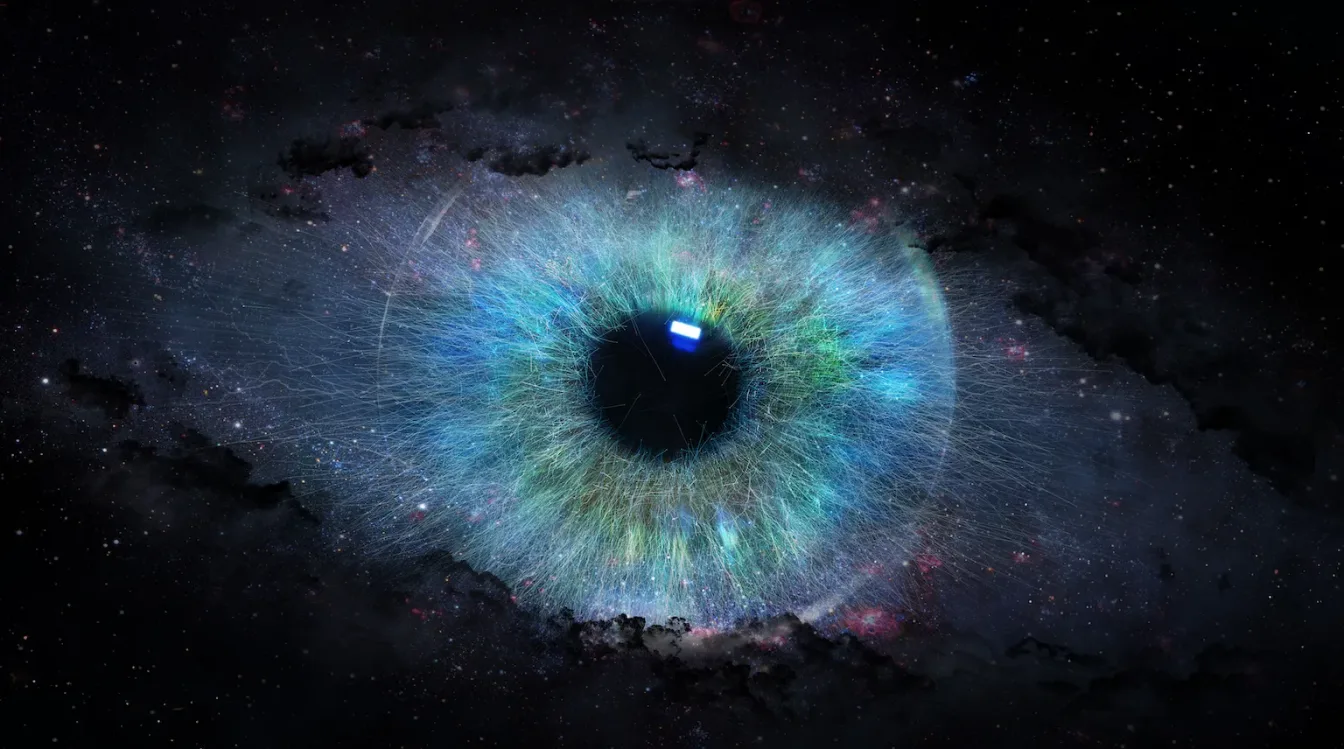
Our observable Universe is enormous compared to a human: over 10²⁶ times as large.
This horizontally-oriented logarithmic map of the Universe shows how, from left-to-right, we go from Earth-sized scales to the largest cosmic distances of all. As spectacular as this logarithmic view is, it “only” spans about 20 orders of magnitude: from the size of the Earth to the size of the present-day cosmic horizon. A human is a further factor of 7,000,000 smaller in scale, roughly, than planet Earth.
These 7 comparisons give perspective to these vastly different scales.
The elements of the periodic table, and where they originate, are detailed in this image above. While most elements originate primarily in supernovae or merging neutron stars, many vitally important elements are created, in part or even mostly, in planetary nebulae, which do not arise from the first generation of stars. Beryllium, boron, and some lithium are primarily created through a process known as spallation: when cosmic rays strike and split apart heavier atomic nuclei. The human body, although it contains over 70 types of atoms, is primarily made up of only four: oxygen, carbon, hydrogen, and nitrogen. Credit: NASA/CXC/SAO/K. Divona
1.) Human cells equal galactic planetary bodies.
There are approximately 30-40 trillion red blood cells in the human body: by far the most common type of cell that is made by humans within the body, and representing around 90% of all cells. In addition, approximately an equal number of non-native cells live within our microbiome, mostly inside our digestive tract. Credit: Design Cells / Adobe Stock
While cells in the digestive tract and red blood cells make up the majority of cells in the human body, the next most common cell type are the cells of the immune system, making up approximately 1.8 trillion cells on their own. Their estimated distribution and location is shown here. Credit: Ron Sender/BioRender.com
Although Earth and Venus are the two largest rocky objects in the Solar System, Mars, Mercury, as well as over 100 of the largest moons, asteroids, and Kuiper belt objects have all achieved hydrostatic equilibrium. Ganymede and Titan are larger than Mercury, but Callisto, at 99% of Mercury’s size, has just one-third of Mercury’s mass. All told, all known objects with diameters greater than 800 km are in hydrostatic equilibrium. The number of rounded bodies is expected to be similar among nearly all star systems.
Credit: Emily Lakdawalla. Data from NASA / JPL, JHUAPL/SwRI, SSI, and UCLA / MPS / DLR / IDA, processed by Gordan Ugarkovic, Ted Stryk, Bjorn Jonsson, Roman Tkachenko, and Emily Lakdawalla
2.) More cells than overall galaxies.
Only approximately 1000 stars, totaling ~175 solar masses, are present in the entirety of dwarf galaxies Segue 1 and Segue 3, the latter of which has a gravitational mass of an impressive 600,000 Suns. The stars making up the dwarf satellite Segue 1 are circled here. As we discover smaller, fainter galaxies with fewer numbers of stars, we begin to recognize just how common these small galaxies are as well as how elevated their dark matter-to-normal matter ratios can be; there may be as many as 100 for every galaxy similar to the Milky Way, with dark matter outmassing normal matter by factors of many hundreds or even more. Credit: Marla Geha/Keck Observatory
This diagram shows the phases of apoptotic cell clearance. Apoptosis is the process by which the body regularly destroys older cells, paving the way for newer, healthy, less damaged cells to take their place. Every day, somewhere around 50-70 billion cells die inside your body. Credit: I.K.H. Poon et al., Nature Reviews Immunology, 2014
3.) Daily cell death comprises a whole galaxy of stars.
The spiral galaxy Messier 33, shown as imaged by an amateur astronomer with X-ray data from NASA’s Chandra overlaid in pink, is also known as the Triangulum galaxy: a faint galaxy visible in the southern skies. First recorded in 1654, it is the faintest object visible by typical, unaided human eyes at a distance of 2.878 million light-years: several hundred million light-years more distant than Andromeda. As the Local Group’s third largest galaxy, it contains an estimated 40-50 billion stars.
Credit: Optical: Warren Keller; X-ray: NASA/CXC/SAO/P. Plucinsky et al.
The brain is a network of neurons, connected by synapses, embedded in a substrate of four different types of glial cells. There is both white and gray matter in the brain, and a three-layer protective casing surrounding it, all fed by blood vessels. A typical human brain contains an estimated 86 billion neurons. How this organ produces consciousness remains highly mysterious.
Credit: Dr_Microbe / Adobe Stock
4.) A galaxy cluster’s galaxies are like organs, muscles, and bones.
Most of the largest known galaxies in the Universe are found at the hearts of massive galaxy clusters, like the nearby galaxy cluster shown here. While the largest and most massive galaxy clusters possess several thousand galaxies, they are rare. More typically, galaxy clusters contain a few hundred galaxies, with an “average” galaxy cluster possessing right around 1000 significant galactic members.
Credit: CTIO/NOIRLab/DOE/NSF/AURA; Image processing: Travis Rector (University of Alaska, Anchorage/NSF’s NOIRLab), Jen Miller (Gemini Observatory/NSF’s NOIRLab), Mahdi Zamani & Davide de Martin (NSF’s NOIRLab)
This view of the human body, both shallow as well as posterior and anterior, shows the major muscle groups found inside the human body. Along with 79 organs and 206 bones, there are over 600 and closer to 700 identified skeletal muscles within the human body. These three systems, combined make up the majority of a human body’s mass. Credit: OpenStax Anatomy and Physiology/Wikimedia Commons
Although human beings are made of cells, at a more fundamental level, we’re made of atoms. All told, there are close to ~10^28 atoms in a human body, mostly hydrogen by number but mostly oxygen (due to water) and carbon (due to the musculoskeletal system and our organs) by mass. Credit: Dave Collins/Dave’s Brain
5.) Water is the body’s “dark matter.”
Human bodies gradually evolve in terms of their water-weight content over the course of their lifetime. A zygote’s mass is nearly 100% water, a developing fetus is around 90%, a newborn baby’s water content is 75-80%, which decreases to around 70% in childhood, 55-65% in adulthood and down to about 50% in the elderly. Credit: Kati Finell / Adobe Stock
This composite JWST (above left) and Hubble (lower right) image of nearby spiral galaxy NGC 628, located 32 million light-years away, showcases the gas and dust network that traces out the spiral arms and the current star-forming regions within them. For large, high-mass spiral galaxies, it’s very common to find a dark matter to normal matter ratio consistent with the cosmic average: 5-to-1. However, in extreme environments and for low mass galaxies, the ratios can be extreme, both in terms of producing galaxies overabundant and deficient in dark matter. Credit: NASA, ESA, CSA, STScI, Janice Lee (STScI), Thomas Williams (Oxford), PHANGS Team
6.) Our circulatory system’s length is like a galaxy compared to our home.
This simplified diagram shows the large, major pathways for both arterial and venous blood flow within the human body. Although these are the largest-diameter pathways for blood flow, the majority of the length of the human circulatory system is composed of the smallest vessels: capillaries. Credit: public domain, LadyofHats/Wikimedia Commons
The inner Solar System, including the planets, asteroids, gas giants, Kuiper belt, and more, is minuscule in scale when compared to the extent of the Oort Cloud. Sedna, the only large object with a very distant aphelion, may be part of the innermost portion of the inner Oort Cloud, but even that is disputed. The diameter of the Kuiper belt is a little bit over 100 AU in size, before giving way to the Kuiper cliff, where its population abruptly plummets.
By viewing the Milky Way in infrared wavelengths of light, we can see through large amounts of the galactic dust and view the distribution of stars and star-forming regions behind them. As revealed by the 2 micron all-sky survey (2MASS), the densest collections of galactic dust can be seen tracing out our spiral arms, but the center of the plane of the Milky Way is where the dust is densest. The Milky Way’s diameter is estimated to be just over 100,000 light-years.
This diagram and table show the main elements that compose the human body as a function of percentage of mass. The fraction by number of atoms is vastly different and dominated by hydrogen, due to the enormous variation in atomic weights of the various elements. Oxygen contributes the most mass (with carbon second and hydrogen third), while hydrogen is the most abundant element by number (with oxygen second and carbon third). Credit: OpenStax College, Anatomy & Physiology, Connexions Web site, 2013
The star-formation rate in the Universe is a function of redshift, which is itself a function of cosmic time. The overall rate, (left) is derived from both ultraviolet and infrared observations, and is remarkably consistent across time and space. Note that star formation, today, is only a few percent of what it was at its peak (between 3-5%), and that the majority of stars were formed in the first ~5 billion years of our cosmic history. Only about ~15% of all stars, at maximum, have formed over the past 4.6 billion years, with a total of just over 2 sextillion stars formed, total, within our observable Universe.
↑ Back to top
Originally published by Big Think ↗· rebuilt here from its own full-text RSS feed · all rights
remain with the publisher, please read and support them there.
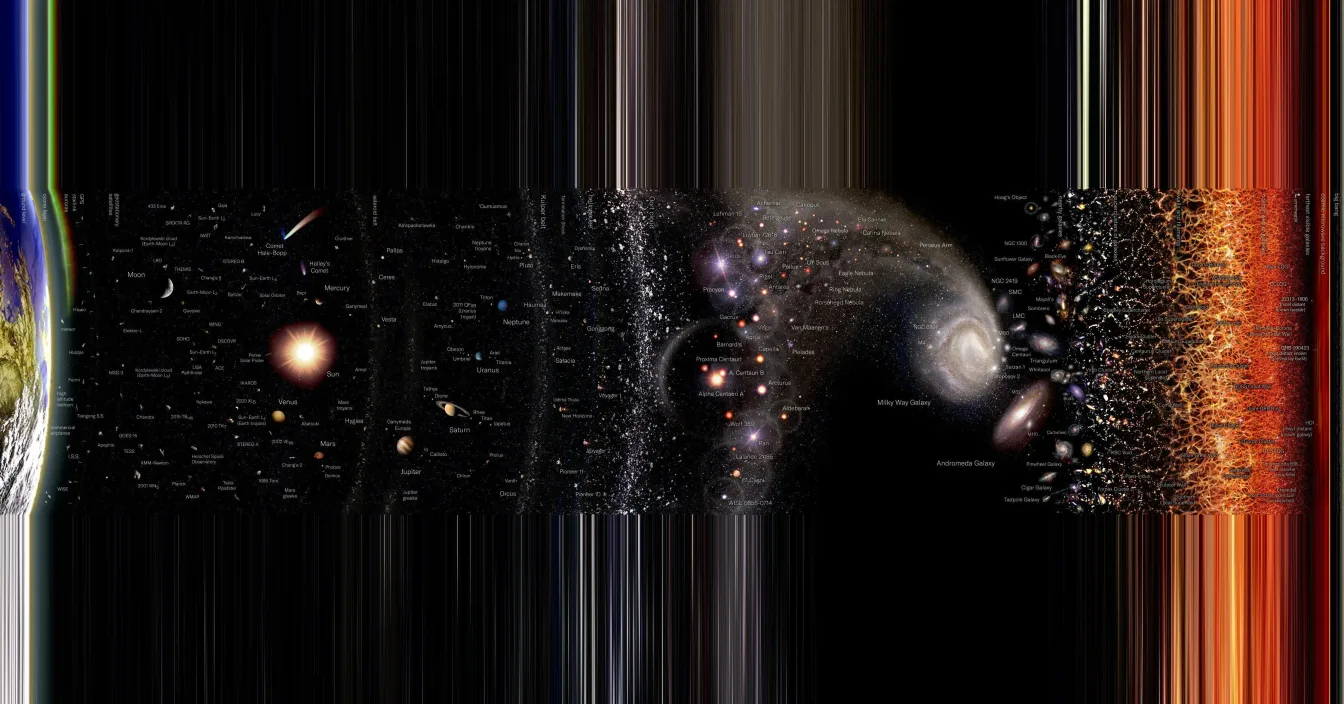 This horizontally-oriented logarithmic map of the Universe shows how, from left-to-right, we go from Earth-sized scales to the largest cosmic distances of all. As spectacular as this logarithmic view is, it “only” spans about 20 orders of magnitude: from the size of the Earth to the size of the present-day cosmic horizon. A human is a further factor of 7,000,000 smaller in scale, roughly, than planet Earth.
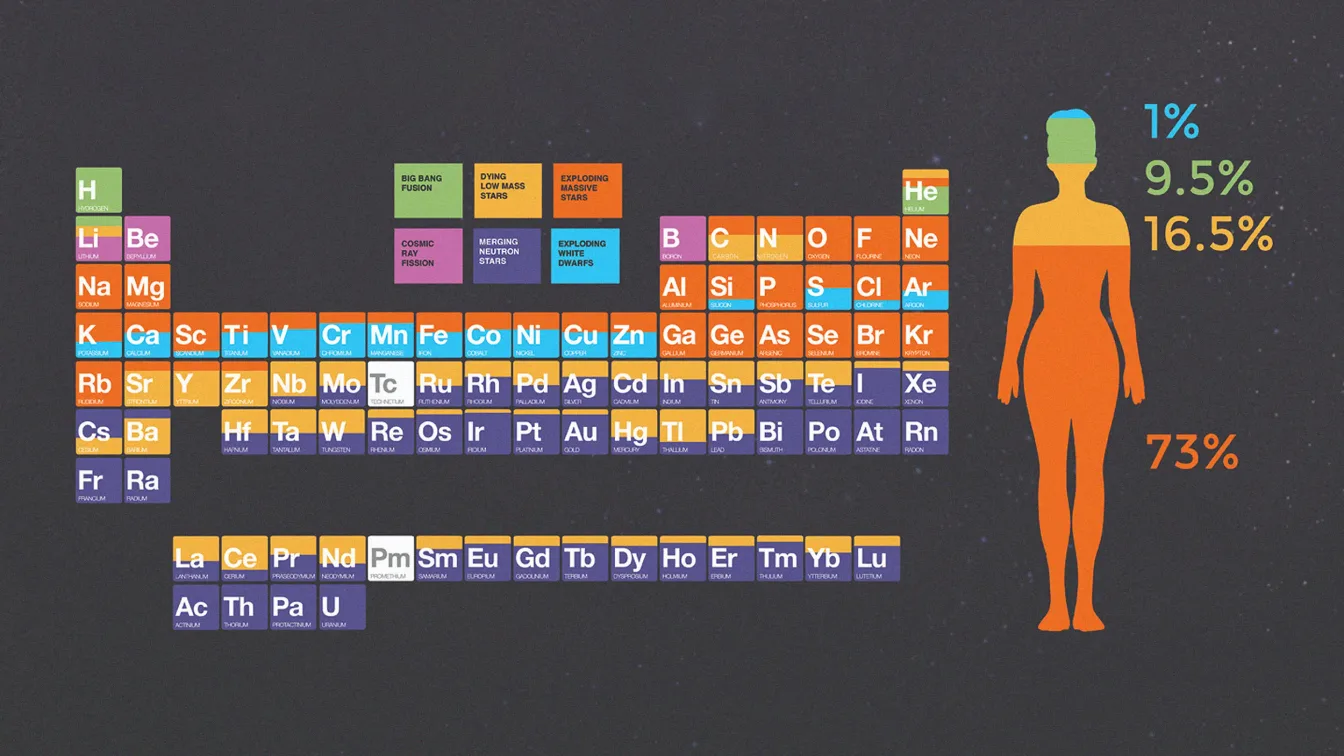 The elements of the periodic table, and where they originate, are detailed in this image above. While most elements originate primarily in supernovae or merging neutron stars, many vitally important elements are created, in part or even mostly, in planetary nebulae, which do not arise from the first generation of stars. Beryllium, boron, and some lithium are primarily created through a process known as spallation: when cosmic rays strike and split apart heavier atomic nuclei. The human body, although it contains over 70 types of atoms, is primarily made up of only four: oxygen, carbon, hydrogen, and nitrogen.
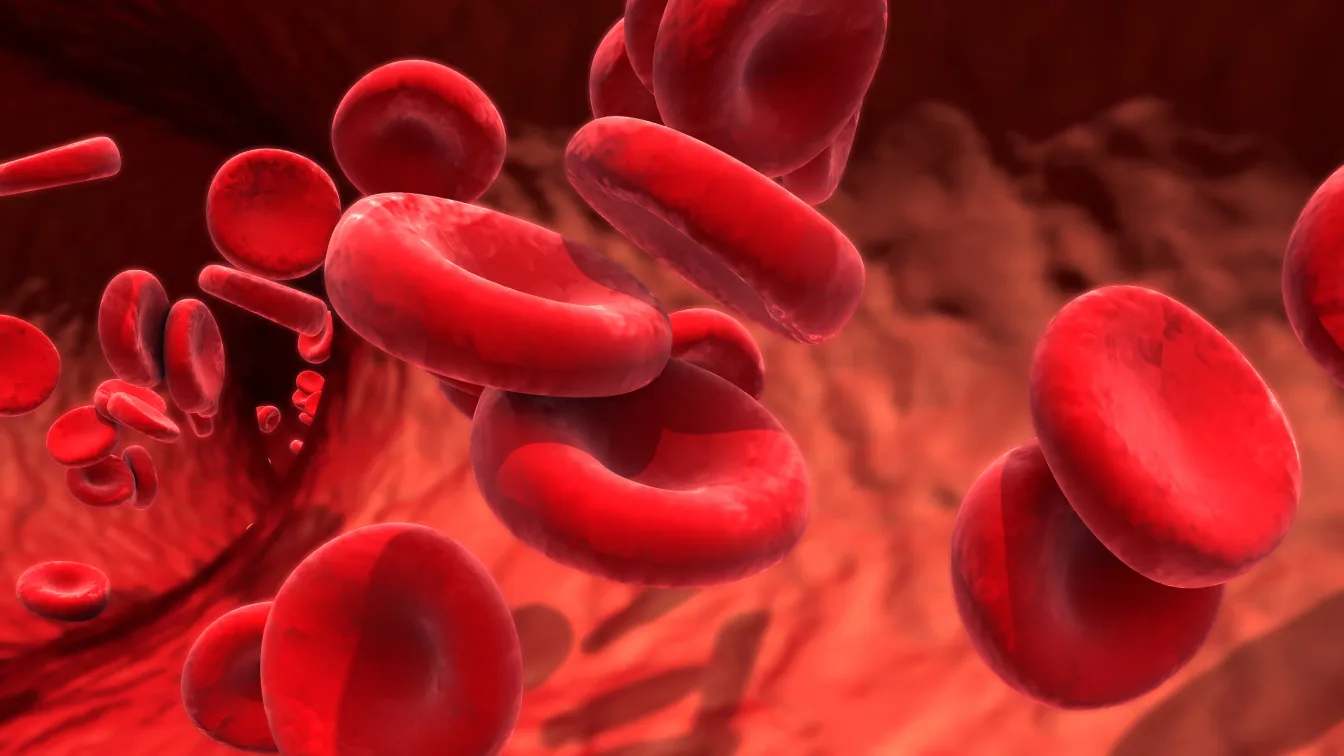 There are approximately 30-40 trillion red blood cells in the human body: by far the most common type of cell that is made by humans within the body, and representing around 90% of all cells. In addition, approximately an equal number of non-native cells live within our microbiome, mostly inside our digestive tract.
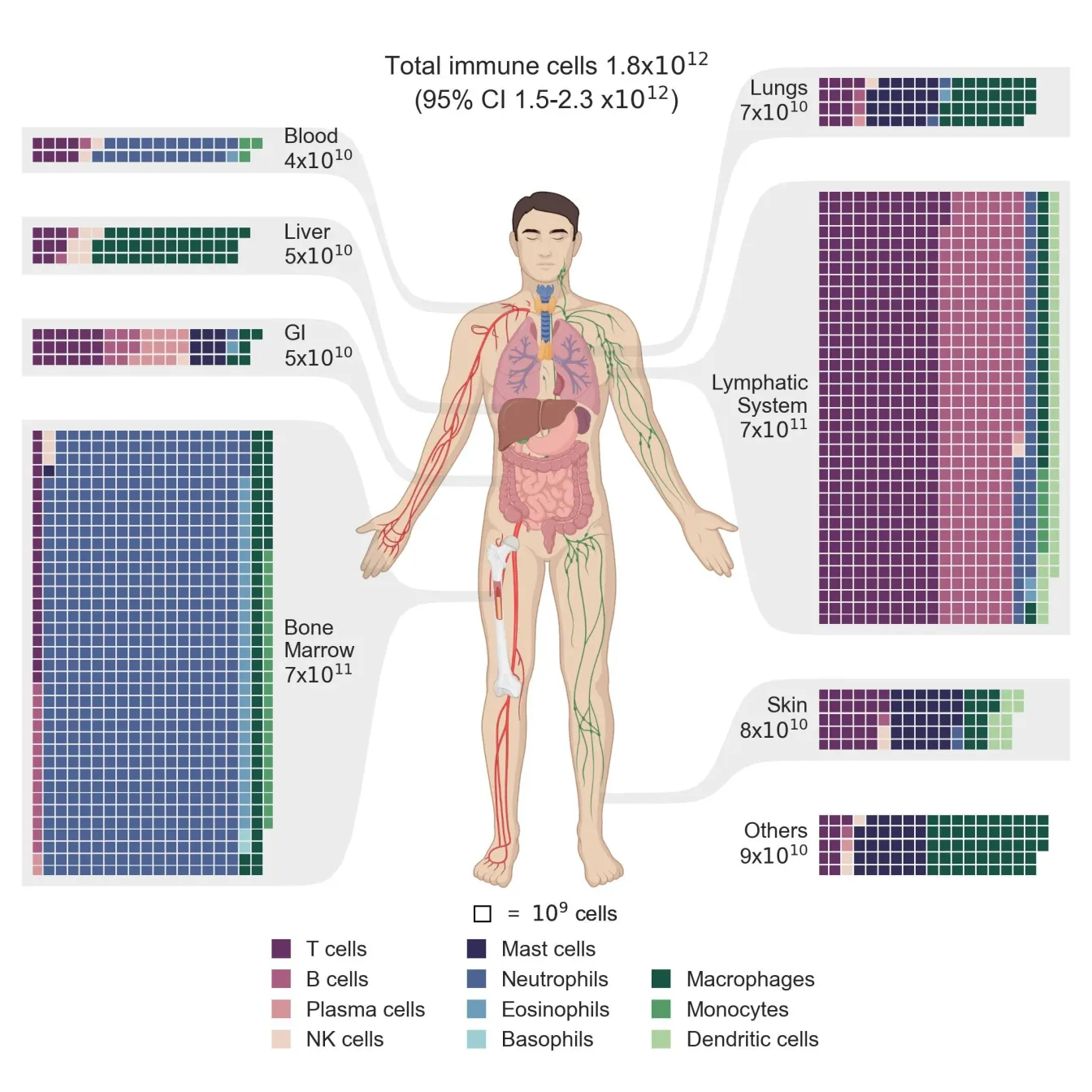 While cells in the digestive tract and red blood cells make up the majority of cells in the human body, the next most common cell type are the cells of the immune system, making up approximately 1.8 trillion cells on their own. Their estimated distribution and location is shown here.
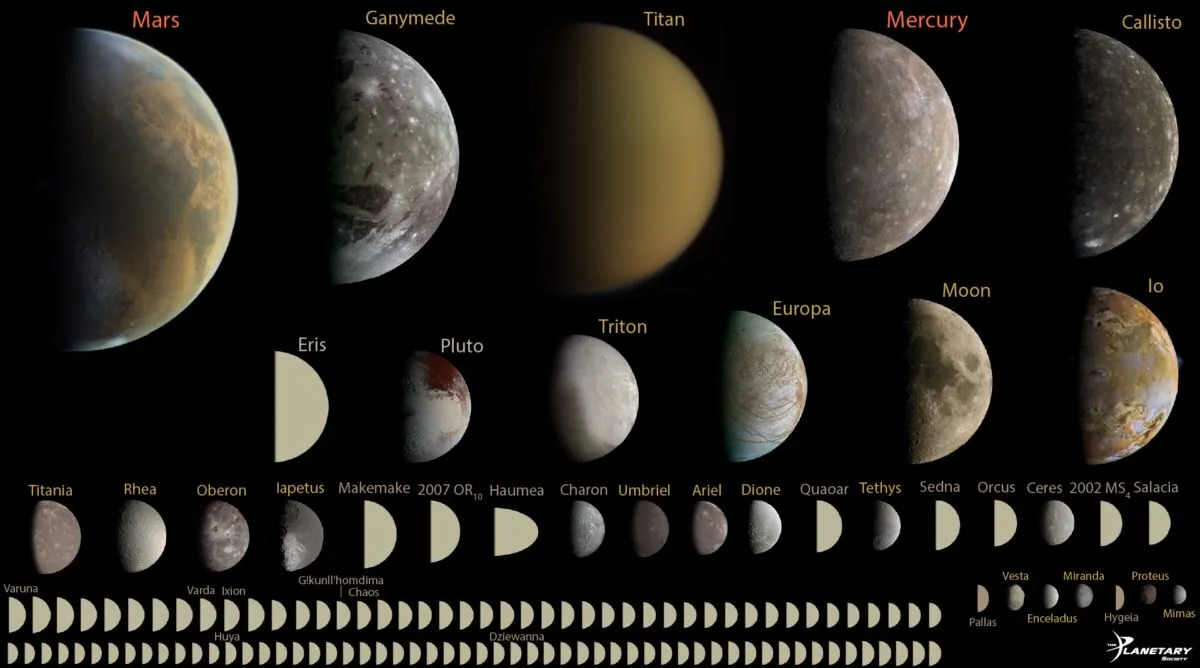 Although Earth and Venus are the two largest rocky objects in the Solar System, Mars, Mercury, as well as over 100 of the largest moons, asteroids, and Kuiper belt objects have all achieved hydrostatic equilibrium. Ganymede and Titan are larger than Mercury, but Callisto, at 99% of Mercury’s size, has just one-third of Mercury’s mass. All told, all known objects with diameters greater than 800 km are in hydrostatic equilibrium. The number of rounded bodies is expected to be similar among nearly all star systems.
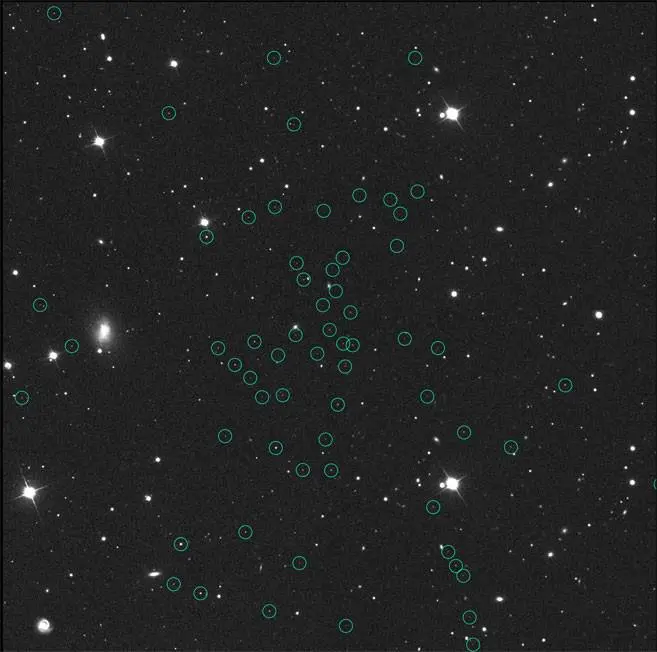 Only approximately 1000 stars, totaling ~175 solar masses, are present in the entirety of dwarf galaxies Segue 1 and Segue 3, the latter of which has a gravitational mass of an impressive 600,000 Suns. The stars making up the dwarf satellite Segue 1 are circled here. As we discover smaller, fainter galaxies with fewer numbers of stars, we begin to recognize just how common these small galaxies are as well as how elevated their dark matter-to-normal matter ratios can be; there may be as many as 100 for every galaxy similar to the Milky Way, with dark matter outmassing normal matter by factors of many hundreds or even more.
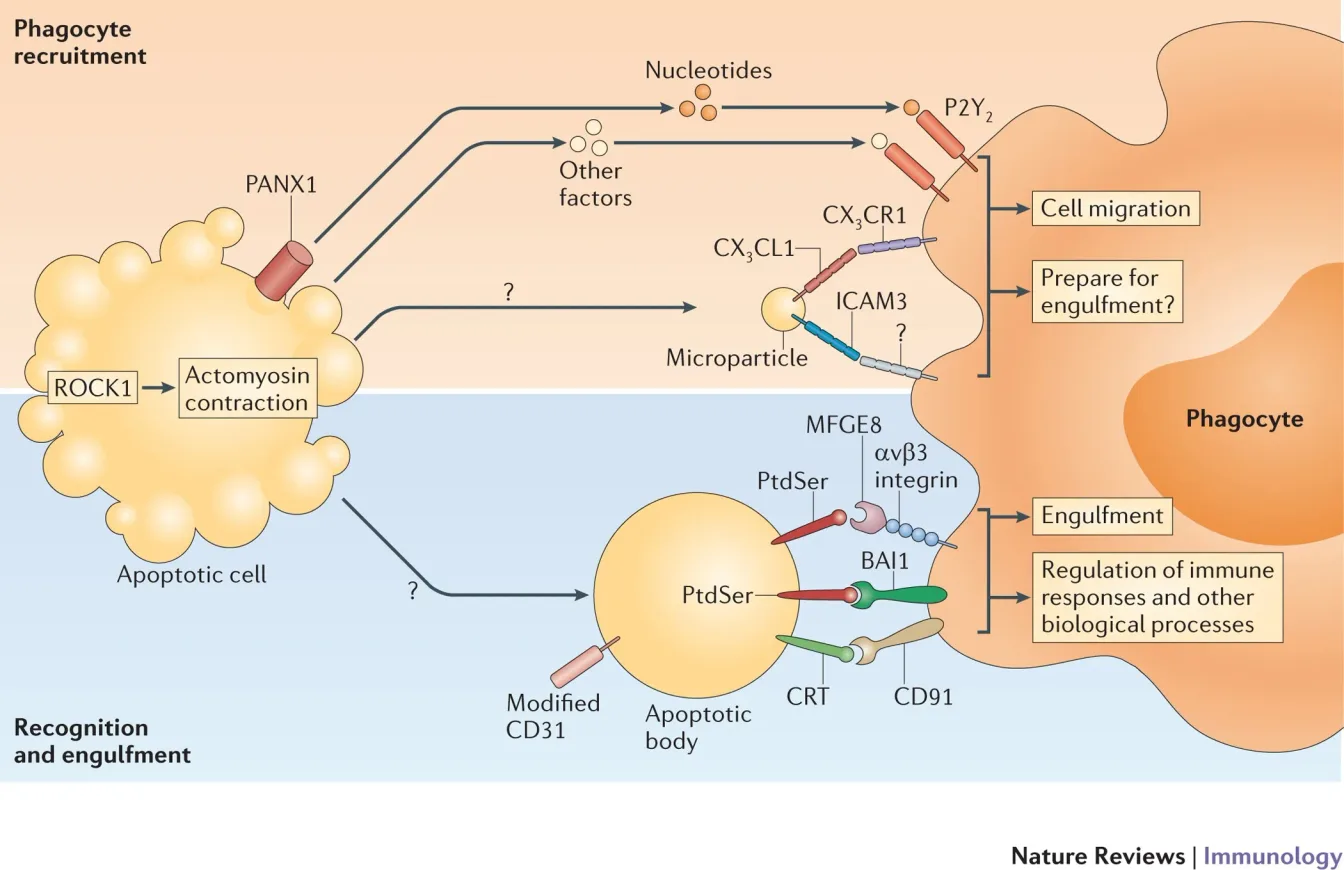 This diagram shows the phases of apoptotic cell clearance. Apoptosis is the process by which the body regularly destroys older cells, paving the way for newer, healthy, less damaged cells to take their place. Every day, somewhere around 50-70 billion cells die inside your body.