Silver linings: From fjord to friluftsliv — Visiting Norway’s land of the midnight sun
As a destination enrichment speaker with a cruise line, I’ve found Norway an easy and accessible country to visit: English is widely spoken, credit cards are welcome and the scenery is stunning. While the Norwegian word “koselig” isn’t as widely recognized in the United States as the Danish word “hygge,” both mean cozy contentment and relaxed lifestyle. This is something widely practiced throughout the country.
Koselig shows up in many different ways. Sometimes, it is all about relaxing and taking things easy. At other times, it is simply about taking time off. It is the same in Denmark and Sweden. For instance, I wrote to a Swedish folk museum about arranging for a visit in August and received this simple reply:
“Sorry, vacation time. Folkmusikkafeet will be closed.”
I was perplexed. During the peak summer holidays, a folk museum in the capital city would be closed?
“Friluftsliv,” a Norwegian friend told me. That means “open-air life” or “free-air living.” It describes a spiritual and physical connection with nature — treating time spent outdoors not as a mere hobby but as a fundamental requirement for well-being. All the Scandinavian countries subscribe to it.
Silver linings: Sentimental journeys — Why we buy souvenirs and what we do with them
No one wants to stay in the city during July or August when the weather is so good, my friend said. Residents must take advantage of the few summer days that are available when it is not raining, he told me.
No worries. I booked a visit to the Royal Palace instead and tried to book a sauna session with a cold plunge, but there were no openings at the location near where we were staying.
Sauna is a big deal in Norway. It is unhurried. It is a social activity, but mostly, participants don’t talk. They simply sit quietly with each other. Norwegians don’t usually talk much to begin with — no one would ever accuse Norwegians of being loquacious. So this is the perfect “social” activity for them: sitting with others in sweltering heat without saying a word.
Bringing your own swimming suit and towel is required to visit most public saunas in Norway. Temperatures in a sauna can range from 170-200 degrees Fahrenheit, so it can literally take your breath away. Everybody seems to understand that. One more reason there’s not much talking.
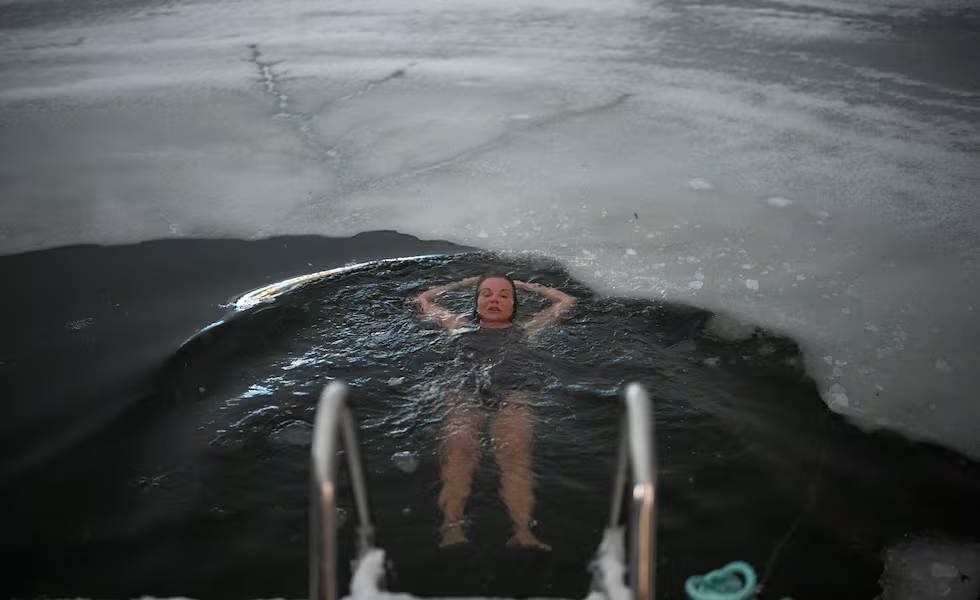
Oslo is known globally as the “capital of the floating sauna” because it has a dozen or so motorized sauna rafts that sail around the harbor for an hour or two while participants enjoy the heat of the sauna, appreciate the majestic scenery and take a cold plunge in the fjord every 15-20 minutes.
“You are kidding me,” my wife, Stephanie, said when I mentioned I wanted to go. “Do I have to do that cold plunge part?”
“It is optional,” I said, “but do you want to be seen as a soft American?”
“But I am a soft American,” she said. “I wear that badge proudly.”
While Stephanie doesn’t like being cold, she also doesn’t like to be left out. She scores very high for FOMO (fear of missing out).
In an effort to convince her, we watched a couple of videos about saunas and cold plunges before we arrived in Norway. None of the videos were convincing. In one video, sauna bathers raced back to the sauna after the cold plunge, shivering.
“People willingly do this?” Stephanie asked. “Why on earth would they do that?”
“Norwegians say they like it,” I said.
“I hear they also like fermented fish, but I’m not planning to eat that while I’m there,” she replied.
“Let’s keep an open mind, please,” I pleaded, explaining that cold baths were part of the culture there.
When we arrived in Oslo, it was a balmy 62 degrees — typical for Oslo even in early August. It was 110 in St. George when we left. Oslo’s water temperature was in the mid-50s. Even though the harbor is also a fjord, because it is a protected inner harbor, the air and water temperatures are moderate in the summer.
After arriving in Oslo, I met Tor Andre Gjesteland. He had been working for a floating sauna company for about three years. I asked him why so many locals liked going to a sauna.
“It’s a social thing,” he said. “It’s a way to relax and simply enjoy others’ company without needing to carry on a forced conversation.”
“But why not go to a sports bar or have people over instead?” I asked.
Silver linings: Not all who wander are lost
“Sports bars are too noisy and most houses are much smaller than in America,” he replied. “Besides, when you are sitting around in a sauna in only your bathing gear, it is much easier to have an intimate conversation. When you are half-naked, there’s no pretense,” he said with a wry grin.
He had a point.
In the end, we were not able to schedule a sauna raft session at the harbor when we were in Oslo. It was raining and our schedule was full. My wife was worried that I was disappointed.
“I would have liked trying it, but I’ve been to saunas and taken cold showers before,” I said. “Norway is stunning, but you don’t have to shock your nervous system to experience its beauty.”
My wife said she didn’t feel like she had missed a thing. Watching others shiver as they raced back to the sauna was enough of a vicarious experience for her. She didn’t feel like she missed a thing.
No FOMO whatsoever.