Voters broke with Democrats on ballot initiatives
The News
PALO ALTO, Calif. — Democrats swept Republicans on Nov. 3, but some of their party’s progressive ideas didn’t make it with them, as a host of liberal ballot initiatives failed and conservative proposals passed across the country.
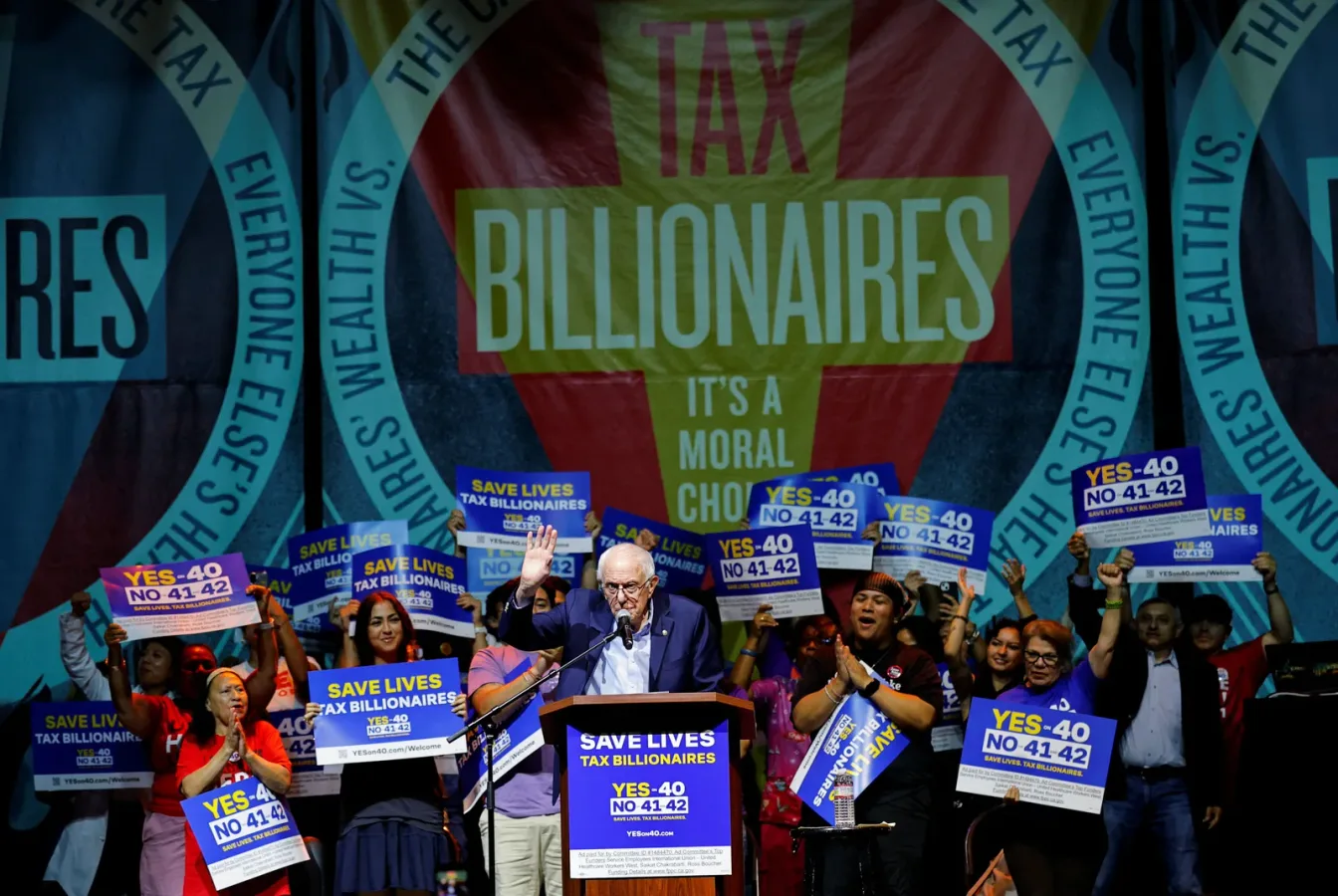
In California, where Republicans lost every major race by landslides, voters rejected a billionaire wealth tax, made it harder to create one, and likely killed a measure that would have piloted public financing of elections.
In Colorado, a deep blue electorate voted to ban gender surgeries on minors by 4 points and to bar trans athletes’ participation in female sports by 5 points. A similar sports proposal prevailed by 12 points in Washington, even as Democrats padded their state legislative majorities.
And in Iowa, where Gov.-elect Rob Sand led a Democratic comeback, voters endorsed a two-thirds legislative supermajority for any income tax increase.
The success of some conservative ideas down the ballot — largely focused on taxes and social issues — gave some hope to Republicans after a hopeless election night. Voters rejected their party, but took multiple opportunities to oppose tax increases and roll back progressive social policies.Democrats were not taking that as advice to their party. Instead, they believe that opposition money and muddled messaging overwhelmed them, and they could win if they made another run at the ballot.
“The margin was narrow enough that if we do more education with voters, we could significantly narrow it and win this,” said Suzanne Jimenez, the chief of staff at the union SEIU-UHW and a proponent of the California wealth tax.
Saikat Chakrabarti, an unsuccessful House candidate who was a top contributor to the wealth tax campaign, agreed.
“When you have nearly half a billion dollars against you, and they spend it to spread straight-up lies about an issue, it’s hard to win unless you can get your own message out,” Chakrabarti said.
“The campaign had a winning issue,” he said, “but failed to get its own message out.”
Different ways to lose
The Proposition 40 campaign was heavily outspent, with some of California’s wealthiest residents funding its opposition.
According to state campaign finance records, $152 million went into the “no” effort, compared to a bit more than $33 million for “yes.” Spending for and against Proposition 42, which bars new wealth taxes, was similarly lopsided —nearly $128 million for, and nearly $35 million against.
Some of the funding to kill the wealth tax also came from members of the Democratic Party’s coalition, like Planned Parenthood, which advocated for a long-term funding source over the proposed one-time levy. Outgoing Democratic Gov. Gavin Newsom opposed it, as did Gov.-elect Xavier Becerra, giving voters permission to support their ticket while voting against an idea backed by Sen. Bernie Sanders, I-Vt.
“Since it failed, I look forward to Gov. Newsom leading the fight by championing a national wealth tax, which he claimed he heavily supports,” said Chakrabati.
The spending in other conservative down-ballot victories was more mixed. Supporters of Washington’s ban on transgender girls playing in girls sports out-spent opponents by a 3-1 margin. One of the coalition’s other priorities, which would have required schools to notify parents if their children identified as a different gender at school than at home, failed by 5 points.
In Colorado, where transgender sports and medicine bans for minors passed narrowly, the “yes” side was heavily outspent by its opponents, the Families Not Politics coalition.
“It’s unfortunate that this is an issue that’s been politicized,” said Erin Lee, the Democrat-turned-Independent whose Protect Kids Colorado coalition got the measures on the ballot. “Democrats have chosen this as a hill to die on, and Republicans have grabbed this as a political tool to wield. But when we started putting the team together, it became clear that this issue transcends the parties.”
The Democratic Party in both blue states opposed the measures. Shasti Conrad, the chair of the Washington state Democratic Party, said that the sports measure “was very confusingly written,” while Republicans brought out their base to support it.
Sources who worked to beat the measure told Semafor that their campaign was beset by bad planning and bad luck. The Gender Justice League, an LGBTQ+ rights group that was working against the measure, claimed to have “lost 80% of our foundation support and 35% of our government funding” as the Trump administration enforced its executive order on gender.
The “no” campaign also resisted help from Third Way, the centrist Democratic think tank not beloved by progressives. Lanae Erickson, a Third Way vice president, shared research with campaigners in every state where a sports ban could appear on the ballot.
“We found that most persuasive messages were around the gender checks component of the measure,” said Erickson, referring to language in the Washington initiative that required female athletes to prove their biological sex . Colorado campaigners used Third Way’s research; Washington campaigners opted not to until the campaign’s final weeks, when they ran some digital ads based on the information. Democrats in both states believed that their eventual messaging was not effective enough.
“We had an extremely long ballot, and I think it was confusing to folks,” said Rep. Jason Crow, D-Colo. “I think a lot of people didn’t know exactly what those provisions stood for. We have to make sure we’re protecting folks, and that we’re doing so clearly and specifically.”
In no state where conservatives passed their preferred tax or social issue measures did Democrats say that their party’s position might change. Erickson, pointing to the margins in both Washington and Colorado, said that Third Way had been trying to find a winning path for trans rights for years, and that the results showed progress.
“Funders kept telling us it’s an 80-20 issue, so they didn’t help us,” she said, referring to polling on trans participation in girls sports. “It’s not an 80-20 issue. But if the question is put to voters as the status quo or a blanket ban, people will say yes to the blanket ban.”
David’s view
Roughly speaking, there are two kinds of ballot measures – those designed to bring out voters for one of the major parties, and those designed to pass no matter what the parties do. For years, Democrats hoped that ballot measures raising the minimum wage would help them change the electorate. Two decades ago, Republicans thought the same about ballot measures that banned same-sex marriage. But in many cases, voters simply took the chance to separate their partisan preference from their issue preference.
This is what happened on Nov. 3, when Republicans got no lift at all from measures that were most attractive to their hardcore voters. The results in Washington and Colorado will probably strengthen the hands of social conservatives, who can argue that their priorities are more popular than the GOP itself. The success of anti-tax measures in so many states will encourage Republicans who are already planning to unseat Democrats in 2028, if they don’t deliver on their gauzy promises of “affordability” and raise any kinds of taxes.
Room for Disagreement
Conservatives ran more ads than ever about transgender rights this cycle, and lost most of the races they targeted, while their major ballot issues won. But they were not looking at ballot measures as a way to drive out their base in future elections.
“We can win, at least temporarily, in blue states,” said Terry Schilling, the president of the American Principles Project, which had warned in September that gender critical messaging wouldn’t be enough to elect Republican candidates. “Ballot initiatives also allow for ticket splitting, and let candidates off the hook on issues where they are unpopular.”
Notable
- In the Anchorage Daily News, Iris Samuels reported on how and why Alaskans voted with progressives and independents on something Republicans opposed – the “top four” electoral system that Republicans blamed for weakening Sen. Dan Sullivan.
- In CalMatters, Kristen Hwang, Yue Stella Yu and Jeanne Kuang looked closer at state and local ballot measures, finding a more nuanced picture of the tax revolt.