Utah sues popular prediction market platform
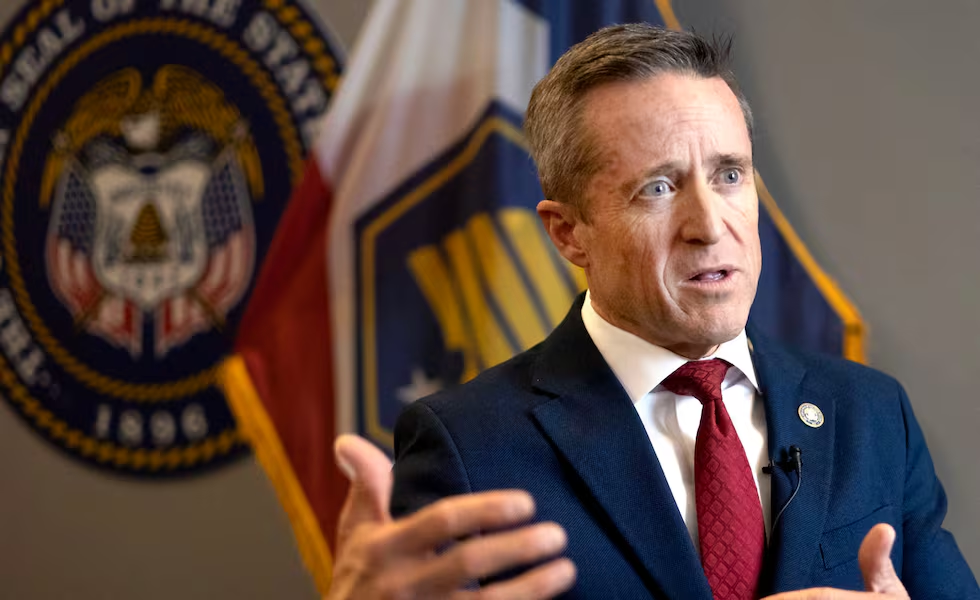
Utah filed a lawsuit Tuesday against Kalshi, arguing the prediction market platform is subject to the state’s anti-gambling laws.
Along with the lawsuit, Attorney General Derek Brown declared gambling a “public nuisance” in Utah that causes harm to its residents.
Utah — one of two states that prohibit all forms of gambling — is the latest state to challenge a prediction market company in court. At least nine states have brought legal actions against prediction market platforms. While most are civil lawsuits, at least one state, Arizona, filed a criminal complaint.
The 63-page Utah lawsuit filed in 3rd District Court in Salt Lake City seeks to stop the company from operating in the state, as well as collect millions of dollars in damages.
“Under Utah law, I have determined that this operation is causing a significant and substantial ongoing harm to a significant number of Utahns,” Brown said at a news conference.
“And so today we are asking the court to stop sports, elections, politics, culture and mention bets here in Utah, and to use a court-approved geolocation provider to enforce this. We’re also asking the court to make the defendants give up the profits that they have made to pay restitution and to be accountable for the public nuisance that they have caused here in the state of Utah.”
Kalshi did not immediately respond to an email request for comment.
Some users see 100 online gambling ads a week. Here’s the impact
How much did Kalshi make on Utah wagers?
The lawsuit seeks to pull back Kalshi’s “illegally obtained profits” in the state. Kalshi takes a one- to two-cent fee for every wager, per the lawsuit. Based on those numbers, the state estimates the company made between $30.5 million and $61.1 million from bets placed by Utah accounts.
But those numbers could change.
“As we get discovery in the course of this civil complaint, we anticipate having more information that will help us understand exactly what it is that they’ve made and how they’ve done it in the course of effectively breaking Utah law,” Brown said.
According to the lawsuit, at least 1.1% of wagers on Kalshi involve Utah accounts, totaling more than 3 billion bet as of Oct. 19, 2026. More than 32,000 Utahns had verified Kalshi accounts as of February 2026, per the lawsuit, but state officials believe the number has grown substantially since then.
Utah bettors lost at least $5.5 million based on reported nationwide retail losses and the state’s share of the activity, according to the suit.
Kalshi attempted to block Utah gambling laws
In February, Kalshi sued Utah in federal court to block the state from enforcing its gambling laws against the company. The company argued that because it operates a federally registered exchange, the state could not treat its sports bets as gambling.
The New York-based prediction market allows users to place “event contracts” on future outcomes and earn a payout if they are correct. Those transactions are regulated through the Commodity Futures Trading Commission. Kalshi argued the state planned to prevent the company from offering contracts in Utah and asked the courts to block any enforcement that “interferes with the operation and function of plaintiffs’ futures market.”
Are Kalshi’s sports betting contracts subject to Utah gambling law? What a judge ruled
In August, U.S. District Judge Robert J. Shelby ruled that Utah’s anti-gambling laws apply to sports betting contracts Kalshi offers on its platform. He concluded that the federal law Kalshi relied upon in the case does not preempt the state’s ability to enforce its statutes.
That ruling factored into Utah’s decision to sue Kalshi in state court.
“Although the defendants are well aware that sports bets and other forms of gambling are illegal under Utah law, defendants chose to begin offering gambling bets to Utah’s residents by at least September 2024, something they continue to doing despite a a recent federal court order rejecting KalshiEx’s argument that it is not bound by Utah law,” according to the lawsuit.
The lawsuit contends Kalshi advertises its platform as “legal in all 50 states,” including ads that aired in Utah. It also alleges that a Kalshi representative filmed an ad on the campus of Brigham Young University, a private university sponsored by The Church of Jesus Christ of Latter-day Saints.
Latter-day Saint leader condemns gambling
Earlier this month, a member of the faith’s First Presidency condemned gambling, including prediction markets, in a speech during the church’s general conference.
“For us as Latter-day Saints, overarching all other concerns is the fact that gambling is morally wrong,” said President D. Todd Christofferson, second counselor in the First Presidency. “Gambling is built on the desire to obtain something for nothing. Its structure requires that any gain comes at others’ expense. It’s hard to reconcile that with the commandment to love our neighbor as ourselves.”
Brown said in the news conference that prediction markets do not help people invest. “Frankly, they are engineered to do one thing and one thing alone, and that is to empty your wallet,” he said.
In addition to Kalshi, the lawsuit names related entities KalshiEx, Kalshi Klear, Kalshi Trading, Susquehanna International Group and Susquehanna Government Products as defendants.