What my parents are still trying to teach me
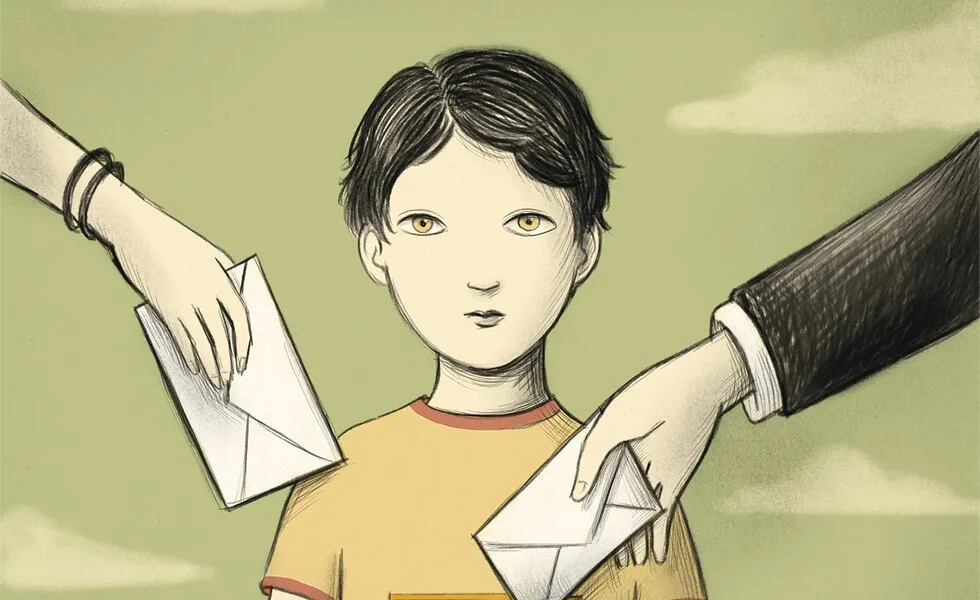
A friend of mine recently asked me what I learned from my father. It’s something guys ask each other, not always expecting an answer, because most guys are better at raising questions than answering them. I know my dad was. And I guess I inherited that.
Guys never ask what you learned from your mother. But they should.
Both are fair questions, and for me they come at a resonant time. I’m about to reach the 30th anniversary of losing my father — who died when he was 62 and I was 39. It’s also the 10th anniversary of losing my mother. She was 82. While it seemed like almost a second lifetime between these two events, their anniversaries arrive each year seemingly married, just four days apart.
Because he had survived a heart attack in his 20s, when I was only eight, he always made it clear that we should live life as if it were short and getting shorter.
So, I think about what my dad taught me, about being a man, a spouse, a professional, a wage-earner, a friend and confidant — the last two being the most important to him. Many things he taught very much on purpose, others accidentally, and some entirely by what he refused to acknowledge. And then I think about all the things my mom tried to teach me when we were all together, and when it was clear Dad would be leaving us unspeakably early, and then when she was the parent still standing for the next 20 years.
That was when she was trying to do her own job as mom, and then grandmom, better and differently, while also trying to represent Dad. She missed him terribly, and sometimes struggled to explain him.
We remember our parents through family photos, some of which document events we all agree on, others that remain in timeless debate because nobody thought to write the date and location on the back of them.
My wife and I have been disagreeing forever about where my favorite picture of me and them together was taken. I’m sitting between them in the open back of their van; they’re dressed in bright suburbanite clothes and grinning because they just met their first daughter-in-law, who was also snapping the picture. I’m in the middle in sunglasses, a gray mock turtleneck and jeans, looking like I just made the first decision in my life on which they didn’t get a vote.
We also remember our parents through snippets of captured answering machine messages, or recordings made of events on cassettes or VCR tapes that should have been transferred before they started demagnetizing, but still work.
Seeing and hearing glimpses of them helps. (My dad once recorded himself reading all the “Just So Stories,” as he did for us as kids, in case he didn’t live to read them to his grandkids.)
After nearly 6 decades, a man found out his biological father is a rock star
But mostly, I am comforted and engaged by still seeing their handwriting. I still have notes of theirs, which I’ve discovered over the years, and then stuck in various places around my office, so I catch a glimpse of their distinctive handwriting and messaging whenever I turn my head.
This started when my dad was turning 60 and there was no inkling his time was almost up. However, because he had survived a heart attack in his 20s, when I was only eight, he always made it clear that we should live life as if it were short and getting shorter.
We should show and share emotion, travel whenever possible, even if we could barely afford it, and, most importantly, avoid small talk, because it was the enemy of the kind of talk he treasured with the people he loved — which I guess could be called “large talk,” or maybe “big talk.” Because nothing mattered more to him than having a really big talk, which could make up for any number of silences, missed news, unshared life moments.
My father was obsessed with finding opportunities to have both quality and quantity time, away from everyone else — a separate room, a two-person-only beach walk. He wanted to be the best friend possible, the person you confided in beyond all others. And he could be trusted with what you shared.
This was true for his relatives, his friends, even his kids’ friends. (It was a little weird when my friends sometimes came to the house to talk to him, but I did understand it.) While I never heard him use the term, he worshipped at the altar of what is now called “active listening.”
When Dad turned 60, my two younger brothers and I took him on a fishing trip to Canada, which was amazingly fun but had one drawback — everyone was in close proximity day and night, and we had a guide, so there was no time for any one-on-one conversation.
When we went home, he wrote me a long note, which I immediately framed and hung near my desk. He wrote that while people often receive gifts of “things,” you rarely get a gift “of self.” He said the days we had spent together on the Bad River “were among the happiest moments for me ever.” He said, “I love you for many things but especially for this wonderful gift of yourself you gave me.”
How a 10-year age gap brought my sister and I closer
I assume each of my brothers got one of these notes, too. And, for my dad, that was a lot of emotional sharing. He wanted you to tell him everything, but when the idea of him reciprocating was mentioned, he looked at you as if he was confused, and then asked another question.
I guess it makes sense I grew up to be a journalist.
My mom was always more focused on community, family gossip and food; in fact, any dish she mentioned that seemed even vaguely intriguing to the listener was followed with a complete spoken recipe (and I have her recipe for my first birthday cake on my bookshelf). I would call this small talk, but Mom had a beloved relative who was capable of even smaller talk, or what we called “tiny talk.”
But Mom had a couple large goals. She was committed to making sure that everyone who deserved a thank-you got one, and drilled that thank-you-note culture into our heads. She didn’t fear illness or death and believed they should be acknowledged in real time and on anniversaries.
She always wanted people to know she loved them and reminded us to always share that sentiment. At a certain point, she started ending every conversation, no matter how mundane, with “I love you,” and I learned to always say it back.
My mom wasn’t always the easiest person in the world, so those “I love yous,” or just “love yous,” would sometimes come at the end of otherwise harsh conversations: “If you ask me that one more time I’ll kill you! … Love you!”
And, as The Beatles said, “Love is all you need.”
Analysis: Two very different kinds of "cutting off" parents
Some of the notes from my parents could be a little cryptic. When I got my dad’s will after he died, there was a handwritten note to me he had put in there years before, on the memo pad from his office. It read:
“Steve, First borns get responsibilities too —
“Here’s one — we trust you —”
And my dad had signed it “Mom & Dad.”
I could employ a gaggle of family therapists to help me deconstruct that note. My father was, like me, a firstborn — although his father was the last-born of 12. Did he think that as firstborn, I had never had a responsibility before, in nearly 40 years? And was he really concerned that I wouldn’t assume my parents would trust me, that I would need extra reassurance? And why did he sign Mom’s name first? I’ll never know.
When I was helping clean out my mom’s house, I saw a note on her “from the desk of” stationery that just said “THANK YOU — I LOVE YOU.” On the side of her fridge, she had a bunch of magnet frames because she liked to cut out cartoons and stick them on her fridge. So, I grabbed one, slipped the note in and brought it home. It has been on my office fridge for a decade, along with another with two cartoons (one of which shows a shopper talking to a store clerk who is saying “Chicken Soup? Aisle 4 — Alternative Medicine.”)
Guys never ask what you learned from your mother. But they should.
Out of curiosity, while writing this, I pulled the THANK YOU note out of its sleeve for the first time, to see if there might be anything written on the other side. There was, and it made me gasp.
In a slightly shaky version of her very distinctive handwriting — which people liked so much they would hire her to address their envelopes for events — she had made a list. It was six things that she couldn’t do herself in order to qualify for care under her long-held and not-inexpensive nursing home insurance policy. She noted that she already needed help with two of them.
It hurt my heart to be reminded that she was living alone — as she insisted on doing — and making these kinds of lists, likely sitting on a stool at her kitchen counter. But it also reminded me just how resilient and self-sufficient she remained until the end.
In her 20s, when I was seven or so, my mom survived being burned on the lower half of her body, after standing too close to a barbecue grill being lit by her father. After that, she could tough out anything.
I do realize that I am lucky to have had parents this deserving of being missed. But I have now been without them for a long time, and even their peers who could be surrogates — my aunts and uncles and close family friends — are just about all gone too. This makes me sigh and be more sensitive to the sighs of others.
Opinion: What do we owe the next generation?
But here’s the thing: I almost lost both of my parents before I was 10. And, after that, they did their best to teach me, every day, with their words and their actions, that as long as you were still here and still able, there was more life left to enjoy, more people to be inspired by and inspire, more two-hour big-talk conversations that explain everything, more money to be made to replace whatever you spent or lost, more to eat, more fish to catch, and, ultimately, more to love.
So, thank you both. I love you.
This story appears in the November 2026 issue of Deseret Magazine under the headline “What my parents are still trying to teach me.” Learn more about how to subscribe.