Democrats turn from midterm wins to a 2028 primary playbook
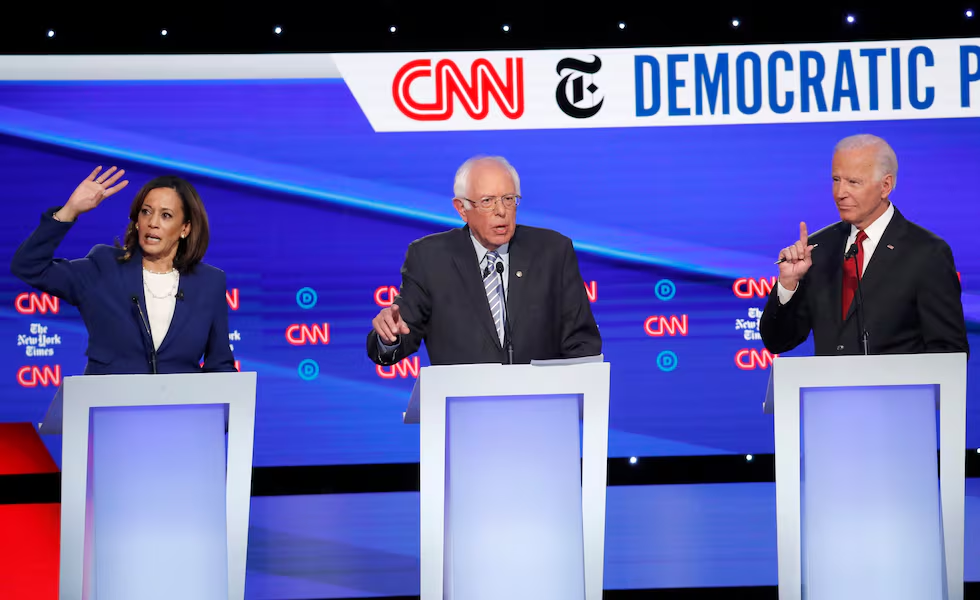
The blue wave in this year’s midterm election has yet to fully settle with a few House races still uncalled, but Democrats are already looking toward the next hill: the 2028 presidential election.
The Democratic National Committee announced the framework for the 2028 presidential primary debates Monday, with the first of 12 debates set for June 2027.
NEW: We’re announcing the framework for the 2028 Democratic presidential primary debates:
— Democrats (@TheDemocrats) November 23, 2026
–12 debates starting in June 2027
–To participate, candidates must denounce dark money spending in the primary
–The debate process will include creators and influencers
“Democrats are on offense after our historic victories in the midterms, and the DNC is committed to keeping our foot on the gas as we head into the 2028 cycle,” the DNC said in a statement.
While much of the schedule and candidate requirements seem to mirror the Democrats’ last open primary in 2020, the party has added a few new requirements for candidates in the 2028 cycle, including a pledge to “denounce” dark money contributions and refrain from early campaign activities.
What’s inside the DNC autopsy report
The new provisions are added to support the party’s “core objective” of “ensur(ing) that the debate process is transparent, fair, and rigorous so that our nominee emerges stronger and ready to take back the White House,” the committee said.
New provisions include ban on dark money contributions and early campaign activity
To participate in the primary debates, candidates are required to sign the DNC’s Fair Campaign Practices Pledge to renounce dark money spending — spending from groups that can raise unlimited amounts without disclosing their donors — either to support their own candidacy or harm another’s.
Democrats have been working to end dark money fundraising for years, as outlined in their 2024 party platform. Under the Supreme Court ruling in Citizens United v. FEC, the party does not have authority to completely ban Super PACs or dark money groups, which is why they are requiring candidates to sign the pledge.
The Fair Campaign Practices Pledge does not apply to the general election, the committee noted.
Sen. Cory Booker courts Utah Democrats as 2028 hopefuls make moves nationwide
“Outside groups and party committees are free to fundraise and build infrastructure throughout the primary in preparation for the general election,” it said.
The pledge also prohibits candidates from entering joint fundraising agreements with any Democratic Party committee, a provision set to maintain “party committee neutrality,” the committee said.
In addition to abiding by the Fair Campaign Practices Pledge, candidates will be required to follow the DNC-passed Delegate Selection Rules, which prohibit participation in unsanctioned contests during the early window of the presidential nominating calendar. This requirement was outlined earlier this year when the DNC outlined its 2028 nomination calendar.
Democratic candidates put faith front and center on election night
No early-state debates will be held until 2028. Early window states include South Carolina, Nevada, New Hampshire, New Mexico, Michigan and Virginia.
Democrats plan for a ‘potentially large field of candidates’ in primary debates
Of the 12 presidential primary debates announced for the 2028 cycle, five will occur in 2027 and seven in 2028, the committee said. The first two will be in June and July of 2027, with the final set for March 2028.
The party acknowledged there may be “a potentially large field of candidates” for the Democratic nomination and outlined structure to account for it, including allowing early debates to occur over two consecutive nights with a cap of 20 participants per night. A lineup for each night would be determined at random.
Who should run for president in 2028? Voters aren’t sure
To qualify for the debates, candidates must meet polling and grassroots fundraising criteria, in addition to the standard filing and constitutional requirements. Specific criteria to qualify for the first two debates will be announced in January 2027.
More information on the specific dates, locations and media partners for the first two debates will be released in January 2027. The party said they will be partnering with influencers and creators to maximize viewership of the debates.
The committee noted they reserve the right to adjust the schedule as necessary.
Which Democratic candidates are speculated to run?
While no candidates have officially declared their candidacy yet, much speculation has risen over which public figures will throw their name into the hat.
Potential Democratic candidates include:
- Former Vice President Kamala Harris
- U.S. Rep. Alexandria Ocasio-Cortez from New York
- Former Transportation Secretary Pete Buttigieg
- U.S. Sen. Jon Ossoff from Georgia
- Kentucky Gov. Andy Beshear
- Gov. Gavin Newsom of California
- Gov. Wes Moore of Maryland
- Illinois Gov. JB Pritzker
- Gov. Josh Shapiro of Pennsylvania
Top Democrats are positioning themselves for the 2028 presidential race
Marco Rubio shares how faith informs his work as 2028 presidential bid rumors mount
The Republican National Committee has not released its primary debate schedule yet.