Opinion: Do Democrats have the will to stop runaway federal spending?
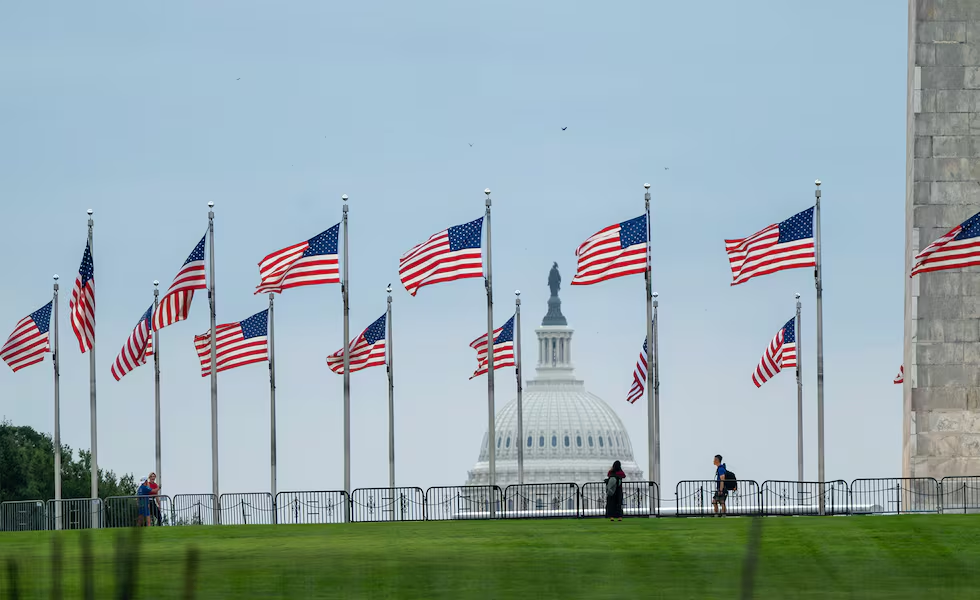
Congratulations to Democrats, who scored decisive victories this week and took majority control of the House and Senate, and the national debt.
Enjoy the temporary euphoria of having “thrown the bums out” before you inevitably inherit the title of a bum yourselves.
As the uniforms change and the District of Columbia begins to shine more blue than red, it’s worth pondering the question of the day.
Which party is the champion of fiscal responsibility?
If you answered neither, go to the head of the class.
If you also answered that it doesn’t matter, go directly to the principal’s office and await punishment.
The biggest winners, losers and surprises from the 2026 midterms
Everyone called it a blue wave. But were the midterms more about independents?
Riding a fiscal Titanic
Historians may point to this year as a time when voters worried more about the dinner menu on the Titanic than the giant iceberg of red ink ahead of them.
Yes, pundits and politicians have laid out the reasons Americans turned on Republicans in this election, and they are correct. Voters were upset by a fruitless and seemingly endless war in Iran, the unaffordable cost of living brought on by inflation, the president’s apparent cruelty in enacting immigrant roundups, tariffs and other factors, including perceived corruption in the White House.
A few voters may have worried that the national debt just ran past $40 trillion or that federal overspending is hovering around $2 trillion a year. These are the modern Cassandras, cursed with the ability to foretell events no one wants to hear.
If they aren’t listening now, they may be forced to listen soon. The rascals of fiscal irresponsibility may learn, as French politicians are learning today, that the nation can’t afford to keep trying to pay its way out of many of those problems.
No spending during lame-duck session?
The Committee for a Responsible Federal Budget, a private bipartisan think tank that keeps its eye squarely on the economic ball, sounded downright quaint this week as it urged lawmakers to, at the very least, avoid new spending during the lame-duck session before Tuesday’s winners are sworn in.
As the committee notes, some are urging higher spending measures for defense, healthcare, farmers, infrastructure and education that “could cost $200 billion or more on a temporary basis or up to nearly $1 trillion on a permanent basis.”
“The upcoming lame-duck session of Congress may seem like an opportune time to ‘clear the deck’ on many policy priorities,” the committee said. “But with debt now above 100% of GDP and interest costs at an all-time record, it would be a terrible time to further add to the debt.”
Democrats flip House and Senate in massive blue wave
I keep returning to a brief released three years ago by the University of Pennsylvania’s Penn Wharton Budget Model, which stated bluntly that the U.S. had about 20 years left to keep fiddling away like a symphony of Neros before the day of reckoning hits and investors lose confidence in U.S. Treasury bonds.
At that point, “no amount of future tax increases or spending cuts could avoid the government defaulting on its debt, whether explicitly or implicitly,” the brief said.
Cue the French-style protests in the streets, calling for things the nation no longer can afford.
The 20-year figure is an estimate. Things could unravel faster than that. And don’t forget that Social Security and Medicare are expected to face funding crises within a few years.
Federal spending and inflation
In retrospect, the best news to come from this week’s midterm election may have been that President Donald Trump won’t give every American the $5,000 he promised if they voted to retain Republican majorities in Congress.
As I reported before, the MIT Sloan School of Management studied why the inflation rate spiked during 2022, eventually becoming a key factor in Democrats losing the White House in 2024. The No. 1 culprit was federal spending, and specifically the pandemic stimulus checks, researchers said.
Trump responds to Democratic wins in races across the country
It wasn’t corporate greed. It wasn’t supply chain disruptions. It was the government.
“What was surprising is not just that (the driver) was federal spending but that it was so overwhelmingly federal spending,” Mark Kritzman, a senior lecturer at MIT Sloan, was quoted as saying in a report on the study.
Now it looks like inflation has helped cause another election turnover. Time to change the players again and hope for a different result.