Musicians are wary of AI. Spotify is charging ahead anyway
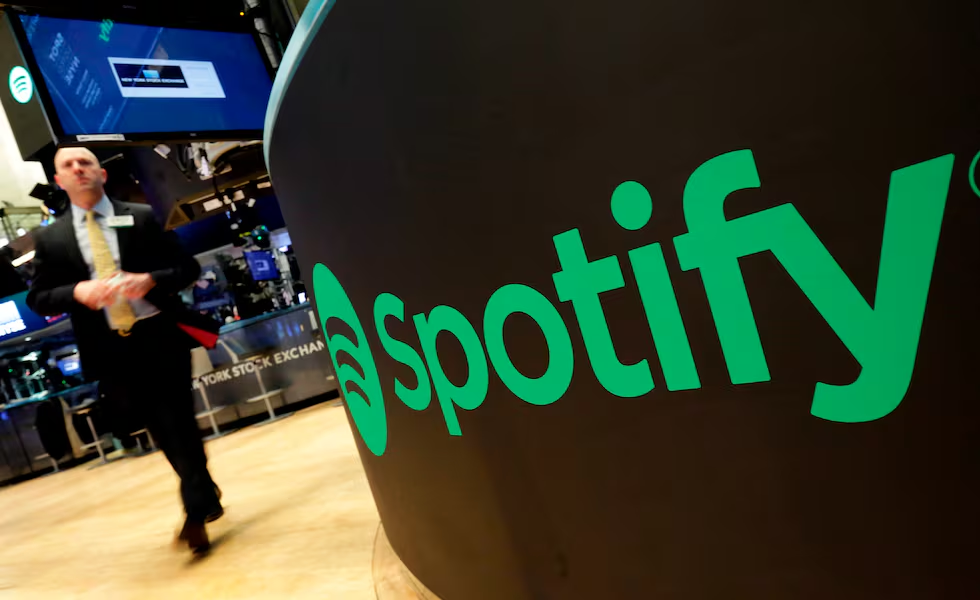
Spotify is charging ahead with plans to introduce an AI-powered service that would let users create their own remixes and covers of songs, even as criticism of artificial intelligence in music continues to mount among artists and listeners.
The streaming giant is currently negotiating licensing deals and trying to persuade artists to embrace the technology ahead of a planned early 2027 launch, the Financial Times reports.
For an additional subscription of $4 or $5 per month, the AI service would allow users to generate their own versions of popular songs, such as turning a country hit into a dance track or having one artist cover another’s music.
Elvis could sing Ella Langley’s “Choosin’ Texas,” while Queen’s “Bohemian Rhapsody” could become a folk song — if artists are willing to sign on.
Spotify has already struck deals with Universal Music Group, independent digital licensing group Merlin and French music company Believe. As of now, the streamer is negotiating agreements with Sony Music and Warner Music.
Still, even when a record label has signed an agreement with Spotify, individual artists retain the right to decide whether they want to participate.
Hollywood is in uproar over Tilly Norwood, an AI-generated actress
Vegas gave ‘The Wizard of Oz’ an AI makeover. Is the future of filmmaking doomed?
Getting artists to embrace the AI product is central to its success — and could prove the streaming giant’s biggest hurdle.
More than 200 musicians and artist estates — including Billie Eilish, Katy Perry, Stevie Wonder, Pearl Jam, Nicki Minaj, Jon Bon Jovi, and the estates of Bob Marley and Frank Sinatra — signed an open letter in 2024 warning against the “predatory use of AI” in the music industry.
The letter calls on AI developers to “pledge that they will not develop or deploy AI music-generation technology, content or tools that undermine or replace the human artistry of songwriters and artists.”
The pushback from artists has not slowed. Last month, Olivia Rodrigo told The Hollywood Reporter, “I would never use AI in any of my music,” adding, “Absolutely no. Hard line on that.”
Listeners have also expressed unease about the growing use in AI in music, with some Spotify subscribers voicing frustration over the company’s plans to introduce the product to its platform.
Yeah maybe it’s time to cancel my @Spotify . They’ve already been pushing mad ai music without labeling anything. Gross https://t.co/NAmLtL3xkQ
— The Cooter Scooter 🛴 (@fitty_d) November 8, 2026
Alert all musicians. Spotify is now "SLOPIFY".
— Ewan Morrison (@MrEwanMorrison) November 8, 2026
Spotify has announced a new feature that lets users modify any song with an AI remixing tool.
Artists and songwriters need to opt in or block the use of their music. They could also boycott Slopify. https://t.co/BuRiIVNaRI
"Spotify Premium subscribers will be able to use AI to transform any participating artist’s song into a completely different version." https://t.co/aSnyYZmZ4E pic.twitter.com/UsfQf9C0L0
— Gen | COMS OPEN (@gameraintgaming) November 7, 2026
Still, Spotify co-chief executive Gustav Söderström argues that the service could create a new revenue stream for artists who choose to participate, particularly older performers.
Under the proposed plan, royalties from fan-generated remixes would funnel back to original artists while streams would also count toward the original songs on Spotify’s charts.
“If you’re an artist today from the ’80s or ’90s, the way that you would make more money today is to hope that some other artists would create a remix or cover of your song. Now, you can hope that your fans actually create remixes and covers of your songs,” Söderström said at a September investor conference, per the Financial Times.
“If one of your fans creates the remix of your song, that actually increases the share of the streaming (revenue) pool that you get,” he added.
Hope and fear: Voters from across the country share their feelings about the burgeoning realm of AI
Which movie most accurately depicts our AI-disrupted future? A new nationwide poll may surprise you
Spotify responded to some of the criticism earlier this year. As AI-generated music began to swamp streaming platforms and social media, the company introduced labels to help listeners identify AI-generated artists.
Artist profiles that Spotify believes belong to AI-generated acts now carry an “AI Persona” label next to the artist’s name.
“While we believe all artists have creative choice in determining how they present themselves,” the company said in an August news release, “Spotify’s programming is focused on elevating music from authentic artists building careers in music.”
The streamer took it a step further with the removal of 50 million AI slop tracks from users’ recommendations this year. Another 75 million tracks were completely pulled from the platform, which had been identified as spam.
“Earlier this year, we looked closely at the tracks listeners were skipping, ignoring, or telling us they didn’t want to hear,” the company said in an October news release.
“A clear pattern emerged: these tracks were consistently ones identified as slop or spam. Over the past six months, we’ve made numerous updates to our recommendation system to remove slop and spam, and surface more music made by authentic, human artists.”