Opinion: The Arctic provides challenge — and opportunity
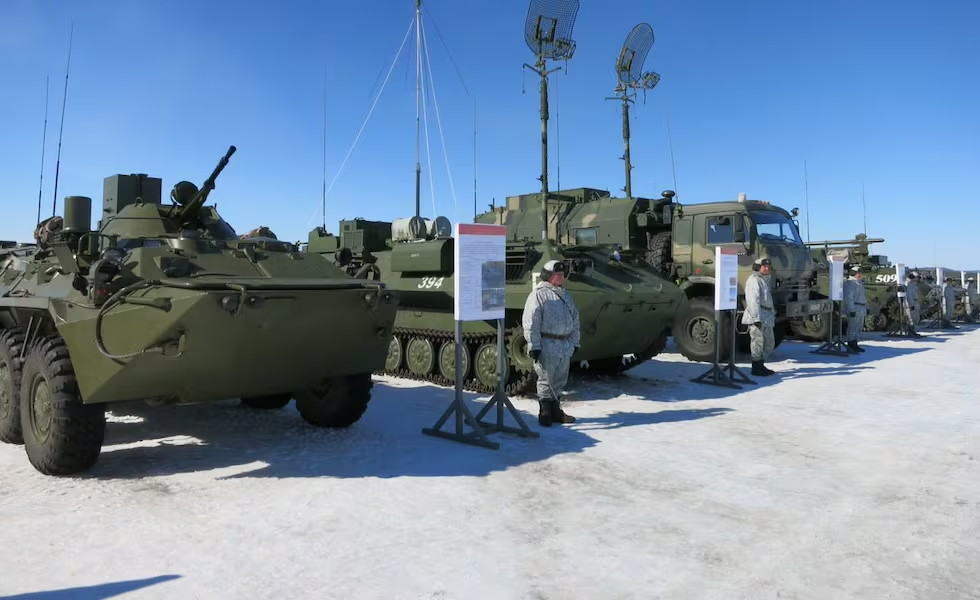
The Arctic steadily grows in importance, including economic, environmental and military dimensions. Russia and also China are aggressively, effectively addressing this situation. Unfortunately, the United States and other Western powers are less engaged.
Multiple news outlets are reporting that Russia, the world’s largest exporter of wheat, is now of necessity using the Arctic port of Murmansk. The Ukraine War, especially success in attacking Russia’s ships in the Black Sea, is responsible for the lengthy detour.
Meanwhile, big money and big militaries are heading north. Today, Russia gives disciplined, long-term priority to the Arctic. Melting ice encourages commercial investment and facilitates military activity. China has joined Russia with an extremely assertive posture.
Opinion: A good agreement with Greenland, but did we need the dramatics?
The Obama, Biden and Trump administrations have not given the Arctic sustained emphasis. An exception is President Donald Trump’s declarations regarding Greenland, which resulted in expansion of practical security cooperation between Denmark, Greenland and the United States.
Russia’s President Vladimir Putin relentlessly pursues power and influence in this part of the world, as in other regions. Visible expansion of surface ships, beyond customary presence of submarines, is one indicator.
In October, the U.S. Congress issued a report titled “Russia’s Arctic Military Posture.” Russia’s priority sustained expansion of military capabilities in the North is discussed in detail, including reactivation of old retired Soviet military bases. NATO defense expansion in response to the Ukraine War is an important spur, but Russia’s efforts predate that war and reflect much wider long-term ambitions.
Early in 2022, various analysts interpreted ominous operations in the Barents Sea as preparation to invade Ukraine. Russia publicly denied any such intent.
Then Ukraine was invaded.
Russia’s military efforts are part of a disciplined, comprehensive strategic approach. Moscow is spearheading efforts to spur economic development and regional cooperation. In April 2019, Russia hosted leaders from Finland, Iceland, Norway and Sweden in an Arctic Forum held in St. Petersburg.
In 2021, Russia succeeded Iceland in chairing the Arctic Council, which also includes Canada, Denmark, Finland, Norway, Sweden and the United States
President Barack Obama did visit Alaska in 2016, but the trip was largely symbolic and rhetorical. This was an unfortunate missed opportunity since the U.S. also chaired the Arctic Council at the time.
Romney invokes Churchill and George Washington in rare second rebuke of Trump’s Russia deal
Other activities have been noteworthy but fitful overall. In 2018, NATO held the Trident Juncture military maneuvers anchored in Norway. This large operation was unusual since the end of the Cold War.
A U.S. aircraft carrier entered the Arctic Circle for the first time since the Cold War. Also notable, Finland and Sweden participated along with NATO nations, and both nations, traditionally neutral, have formally joined the alliance.
Historically, Britain has led in Polar matters, joined in the nineteenth century by the United States. Germany also emerged as a leader until disastrously sidetracked in the twentieth century.
A recent comprehensive report by Britain’s Parliament on Arctic security, just updated, provides a road map for pursuing effective policies regarding management of the region.
Longer term, history is encouraging. International Polar Years occurred in 1882-1883, 1932-1933 and 2007-2009. The first two inspired the International Geophysical Year (IGY) of 1957-1958, during the Cold War.
Discovery of the Van Allen Radiation Belts was among the important IGY scientific discoveries. American scientific and government leadership was instrumental in launching and completing this comprehensive global enterprise.
President Dwight D. Eisenhower also initiated demilitarization of Antarctica. This was the first major arms control agreement of the Cold War and laid the foundation for others.