Riding to Fisherman’s Wharf, and nobody’s behind the wheel
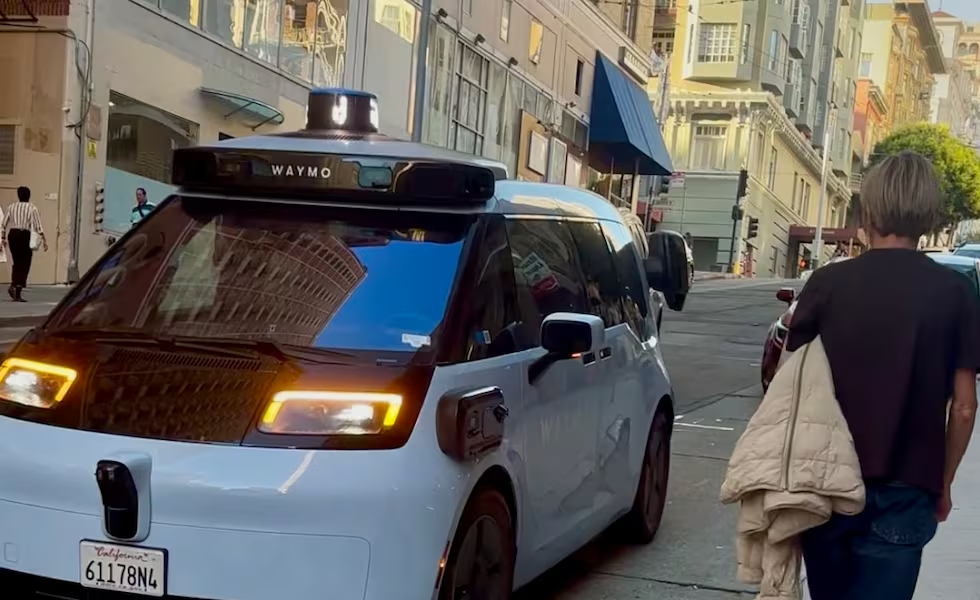
The Waymo pulled to the curb, and we got in and buckled up. Going to the dark side was surprisingly easy. All it took was Kerri downloading the Waymo app on her phone, and within six minutes, the driverless cab was there at our service. We were in Union Square in San Francisco, heading to Fisherman’s Wharf for dinner.
As soon as we were seated, the car moved smoothly into the flow of traffic, the steering wheel turning efficiently back and forth with no human being behind it.
We passed by a car parked next to the hotel passenger loading area with a LYFT sticker. In the window, there was a placard soliciting customers that proclaimed: “A car with a driver and everything!”
I considered the irony: A company that just a few short years ago started making taxi cabs obsolete was now itself in jeopardy of becoming obsolete because of cars that drive themselves.
Technology eliminating jobs is nothing new, of course. It’s been going on at least since the invention of the wheel. Think how many monks with excellent handwriting were suddenly looking for work when Gutenberg invented the printing press.
But lately, the pace seems to have accelerated. The AI revolution is everywhere, including our streets, endangering jobs like a meteor shower.
Before we hailed the Waymo, we did some shopping. I bought a parka. To check out, I just needed to toss the coat in a bin along with my debit card, collect my receipt and my new coat, and walk out. No human interaction required. The night before, watching a baseball playoff game on TV, I watched the catcher for the Milwaukee Brewers use the ABS (Automated Ball-Strike System) to contest four straight calls he thought were wrong. He was right four straight times. You could almost hear the umpire considering his employment alternatives.
No one seems to be safe. Take the Zamboni driver, for instance. The Zamboni is the machine that scrapes and smooths the ice in between sessions at a hockey game. When it was invented by an ice rink owner named Frank Zamboni in 1949, it replaced the laborious method of a tractor dragging an ice scraper. Zamboni’s Zamboni instantly put four people out of work: the guy whose job was to shovel away the loose shavings left by the scraper, the guy who sprayed the rink with water, the guy who used a squeegee to whisk the dirty water away, and the guy who applied a layer of clean water and waited for it to freeze. Only the driver’s job remained. Ever since, watching a Zamboni driver do his circuits has entertained and all but hypnotized hockey fans.
But that is in jeopardy now because a Zamboni has a driverless feature. So far, no NHL clubs have gone driverless (including the Utah Mammoth, with their customized “The Zammoth” Zamboni). But the Colorado Avalanche is reportedly using one at its practice rink.
Lists are all over the internet rating the jobs next most likely to fall to the AI wave. Data entry clerks, translators, bookkeepers, cashiers, telemarketers and customer service reps make most of them. Bank tellers are another one. “In ten years your local branch will be a lobby with two ATMs and a manager,” said one report. It was probably written by AI.
One list had “authors and writers” at No. 5 most endangered.
There are also lists for the jobs considered least endangered. On one of these, phlebotomist was No. 1.
I looked up “phlebotomist” because I wasn’t sure what it is (and also because of a possible job alternative after reading about the situation with authors and writers; see above).
A phlebotomist, as probably everyone knows but me, is the medical tech who draws your blood.
When I Googled “phlebotomist” to learn more, I came across a story that talked about a new blood-drawing robot that suggests the job isn’t as AI safe as presumed.
Quoting from the article: “The imaging device uses near-infrared light and Doppler ultrasound to map the arm, while AI algorithms analyze the images to locate a suitable vein and separate it from surrounding arteries. Once a vein is verified, the system automatically applies a tourniquet, preps and disinfects the skin, inserts the needle with submillimeter precision, fills the collection tubes, removes the needle and places a bandage.”
Pretty sure AI wrote that too.
The article ended by throwing a bone to humankind: “If the AI cannot locate a proper vein or if a patient moves too much during the process, the device aborts or stops, and a human phlebotomist takes over. A single trained healthcare supervisor can oversee multiple robotic units at the same time.”
Anyway, the Waymo got us to Fisherman’s Wharf, despite rush hour San Francisco traffic, with ease. Other than the $40 it cost to go 2.2 miles.
Let’s face it, we’re all living better than the Rockefellers did a century ago … except maybe cab drivers.