Democrat Scott Colom ousts Cindy Hyde-Smith to be Mississippi’s first Black U.S. senator since 1881
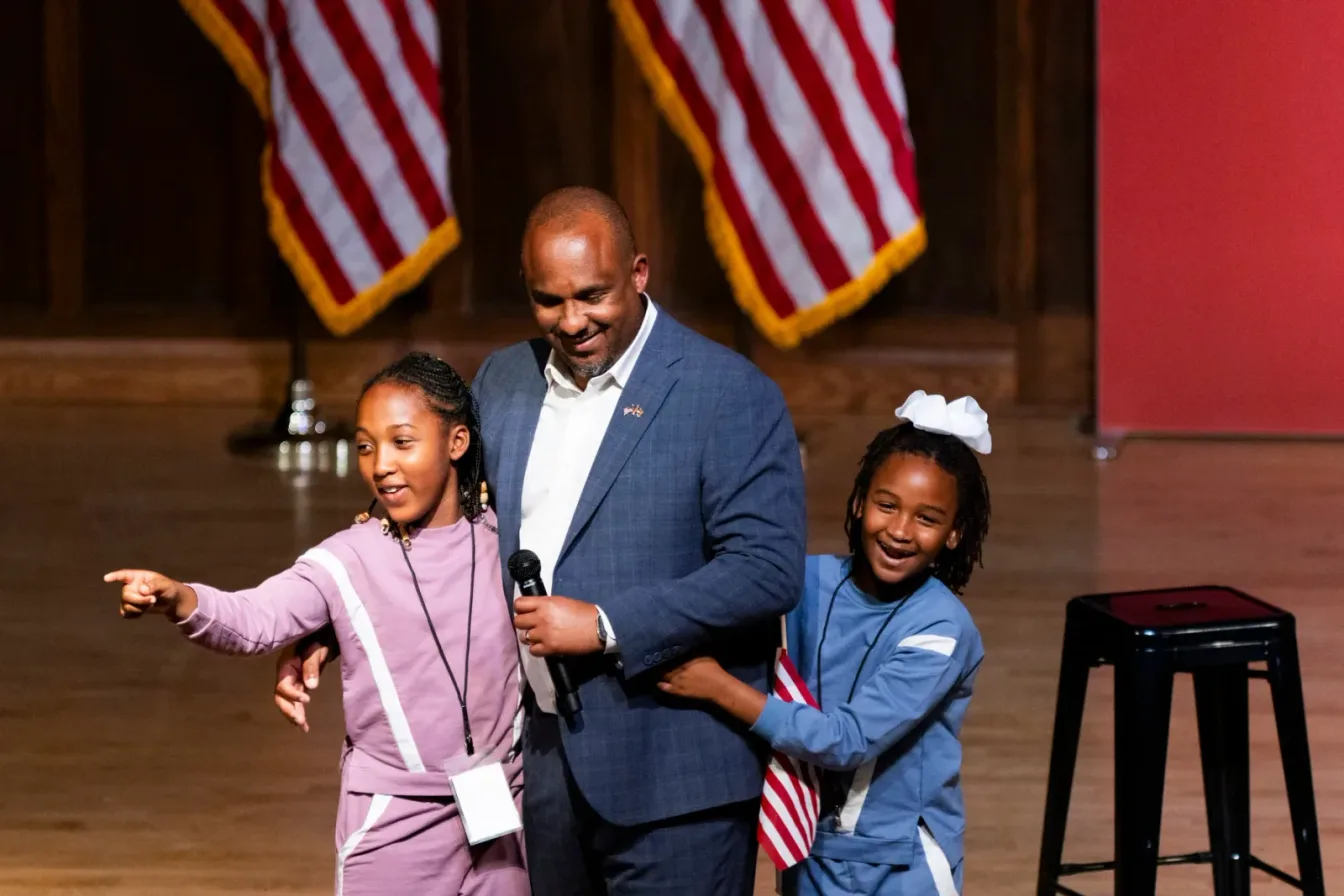
Democrat Scott Colom’s bid for a U.S. Senate seat in Mississippi was dismissed as improbable — a long-shot effort standing up against the weight of political history that has shut Black people out of statewide representation for generations. While Mississippi was the first in the country to send a Black person to the U.S. Senate, the state has not had another Black U.S. Senator since 1881.
But this year of historic firsts made its way to Mississippi on Wednesday, with Decision Desk HQ projecting Colom to win his race against incumbent Republican Cindy Hyde-Smith, flipping another GOP-held seat as Democrats take control of both chambers of Congress.
Colom’s victory will cement a historic high of seven Black U.S. senators serving at one time: He and projected Senator-elect Juliana Stratton of Illinois will join Sens. Angela Alsobrooks of Maryland, Lisa Blunt Rochester of Delaware, Cory Booker of New Jersey, Tim Scott of South Carolina and Raphael Warnock of Georgia. In total, only nine Black men and five Black women have held a U.S. Senate seat.
Hyde-Smith’s loss, along with the defeat of longtime Sen. Susan Collins in Maine and Sen. Darline Graham in South Carolina, will bring the number of Republican women in the chamber down from 11 to eight.
As Colom’s campaign picked up steam in the waning weeks before Election Day, President Donald Trump attempted to shore up Hyde-Smith by traveling to a rally in Corinth, Mississippi. Standing next to the president, she spoke only nine words: “Is this not the best president of our lifetime?” Trump then proceeded to talk for the next hour and a half.
That last-minute show of support from the president was not enough to secure a win. It comes at a time when advocates working to increase the number of Republican women in elected office have pointed to structural issues they believe hinder their efforts.
Black candidates face their own set of systemic and racial realities that have historically blocked their ability to advance in politics. Despite having the largest concentration of Black residents of any U.S. state, Mississippi currently has zero Black people in statewide office. The last Black person to hold a U.S. Senate seat in the state was born into slavery. The last time a Democrat won a U.S. Senate race there was in 1982.
Colom is a former prosecutor who has worked as district attorney for the 16th Judicial District of Mississippi since 2016. In 2022, President Joe Biden nominated Colom to serve as a U.S. District Court Judge for the Northern District of Mississippi, which Hyde-Smith ultimately helped to block by declining to return a “blue slip,” a document used to allow senators from the home state of judicial nominees to signal their support or disapproval.
In her reasoning, she cited Colom’s public support for transgender rights, which included signing a 2021 letter criticizing the criminalization of transgender people and gender-affirming healthcare around the country.
Three years later, Colom has now unseated Hyde-Smith from her position in what may be viewed as one of the biggest comeback moments of the midterms. Much of the messaging throughout his campaign focused on cost of living, low wages and the ways he feels voters in his home state have been overlooked by political leaders. This includes his opponent, Hyde-Smith, who during a February interview suggested that people choose a different protein option in response to the rising cost of beef. It also includes leaders within his party, Colom has said.
National Democrats are “conditioned not to care about Mississippi,” Colom told The Washington Post ahead of Election Day. “To me, you can’t be a party that cares about working people if you don’t care about working rural people in Mississippi who are struggling.”
Part of the struggles Mississippi residents face are barriers to voting access that include a strict photo ID law, no early voting and limited absentee voting, and disenfranchisement for people with certain felony convictions. On Election Day some residents took to social media to report being turned away at polling sites due to “inactive” voting status. The nonprofit newsroom Mississippi Today reported a surge in voter inactivations, which purged more than 200,000 voters from state rolls of registered voters. Inactive voters were permitted to cast provisional or “affidavit” ballots that were still being counted along with absentee ballots in the days after the election.
In one November ad, Colom tied this political moment to the legacy of Civil Rights activist Medgar Evers, a Mississippi native and World War II veteran who returned from the war and was then blocked from registering to vote in Decatur, Mississippi. Evers spent the remainder of his life working to ensure he and other Black citizens would be able to execute that right. He documented voter suppression, helped people register to vote and walked with them to the polls. He also provided civic education in Black gathering spaces throughout the state.
In 1963, a member of the Ku Klux Klan murdered Evers but was not convicted for the killing until 1994.
“In Mississippi, no one is above the law, and no one should be outside its protection,” Colom said in his ad. Evers, who was only 37, “was killed for helping Mississippians vote,” he continued, “On Tuesday, use your vote and honor everyone who died for that right.”