Billionaire tax fails in California, deepening Democratic divide
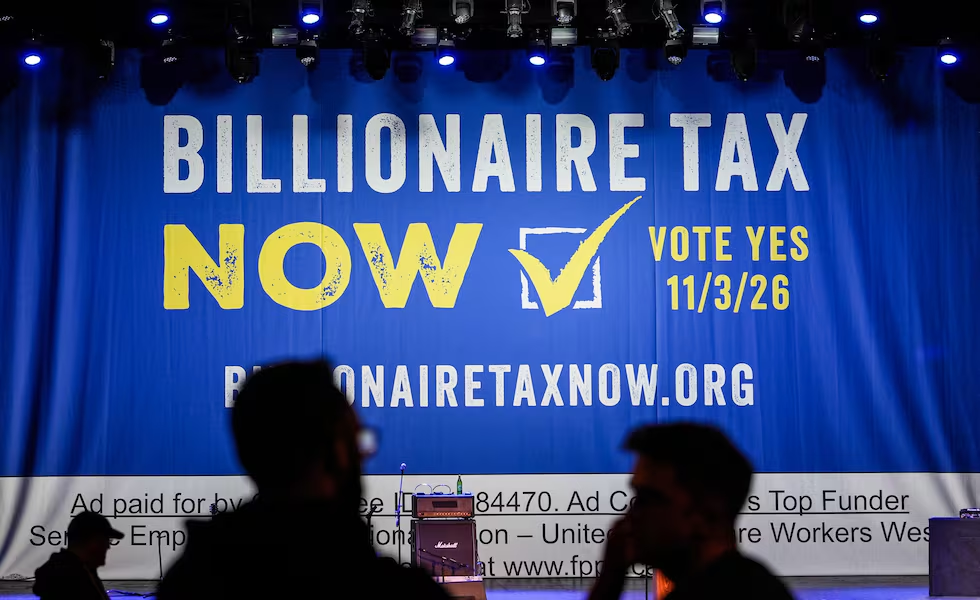
California voters rejected a proposed billionaire tax, The Associated Press projected Monday. The tax became a point of disagreement among Democratic leaders, including Gov. Gavin Newsom, who opposed the measure.
Proposition 40 would have imposed a one-time 5% tax on the net worth of California residents worth more than $1 billion, directing most of the revenue to healthcare and the rest to education and food assistance.
Supporters said the money could help offset expected federal healthcare cuts, while Newsom warned the tax could drive wealthy residents out of the state and backed a separate measure to restrict certain future taxes on financial assets.
When the AP called the vote on Monday, the results showed 52.8% of voters aligned with Newsom in opposing Proposition 40 while 47.2% supported it. The count is still unofficial, but with 83% of the expected vote already counted, AP determined the remaining ballots are not enough to change the outcome.
What Proposition 40 would have done
The measure would have reached well beyond cash in the bank. Californians worth more than $1 billion would have owed a one-time tax equal to 5% of their net worth, which includes stocks, business holdings and other investments. At the $1 billion mark, a 5% tax would amount to $50 million.
Proposition 40 planned to allot 90% of those proceeds to healthcare, with the remaining 10% put toward education, food assistance and administering the tax itself. If passed, it would have been the world’s first wealth tax aimed specifically at billionaires.
Utah weighs a 60% threshold for tax initiatives as California considers taxing billionaires
“We’re calling on California’s billionaires to step up and pay a one-time, emergency 5% tax to prevent the collapse of California healthcare,” Service Employees International Union-United Healthcare Workers West, the California healthcare workers union that sponsored the measure, said on its official website. “This would protect healthcare jobs and ensure working people and families can get the care they need.”
According to SEIU-UHW, there are about 200 Californians with a net worth of $1 billion or more that hold a combined wealth of $2 trillion. The union’s website cited federal funding cuts that would strip roughly $100 billion from California healthcare over the next five years as well as the removal of 145,000 healthcare jobs as reasons for the emergency tax.
Why Newsom opposed it
Newsom’s opposition to the proposal was mostly about state finances. California’s budget depends heavily on income taxes paid by its top earners. If billionaires move away, the state collects a one-time 5% but loses their income taxes every year after.
Newsom was concerned that wealthy people would leave the state and take their income tax revenue with them, but expressed support for a national billionaire tax instead.
“The fight to make the wealthiest Americans pay more in taxes is not one we should be fighting state by state,” Newsom said in an essay explaining his resistance to Proposition 40. “Wealth is movable, and it shops for the states with the lowest taxes. The fight belongs at the federal level, where this broken system was created in the first place.”
On the state level, Newsom opposed Proposition 40 but backed Proposition 42, which would prohibit most retroactive taxes and restrict new state taxes on personal property, including financial assets. These rules would have conflicted with Proposition 40 and made future wealth taxes harder to enact.
“We all agree that Californians deserve to have their retirement and life savings protected from new state taxes so those savings are there when they need them,” Newsom said in a statement released by the Proposition 42 campaign. “That’s why I’m voting Yes on Prop 42.”
While not finalized, Proposition 42 was ahead in the vote among California voters as of Tuesday afternoon.
A costly, divisive campaign
The Proposition 40 campaign was the most expensive ballot measure fight in the country this year, and drew an unusually large fundraising gap. Opponents outspent supporters by more than 10 to 1, with supporters raising $33.5 million and opponents giving $378.4 million. Google co-founder Sergey Brin backed separate measures intended to block the tax and contributed more than $100 million to opponents of the proposal.
The fight also divided California Democrats. Although the state Democratic Party backed the proposition, some traditional Democratic allies such as Planned Parenthood, the California Medical Association and the teachers union opposed it, citing concerns about its effects on the state budget and how the revenue would be spent.
A first-in-the-nation wealth tax is dividing California’s Democrats
The two sides made sharply different cases to voters. Supporters, led by the healthcare workers’ union SEIU-UHW, said the tax could help protect healthcare funding amid expected federal cuts.
Opponents warned that billionaires could leave California and reduce the income tax revenue they currently pay, ultimately ending the proposal’s path toward becoming a law. However, it did not settle the broader debate over how California should fund healthcare or tax extreme wealth.
“We can’t let a single advocacy organization, however well-intentioned, write the state’s tax code on its own terms,” Newsom said of SEIU-UHW. The incoming governor, Xavier Becerra, joined Newsom in opposing the proposition.
What the vote means for future wealth-tax efforts
Supporters of Proposition 40 say they may try again in 2028 if state lawmakers do not find another way to address healthcare funding. That effort would have to contend with Proposition 42 if it passes, as well as the same debate over whether taxing billionaires’ wealth would raise needed revenue or push wealthy taxpayers out of California.