U.S. loses long-held measles elimination status amid outbreaks
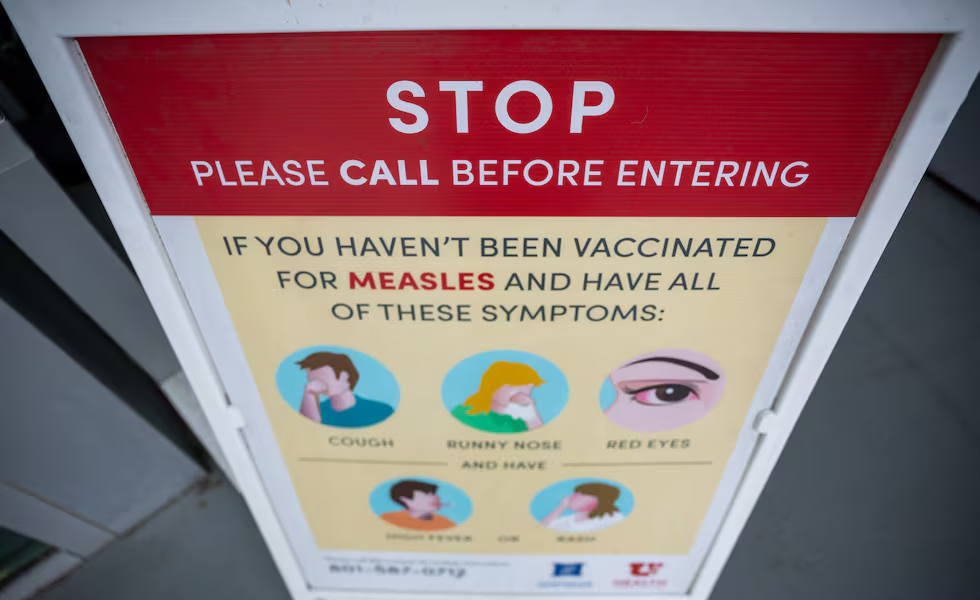
The United States has lost its measles elimination status, 26 years after gaining the designation back in 2000.
A Pan American Health Organization panel made the decision to change the status after reviewing the recent and current outbreaks and considering the number of cases in the past 12 months.
The change in measles status was first reported by The Wall Street Journal. The Pan American panel plans to make a formal announcement on Nov. 17.
The World Health Organization, of which the Pan American panel is a regional unit that includes North America, said measles is considered eliminated and assigns the designation when there are “no locally transmitted measles infections or outbreaks lasting 12 months or longer.”
It is the first time since 2000 that the U.S. has not met that standard. Instead, it has been experiencing cases since at least mid-2025.
A long line of outbreaks
The new Centers for Disease Control and Prevention numbers show 1,385 of this year’s 5,412 lab-confirmed measles cases are linked to 2025 outbreaks. The year’s cases are widespread, occurring in 47 different jurisdictions — including 45 states — and are likely an undercount because it’s believed not all cases are reported.
The CDC reported that those confirmed 2026 cases include more than 590 hospitalizations and at least six measles-related deaths. Meanwhile, some states are reporting deaths that are not yet part of the CDC count.
Per CBS News, “The biggest outbreak has been in Pennsylvania, where state health officials have reported more than 1,500 cases and seven deaths associated with the disease this year. Wisconsin reports two children have died and New York had its first measles death in more than 30 years.”
Some counts are higher.
NPR reported, “In the past two years, over 830 people have been hospitalized with measles in the U.S. More than 8,000 people have been sickened in outbreaks that have cost roughly $125 million in medical care, public health response and productivity losses, Johns Hopkins University researchers estimate.”
U.S. measles cases hit 35-year high, spark interest in vaccine
Per the article, “States have reported 13 measles-associated deaths, including a 7-month-old in New York and infants in Pennsylvania and Wisconsin in recent months. Babies typically aren’t vaccinated before they’re a year old.”
Since the 2025 beginning of significant measles spread, Utah and South Carolina rounded out the top three behind Pennsylvania in terms of case numbers.
Stopping the viral spread
Herd immunity is a key tool for preventing measles spread. When enough people are vaccinated against an illness, it provides a barrier to the spread, which is particularly important to protect vulnerable populations who could suffer significant illness and complications and/or who cannot receive the measles-mumps-rubella (MMR) vaccine. Measles herd immunity is attained when about 95% of the population is fully vaccinated or has natural immunity from having had the disease.
Some public health experts point to distrust in vaccine safety sown by top federal officials as contributing to the recent outbreaks and, subsequently, loss of elimination status.
“The vaccine policies and rhetoric of President Donald Trump and Health and Human Services Secretary Robert F. Kennedy Jr. have reshaped federal public health guidance and negatively impacted children and families,” Michael Stapley, former executive director of the Utah Department of Health and chairman of the Community Vaccine Forum, told Deseret News.
He said he was referring to “leaders’ unfounded, constant questioning of vaccine safety” as a contributor to declining trust in vaccines.
Nationwide kindergarten vaccination coverage dropped to 92.4% for the 2025-2026 school year “and measles outbreaks have surged in several states, including Utah,” where the coverage is an even lower 87.2% among those entering kindergarten this year, per Stapley.
Federal officials, including skeptics like Kennedy, have recently said that vaccination is the best way to protect both children and adults from the highly contagious disease.
In an email to NPR, White House spokesperson Allison Schuster wrote, “The president and the secretary have repeatedly encouraged measles vaccination, coordinated with states, and facilitated the deployment of vaccine doses across the country.”
Measles can linger in the air for a couple of hours after someone who has it has left the area.
And complications can be serious, including pneumonia, ear infections, severe diarrhea, and encephalitis. Some people die.
What does losing that status mean?
According to CBS, “A country or region loses its measles elimination status once its population immunity lowers enough that there is sustained spread of the disease,” as its medical correspondent Dr. Céline Gounder explained. “When a country has measles elimination status and a high rate of vaccination, a case of measles or small outbreak will soon fizzle out. But when there are this many gaps in the population’s immunity, there can be ongoing chains of transmission,” Gounder said.
It’s also possible, she said, that the U.S. could become “an exporter of measles” to other countries.
The United States losing its measles elimination status is “incredibly embarrassing,” said Dr. Peter Hotez, co-director of the Center for Vaccine Development at Texas Children’s Hospital in Houston, quoted by KSL.
More importantly, he said, it means that “basically, measles is back.”
“Whether or not we’ve officially lost our elimination status to me is much less important than, basically, measles is here. It’s pervasive, and vaccination rates are down across the country, and I don’t see us getting back to normal anytime soon,” he said.
Even with concerted effort, public health experts say it could take many months to regain the measles elimination status.