Getting older and getting braver at trying new things
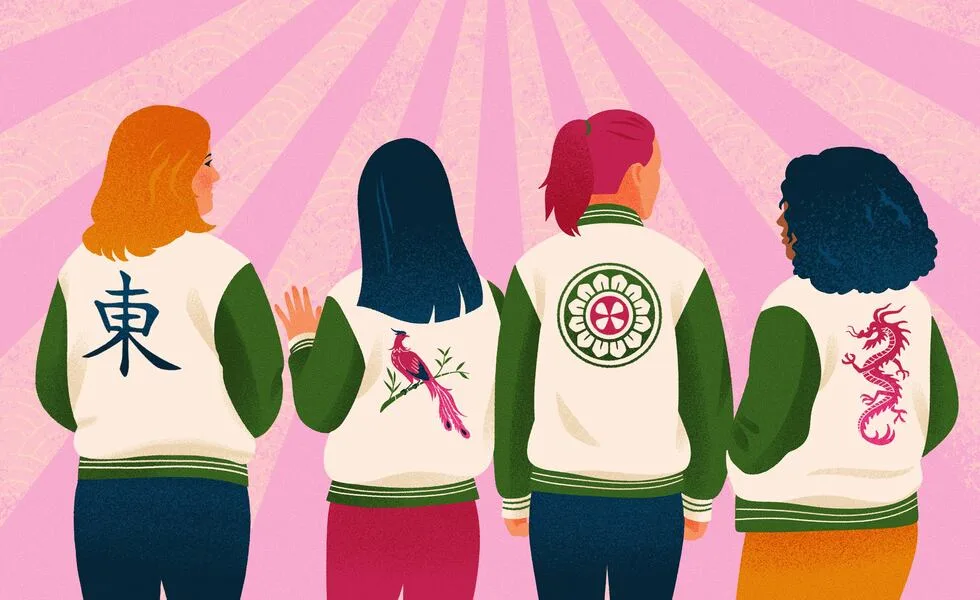
There’s been something in the air over the last few months. A fundamental shift in the universe, if you will. Messages being carried through the wind. Messages that, if you sit still long enough, you can hear them whisper, “Mahjong.”
One day, no one I knew was playing mahjong. The next day, everyone I knew was playing mahjong. And posting about photos of their mahjong girls’ nights. I swear it happened that quickly. For everyone but me.
I waited for a mahjong invitation to hit my text messages. Or Instagram DM. Or GroupMe. Or maybe even via smoke signal. I don’t know. But an invitation never arrived. With my signature rationality and level-headedness, I assumed this was because I had no real friends and no one liked me.
Self-esteem hit aside, the lack of invitations was, in tiny part, a relief, because I really don’t enjoy being bad at things, and I am always bad at new things. As has been previously covered. But still, I wanted to be included. So bad.
I took to social media to poll my followers, asking what it was about mahjong that made it this season’s top social activity in order to research this story. And also in order to weasel my way into getting an invite.
Enthusiastic players of the game explained that the reasons why they love mahjong are plenty. It gives parents, primarily moms, a reason to get out of the house and socialize with other adults. Sometimes those adults are close friends, and sometimes they are people who have little in common with each other outside of mahjong, they explained. The game is difficult, but not too difficult to master, and a perfect balance between strategy and luck. And it is aesthetically pleasing, with colorful tiles and elaborately designed mats.
One user told me that they experience a full range of emotion while playing the game, from rage to joy. Another described the game as relaxing and said that it gave them a sense of accomplishment. And everyone mentioned the sense of community the game provided.
Which made it even more insulting that I had yet to receive a mahjong invite.
Everyone is playing mahjong. Inside America’s latest obsession
Silver linings: Mahjong is having a moment
But then, I realized, there might be others like me, waiting for a mahjong invitation like a high schooler waiting to be asked to the prom, and growing increasingly paranoid that everyone cooler, smarter and prettier was playing mahjong without them.
So I took matters into my own hands and planned a mahjong night. I coerced a very kind relative into teaching me and others the game. And I immediately understood the hype. Well no, actually, two hours later I understood the hype. Once I got over the learning curve, which was steep.
Because of that learning curve, I was, in fact, pretty bad at first. But so was everyone else who was there learning to play for the first time. We were hearing words like “Charleston,” “Bambird,” and “soap dragon” and expected to understand the meaning. We were handed cards with lines of numbers and letters and expected to interpret them into a winning combination of tiles. We were expected to push tiles out at an angle, and pushed the wrong way every time. It was a lot.
But by the second round, I started to get it. And I started to love it.
This is a lesson I’ve had to learn too many times. That yes, I will be bad at new things at the onset. But so will everyone else. And getting OK at it, or maybe even good at it, won’t take as long as my self-consciousness assumes.
For a long time I told everyone, and believed, that I was not crafty. That I’ve never really been gifted when it comes to creating visual works. But then I was introduced to the world of needlepoint and fell in love with the process of pulling a needle and thread through canvas. My first canvas was bad. My next one was better. Am I good now? I don’t know. Does it matter?
For a long time I told everyone, and believed, that I was uncoordinated and unathletic. But in what must have been a moment of delirium, I agreed to try pilates. And I was very bad. So bad that I fell off the reformer. But I enjoyed it. So I powered through the discomfort of being terrible, and have become fairly proficient. Am I good? I don’t know. Does it matter? Not at all. In fact, if I’m as bad as my intrusive thoughts tell me I am, I’m doing everyone else there a service by making them feel better about their own form in comparison.
I’ve now played mahjong on four separate occasions and have invited myself to the neighborhood group that plays. I’m now seasoned enough to not feel embarrassed, and to actually really enjoy the game. So much so that I think of tile combinations as I fall asleep at night. Am I good? No. I still push my tiles in the wrong direction every time. But I’m having so much fun.
I wish this was a lesson I had learned before my fourth decade on Earth: that I’ll never actually regret trying new things. I wonder how many skills I would have mastered by now if I had gotten over my fear of embarrassment decades earlier.
But maybe it’s a lesson that can only be learned after life has run you through the ringer a few times. When being bad at mahjong doesn’t even come close to, say, losing a parent. Maybe that perspective is the true gift of getting older.
There’s an interview with Beyoncé in her Renaissance Tour documentary wherein she explains that when she turned 40, she stopped caring what others thought. At the time, I thought she meant that was a shift she had chosen to make mentally. An intentional choice.
But now, in my 41st year, I think what she meant is that it’s a natural process. Because life is hard. And finding passions as we age is one of the most effective ways to make it a little less hard. The price just happens to be a period of embarrassment when beginning. And the older I get, the more I feel I can afford to pay that price, with the perspective that I don’t have to be good at these passions. I just need to enjoy them. Because we need to find enjoyment where we can.
So the next time I’m invited to play pickleball or knit a hat or write a poem, I will try. And likely face embarrassment. But also love it.